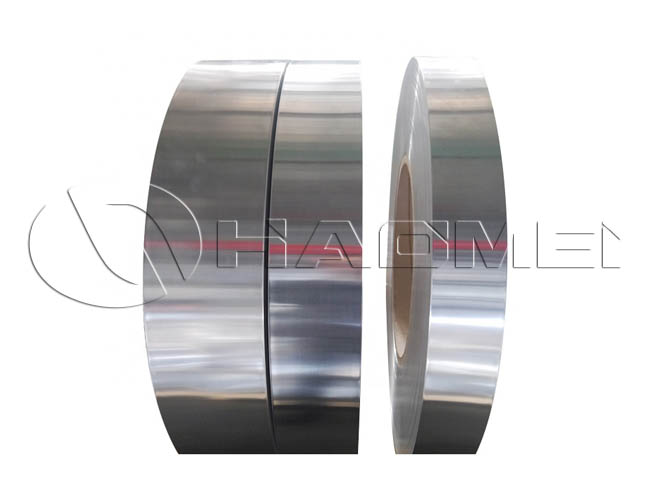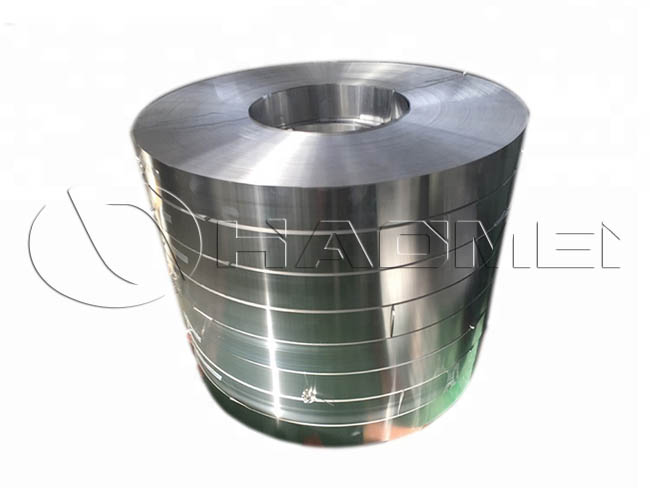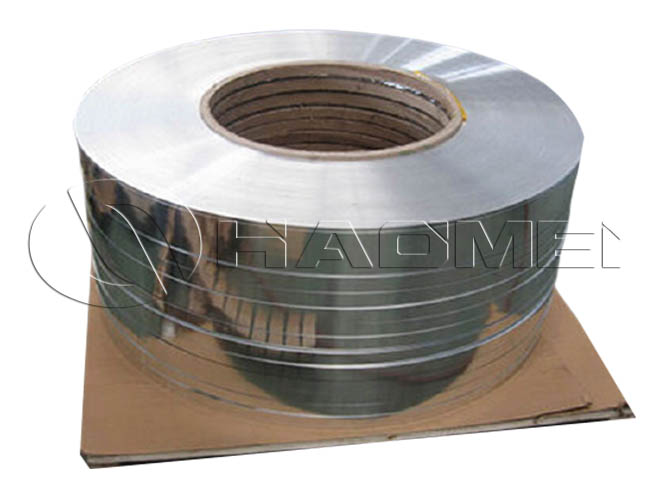
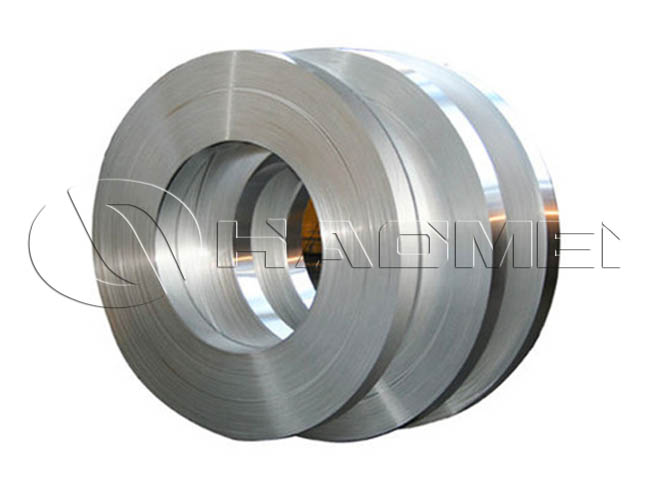
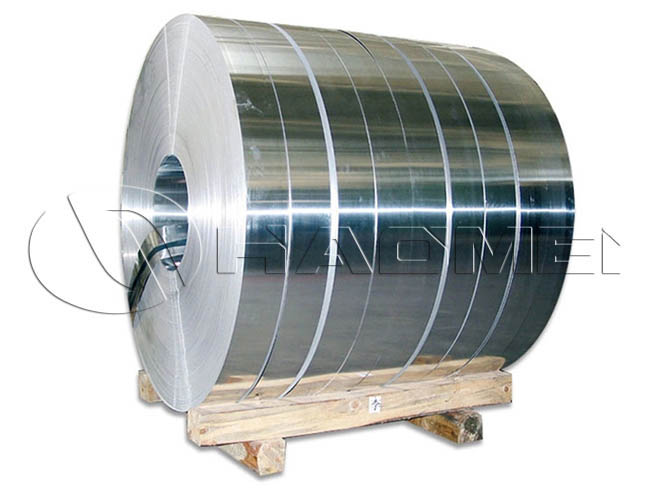
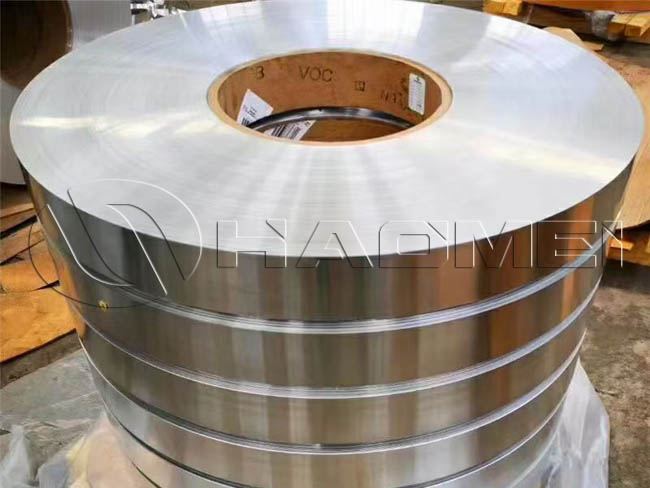
1050 Aluminum Strip
1050 aluminum strip specifically designed for transformer windings, featuring high electrical conductivity, excellent formability, and outstanding cost-performance ratio. Ideal for dry-type and oil-immersed transformers. Custom sizes and tempers available.
- Alloy:1050
Product Overview
Among the wide range of aluminum alloys, the selection for transformer winding conductors is actually quite focused: 1050, 1060, 1070, and 1350 are the most commonly used grades.
The 1050 aluminum strip belongs to the industrial pure aluminum series (Al ≥ 99.5%), with thickness ranging from 0.1 mm to 3.0 mm. It can be manufactured in single-layer or double-layer structures, effectively reducing leakage magnetic fields and improving insulation performance.
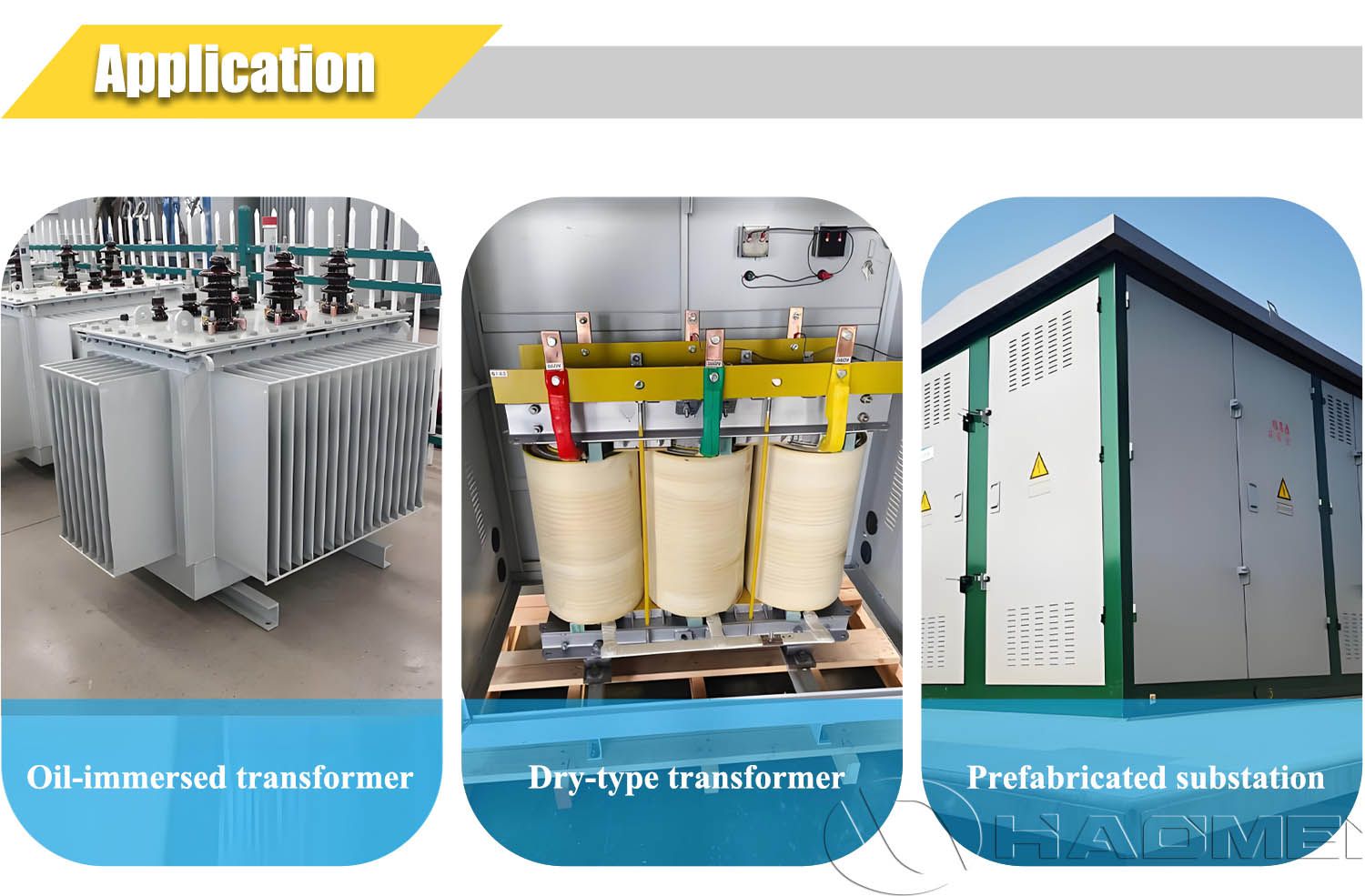
1050 O temper aluminum strip for transformers is a conductive material used for winding coils. It is wound in a specific manner around the coil to form inductance, mutual inductance, or distributed capacitance. It is widely used in dry-type transformers, oil-immersed transformers, and reactor windings.
Compared with copper strip, 1050 aluminum strip offers advantages such as light weight, lower cost, and stable resource supply, making it one of the mainstream conductor materials for low- and medium-voltage electrical equipment.
In the field of conductive materials, purity directly determines conductivity-fewer impurities mean less resistance to electron flow and lower resistivity. 1050 alloy, while maintaining high purity and high conductivity, also offers moderate mechanical strength and excellent machinability, making it an ideal choice for transformer windings.
Compared to 1060 (aluminum content ≥99.6%) and 1070 (aluminum content ≥99.7%), 1050 has slightly lower purity but a more competitive price; compared to 1350 (a high-purity aluminum alloy specifically for electrical engineering), 1050 offers superior overall cost-effectiveness. For most dry-type transformers, the conductivity of 1050 fully meets design requirements, eliminating the need to pay a premium for "excessive purity."
Common Temper: O (Annealed)
In the specifications of 1050 aluminum strip for transformers, the "O" state is the most commonly used. Some states, such as H14 and H24, can be provided upon request.
"O" represents the annealed state, meaning that after rolling, the aluminum strip undergoes high-temperature annealing, allowing the internal grains to fully recrystallize, resulting in the material reaching its softest state. This state is crucial for transformer winding: the soft aluminum strip can tightly conform to the mold on the winding machine, without springing back or cracking when bent, resulting in neatly arranged coils with tight interlayer spacing.
Mechanical Properties (O Temper)
| Tensile strength | 60–95 MPa |
| Elongation | ≥25% |
| Resistivity at 20°C | ≤0.02825 Ω·mm²/m |
Specifications of 1050 Aluminum Strip
| Alloy | 1050 |
| Temper | O (soft), H12, H14, H16 (O temper most common) |
| Thickness | 0.2 mm – 3.0 mm |
| Width | 10 mm – 1600 mm (custom slitting available) |
| Length | Coil (C) |
| Inner Diameter (ID | 300 / 400 / 500 mm (customizable) |
| Outer Diameter (OD) | ≤1500 mm |
| Surface | Mill finish |
| Edge | Deburred, rounded, smooth |
| Application | Transformer windings |
| Packaging | Wooden pallets |
| MOQ | 1-3 tons |
Chemical Composition (%)
| Alloy | Al | Si | Fe | Mg | Zn | Mn | Ti | Cu | V |
| 1050 | ≥99.5 | 0.0431 | 0.203 | 0.0013 | 0.0093 | 0.0104 | 0.0200 | 0.0022 | 0.0039 |
Mechanical & Electrical Properties
| Thickness (mm) | Tensile Strength (MPa) | Elongation % | Bending at 180°, inner radius buckling | Conductivity at 20°C |
| Greater than 0.3 to 0.5 | Minimum value 60, maximum value 90 | 20 | Close contact | 62.5% IACS |
| Greater than 0.5 to 0.8 | 25 | |||
| Greater than 0.8 to 1.3 | 30 | |||
| Above 1.3 to 2.0 | 35 | |||
| Above 2.0 to 2.5 | 35 |
Key Advantages of 1050 Aluminum Strip
1. High Electrical Conductivity
Approximately 61% IACS, ensuring efficient current transmission with reduced losses.
2. Excellent Ductility & Flexibility
High elongation in O temper enables complex multi-layer winding without cracking.
3. Stable Surface Quality
Smooth, clean, and burr-free surface prevents insulation damage and short circuits.
4. Lightweight
Density is only about 1/3 of copper, reducing transformer weight and installation cost.
5. Good Corrosion Resistance
Natural oxide film provides basic protection in standard industrial environments.
The Role of 1050 Aluminum Strip in Dry-Type Transformers: More Than Just Conductivity
In dry-type transformers, the functions of 1050 aluminum strip go far beyond mere conductivity:
1. Conductor Carrier for High and Low Voltage Windings
The continuous winding of aluminum strip forms a helical coil, with each turn constituting a conductive loop. Compared to traditional round wire winding, foil winding allows for a higher fill factor—the same core window can accommodate a larger conductive cross-sectional area, thus reducing current density and copper losses (here, "aluminum losses").
2. Builder of Heat Conduction Paths
Dry-type transformers rely on air convection for heat dissipation, and the interlayer structure of the windings directly affects heat dissipation efficiency. The smooth surface and dense arrangement of the aluminum strip result in a shorter and more uniform path for heat conduction from the inner to the outer layers. Combined with air duct design, this effectively controls temperature rise.
3. Participant in Mechanical Support
After winding, the aluminum strip coil itself becomes part of the transformer body, bearing the short-circuit electrodynamic forces and transportation vibrations. The moderate tensile strength and good ductility of the 1050 aluminum strip ensure that the coil maintains structural integrity under mechanical stress.
4. Contributor to Lightweighting and Compactness
Aluminum has only one-third the density of copper. For the same conductivity, aluminum-wound transformers are significantly lighter. This is crucial for applications sensitive to equipment weight, such as high-rise buildings and underground facilities—lighter transformers mean lower transportation and installation costs and more flexible deployment options.
Main Applications of 1050 O Aluminum Strip
1050 transformer aluminum strip is widely used in power equipment of various voltage levels:
Dry-type transformers: As the core conductive material for high and low voltage windings.
Reactors: Used in smoothing reactors, shunt reactors, etc.
Special transformers: Such as rectifier transformers and windings in prefabricated substations.
Electromagnetic coils: Industrial electromagnets and various induction coils.
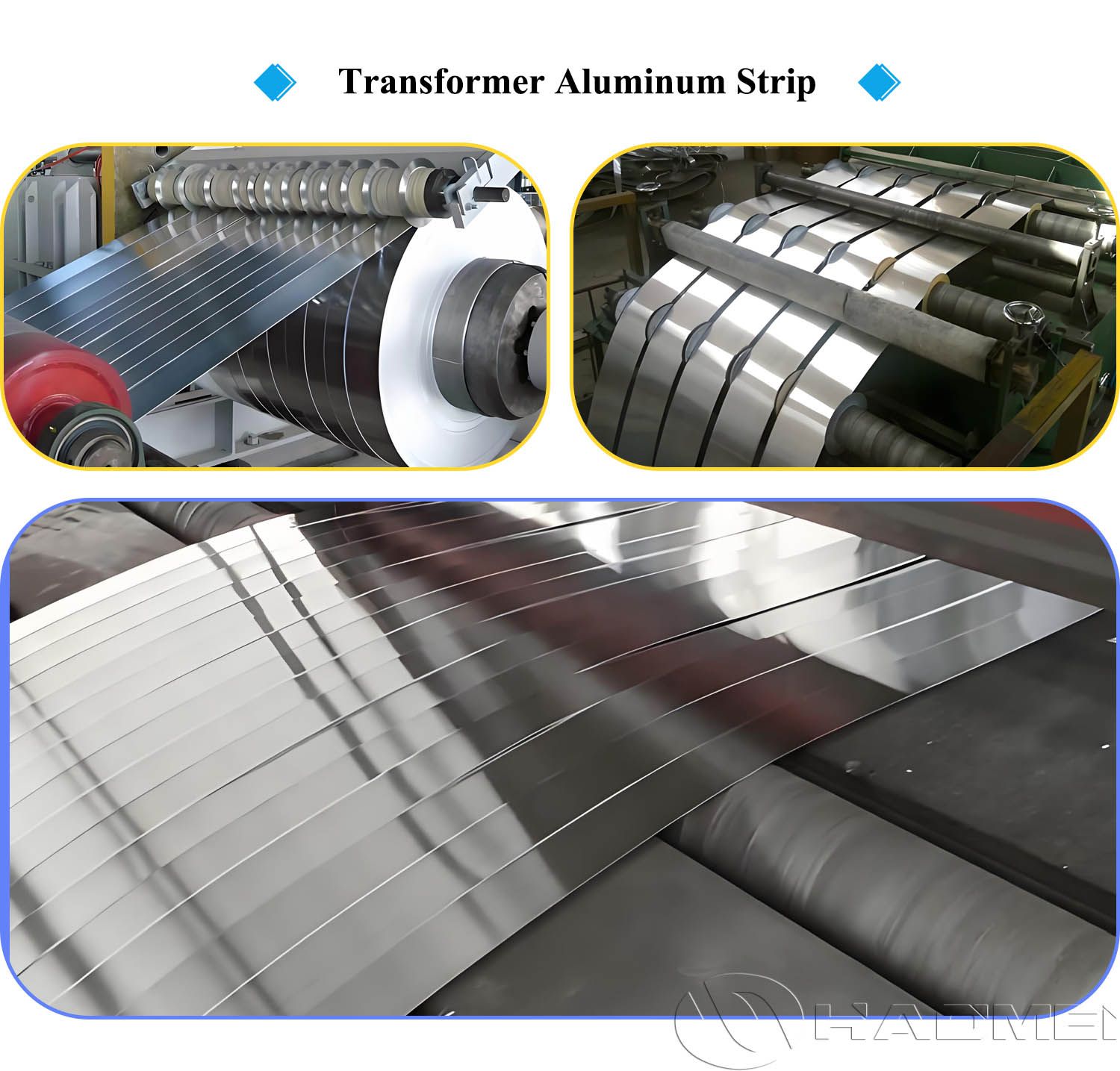
Production Process
Raw material inspection → Melting → Casting → Cold rolling → Annealing → Slitting → Edge rounding → Surface treatment → Final inspection → Packaging
Edge Processing Options
| Rounded corners | Full radius design ensures maximum safety |
| 90° right angle | Sharp right angle |
| Straight line + radius | Rounded corners on straight edges |
| Right angle + chamfer | 45° chamfer |
Transformer Aluminum Strip Surface Quality Requirements
Oil-Free and Dust-Free: The surface is thoroughly degreased to ensure tight adhesion to the insulation material and to remove any conductive impurities.
Undamaged Appearance:Scratches, indentations, roller marks, or oxide spots are strictly prohibited to ensure uniform current transmission.
High Flatness:The aluminum strip is free of wavy edges or warps to ensure tight and even winding.
Clean Appearance:Uniform silver-white color, free of watermarks or black streaks.
Burry-Free Edge Trimming:Special rounded corner/edge treatment ensures smooth, burr-free edges.
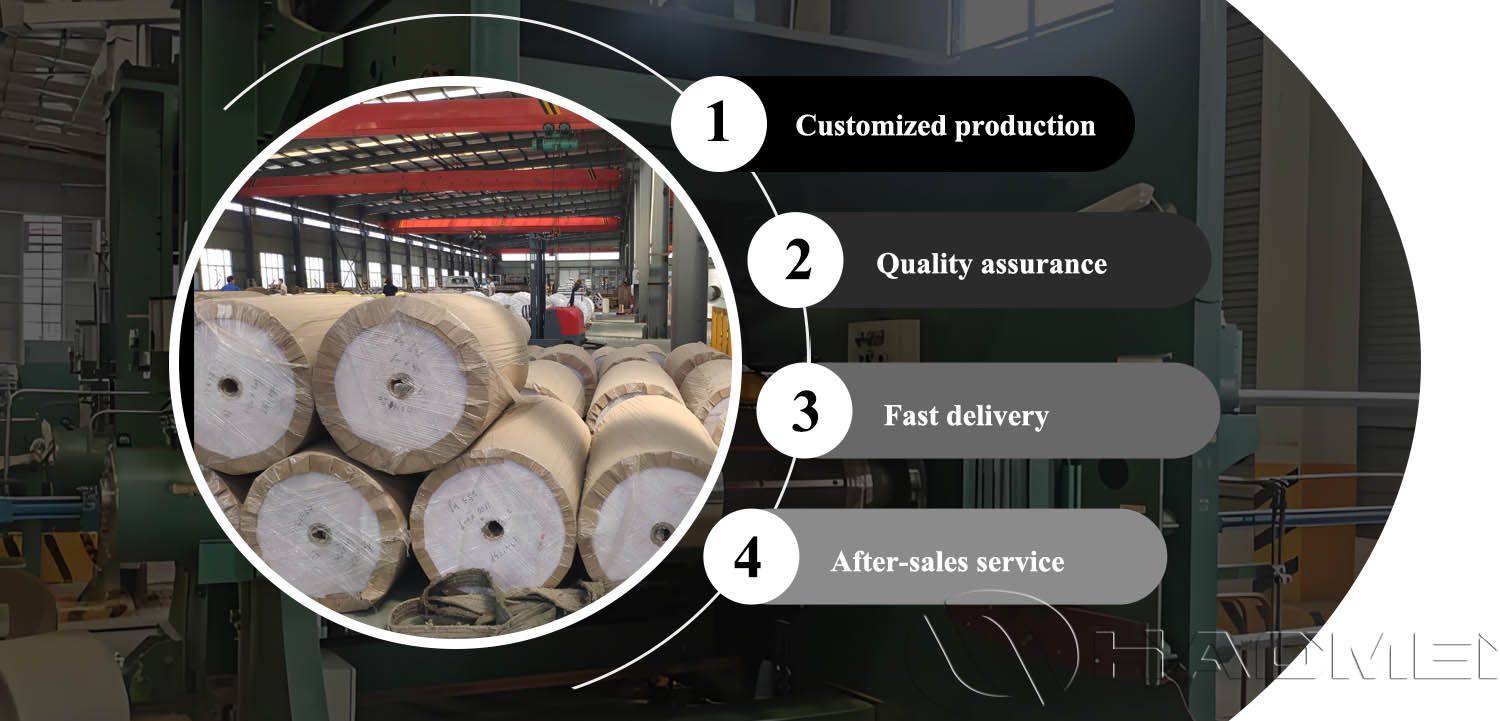
What services does HAOMEI provide?
1. Customized Production Capability: Supports multi-specification customization (thickness/width/coil weight/inner diameter) to meet diverse application needs.
2. Quality Assurance: Products meet international standards and come with quality certifications, ensuring high-quality delivery.
3. Fast Delivery and Inventory Support: The company maintains a regular inventory of standard specifications to shorten lead times and support stable supply for large-volume orders. 4. After-sales service: We provide comprehensive after-sales support and promptly resolve any problems encountered during product use.
FAQ
1. Why is 1050 aluminum strip suitable for transformer windings?
1050 aluminum has high purity (≥99.5%), ensuring stable conductivity and low resistivity. Its excellent ductility makes it an ideal material for winding coils and it is not prone to cracking.
2. What temper (state) is typically used for aluminum strip in transformers?
The O temper (annealed state) is the most widely used because it provides maximum flexibility for the winding process.
3. Can aluminum strip replace copper in transformers?
Yes. Although aluminum has lower conductivity than copper, with proper design adjustments (e.g., increasing cross-sectional area), performance comparable to copper can be achieved while significantly reducing costs.
4. What are the surface quality requirements?
The surface must be smooth, clean, free of oil and burrs to prevent damage to the insulation and ensure safe operation of the equipment.
5. Do you offer custom size services?
Yes. Thickness, width, coil weight, and inner diameter can all be customized to meet specific customer needs.
6. Which standards do you follow?
Depending on the specific requirements of the project, our production can meet ASTM B209, EN standards, and relevant standards such as GB/T 3880.
Tags