 Contact Us
In the field of power equipment manufacturing, transformer performance highly depends on the electrical conductivity, stability, and processing performance of the winding materials. Among various conductor materials, aluminum strip has become one of the mainstream choices for dry-type transformer and oil-immersed transformer windings due to its excellent conductivity, lightweight advantage, and controllable cost.
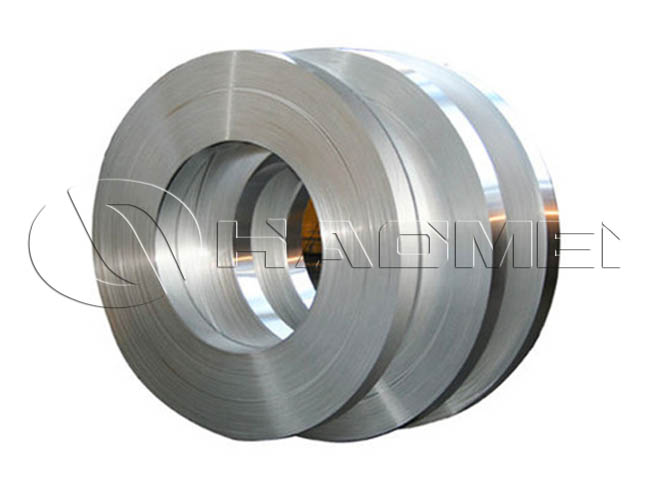
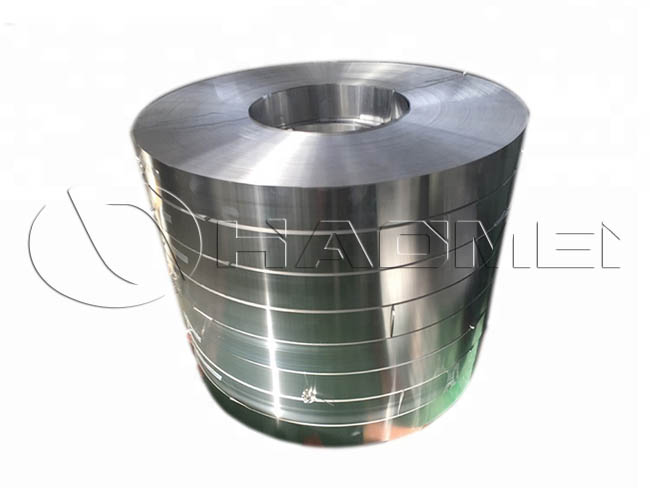
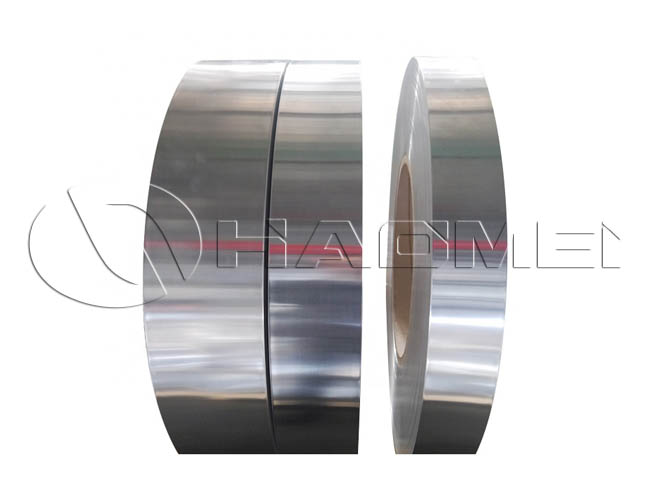
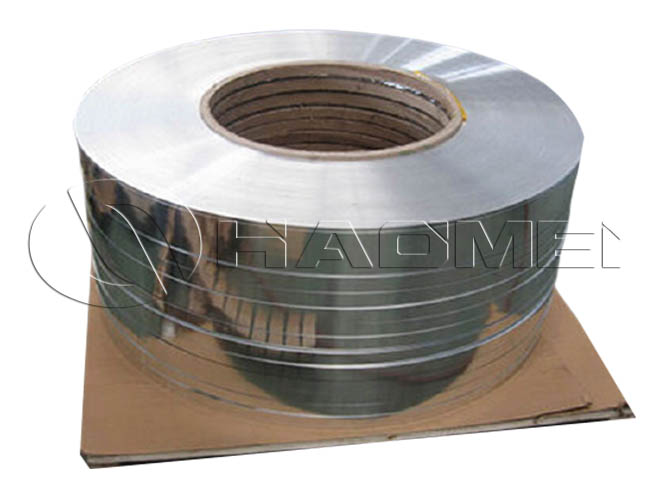
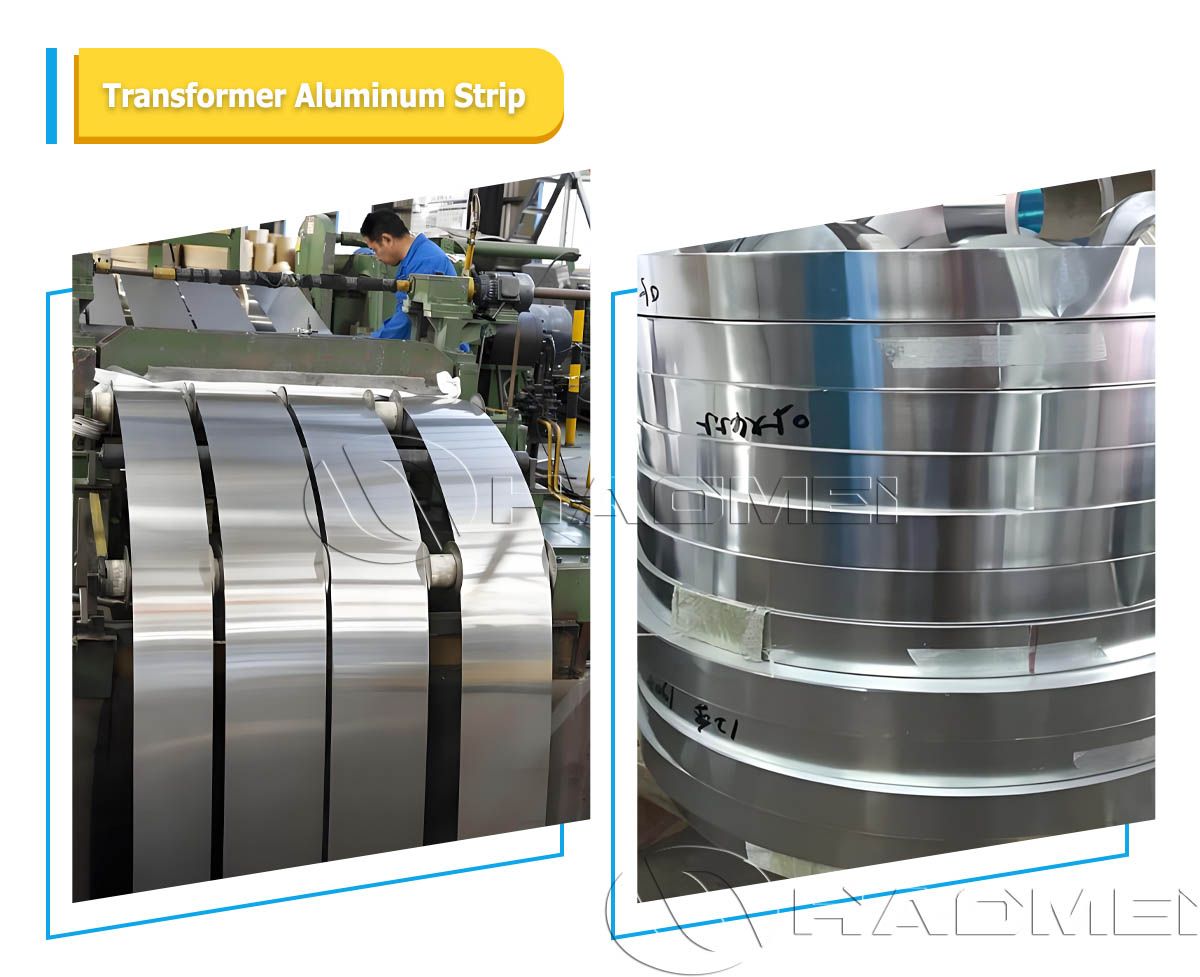
Transformer aluminum strip winding is one of the most important materials used in transformer winding manufacturing, and it directly affects the quality of the transformer. First, let us understand what a transformer is. A transformer consists of four parts: winding, iron core, oil tank, and insulating bushing. The main components are the winding and the iron core, also known as the transformer body. The winding is the electrical circuit of the transformer, while the iron core is the magnetic circuit. Together, they form the electromagnetic part of the transformer.
Among many aluminum alloy grades, 1050, 1060, 1070, and 1350 aluminum strips are widely used in transformer winding manufacturing. Different grades vary in purity, conductivity, and mechanical properties, so proper material selection is very important.
Unlike ordinary aluminum strips, transformer aluminum strips have extremely strict requirements for surface quality, electrical conductivity, burr control, and flatness. This is because during the winding process, burrs or scratches on the aluminum strip surface may easily puncture the interlayer insulation material, causing turn-to-turn short circuits and affecting the safe operation of the transformer.
Common Types of Aluminum Strip for Transformers
1050 transformer aluminum strip
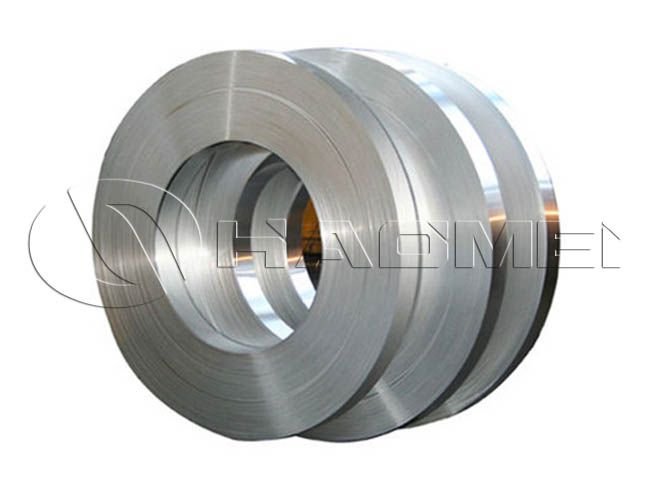
1050 aluminum strip offers exceptional cost-effectiveness and is utilized in dry-type transformer windings.
Temper: O
Aluminum purity: >=99.5%
Conductivity: 61.0% IACS
Applications: Variable transformers, such as low or high voltage transformer windings.
1060 transformer aluminum strip
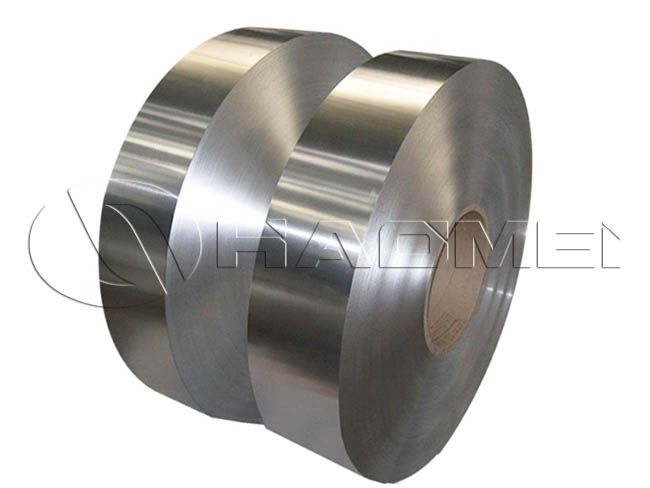
1060 aluminum has an aluminum content exceeding 99.6%, offering a balance between electrical conductivity and processing performance.
Temper: O
Aluminum purity: >=99.6%
Conductivity: 61.5% IACS
Applications: Low or high voltage transformer windings, high-frequency transformers, step-up or step-down transformers.
1070 transformer aluminum strip
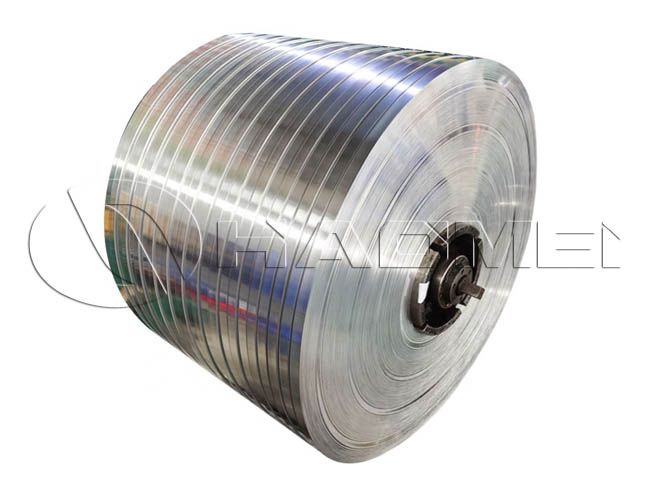
With an aluminum content of over 99.7%, 1070 transformers are suitable for high-end transformers with stringent conductivity requirements.
Temper: O
Aluminum purity: >=99.7%
Conductivity: 62.7% IACS
Applications: High-frequency transformers, power transformers, distribution transformers.
1350 transformer aluminum strip
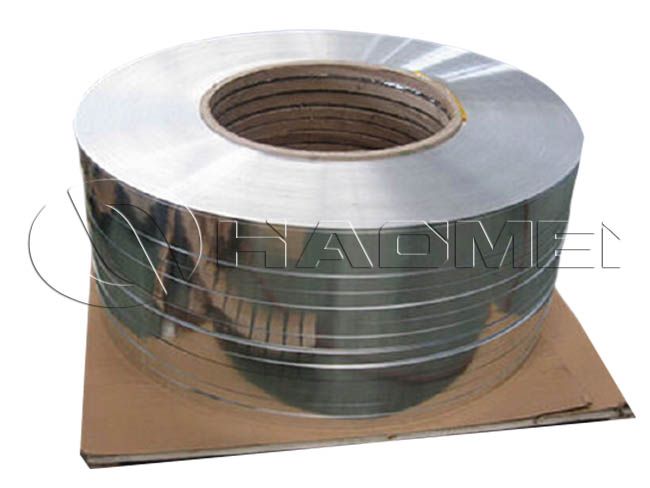
The 1350 aluminum alloy ranks among the leaders in electrical conductivity within the 1-series aluminum strip family, making it suitable for applications with strict limitations on winding losses.
Temper: O
Aluminum purity: >=99.5%
Conductivity: 61.8% IACS
Applications: High-frequency transformers, distribution transformers, ultra-high-voltage transformers, and large power transformers.
Product Specifications
| Item | Specification |
| Product Name | Aluminum Strip for Transformer Winding |
| Alloy | 1050, 1060, 1070, 1350 |
| Temper | O |
| Thickness | 0.2 mm – 3.5 mm |
| Width | 10 mm – 1600 mm |
| Length | 1000 mm – 16000 mm |
| Edge | Slit edge / Round edge |
| Quantity Tolerance | ±10% |
| Paper Core Inner Diameter | Ø150 mm, Ø300 mm, Ø400 mm, Ø500 mm paper core; special inner diameter cores and coreless packaging available |
| Special Surface Requirement | Smooth surface, free from scratches and impurities |
| Conductivity | 1050 O aluminum winding strip: guaranteed above 60% IACS 1060 O aluminum winding strip: guaranteed above 61.5% IACS 1070 O aluminum winding strip: guaranteed above 62.7% IACS 1350 O aluminum winding strip: guaranteed above 62% IACS |
| Application | Transformer winding |
| Packaging | Wooden pallet / Wooden case |
| Payment Terms | 30% T/T deposit and 70% balance before shipment; 100% L/C at sight |
| Delivery Time | 25–35 working days |
| MOQ | 1-5 tons |
| Shipping Port | Qingdao / Ningbo Port |
| Samples | Aluminum strip samples available |
Chemical Composition of Aluminum Strip for Transformer Windings (%)
| Chemical Composition of 1050 O Aluminum Strip for Transformer Winding (%) | |||||||||
| Alloy | Al | Si | Fe | Mg | Zn | Mn | Ti | Cu | V |
| 1050 | ≥99.5 | 0.0431 | 0.203 | 0.0013 | 0.0093 | 0.0104 | 0.02 | 0.0022 | 0.0039 |
| Chemical Composition of 1060 O Aluminum Strip for Transformer Winding (%) | |||||||||
| Alloy | Al | Si | Fe | Mg | Zn | Mn | Ti | Cu | V |
| 1060 | ≥99.6 | 0.0431 | 0.203 | 0.0013 | 0.0093 | 0.0104 | 0.02 | 0.0022 | 0.0039 |
| Chemical Composition of 1070 O Aluminum Strip for Transformer Winding (%) | |||||||||
| Alloy | Al | Si | Fe | Mg | Zn | Mn | Ti | Cu | V |
| 1070 | ≥99.7 | 0.0431 | 0.203 | 0.0013 | 0.0093 | 0.0104 | 0.02 | 0.0022 | 0.0039 |
| Chemical Composition of 1350 O Aluminum Strip for Transformer Winding (%) | |||||||||
| Alloy | Al | Si | Fe | Mg | Zn | Mn | Ti | Cu | V |
| 1350 | ≥99.5 | 0.0431 | 0.203 | 0.0013 | 0.0093 | 0.0104 | 0.02 | 0.0022 | 0.0039 |
Why Use Aluminum Strip for Transformer Windings?
1. Significant Lightweight Advantage
The density of aluminum is about one-third that of copper. Under design conditions that meet the same conductivity requirements, aluminum strip can significantly reduce the overall weight of the transformer. This is especially important for large transformers and helps reduce transportation and installation costs.
2. Obvious Cost Advantage
Aluminum resources are abundant and supply is stable. Its market price is usually much lower than that of copper. Using aluminum strip in transformer manufacturing can effectively reduce raw material costs while meeting performance requirements. This cost advantage is especially significant in mass production and distribution equipment applications, helping improve product competitiveness in the market.
3. Excellent Electrical Conductivity
Although the conductivity of aluminum per unit volume is lower than that of copper, electrical performance comparable to copper conductors can be achieved by reasonably increasing the cross-sectional area. The 1050, 1060, 1070, and 1350 series aluminum strips all have high conductivity. Among them, 1350 is an electrical-grade aluminum, and its conductivity is close to the upper limit of industrial pure aluminum. It can fully meet the operating requirements of medium- and low-voltage transformers, as well as some high-voltage transformers, while effectively controlling power loss.
4. Excellent Heat Dissipation Performance
Aluminum has good thermal conductivity. In practical designs, aluminum conductors usually have a larger cross-sectional area, which gives the winding better heat dissipation capability during operation. Good heat dissipation helps reduce winding hot-spot temperature, slow down insulation aging, and improve transformer operating stability and service life.
5. Good Processing and Forming Performance
Pure aluminum materials have excellent ductility and plasticity, meeting the processing requirements of complex winding structures. During production, aluminum strip is easy to roll, slit, and wind. It is suitable for automated continuous production lines, while reducing processing difficulty and material loss and improving production efficiency and product consistency.
6. Oxidation Resistance and Corrosion Resistance
Aluminum naturally forms a dense oxide film in the air. This protective film can effectively prevent further oxidation and corrosion. During long-term transformer operation, this property helps improve the stability of winding materials under different environmental conditions, especially in environments with large humidity fluctuations.
7. Stable Electromagnetic Performance
Under long-term energization and thermal cycling conditions, aluminum exhibits good electromagnetic stability. It is not prone to structural problems caused by thermal expansion or stress changes. This stability is important for ensuring long-term safe transformer operation and also reduces maintenance costs and failure risks.
Application Fields
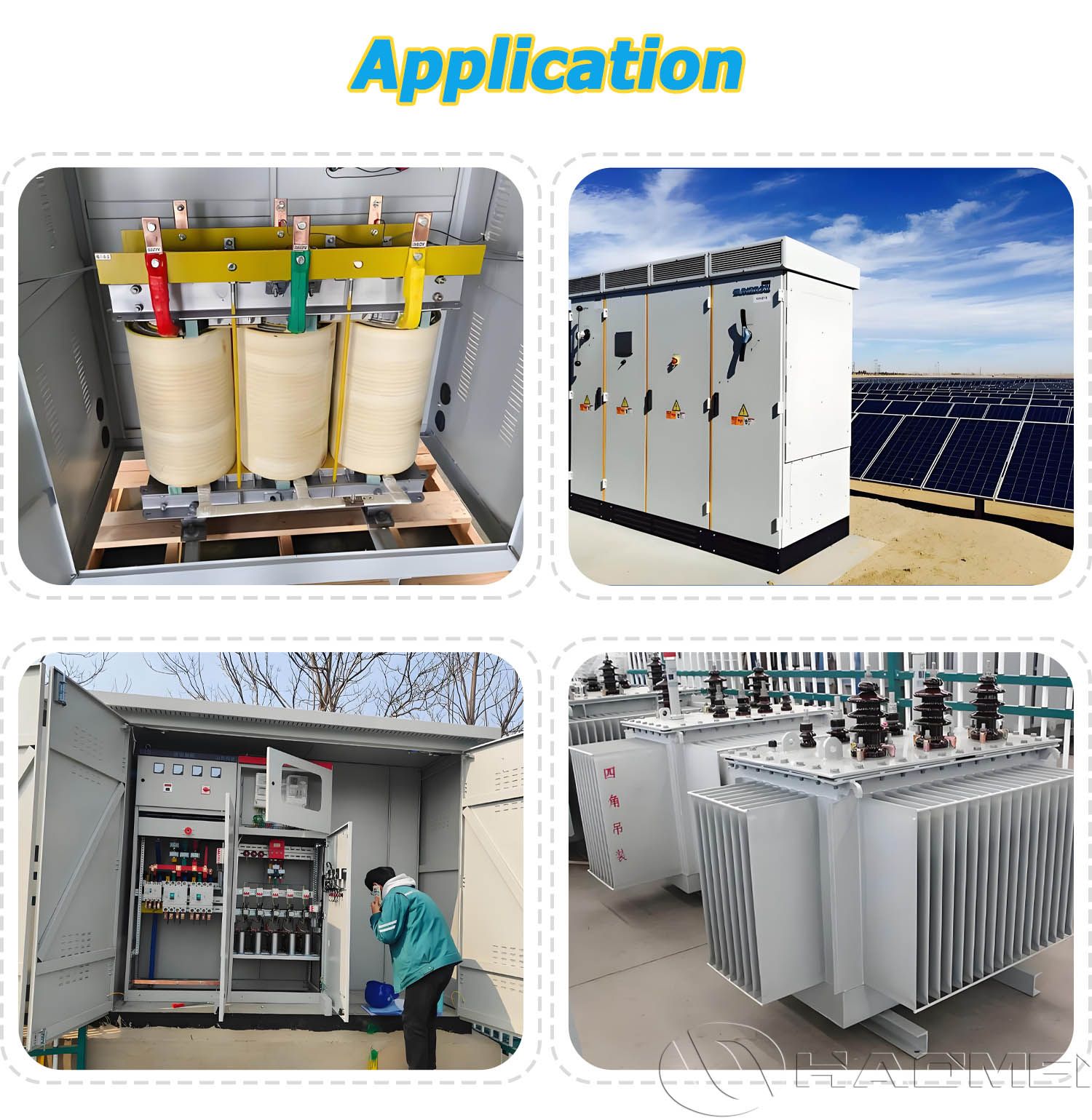
Dry-Type Transformers
Widely used in urban power grids, subways, and data centers. Aluminum strip is a core material for low-voltage windings.
Oil-Immersed Transformers
Used in industrial zones and distribution networks in remote areas.
Special Reactors
Used in power compensation and filtering equipment.
Comparison Between Aluminum Strip and Copper Strip Windings
In transformer manufacturing, replacing copper with aluminum has been a long-standing technical trend. Both materials have their own advantages, and selection should be based on specific application scenarios.
1. Cost Advantage
Cost advantage is one of the most prominent features of aluminum strip. The raw material price of aluminum is much lower than that of copper. Replacing copper strip with aluminum strip can reduce transformer winding material costs by 15%–30%. This advantage is especially obvious when copper prices remain high.
2. Weight Advantage
The density of aluminum is 2.7 g/cm³, while the density of copper is 8.9 g/cm³. For the same electrical conductivity capability, the weight of an aluminum winding is only about half that of a copper winding. Lightweight design makes transformers easier to transport, lift, and install, which is particularly important for substations inside high-rise buildings.
3. Volume and Structure
Aluminum foil-type windings have a relatively compact structure, which can reduce the transformer core window size, thereby reducing the overall transformer volume and silicon steel sheet consumption. At the same time, foil-type windings have uniform interlayer capacitance distribution and better lightning impulse resistance than wire-wound structures.
4. Connection Reliability
Connection reliability is an important aspect that requires special attention in aluminum strip windings. Due to the potential difference between aluminum and copper, improper connection treatment may lead to increased contact resistance, overheating, or even oxidation. Therefore, when aluminum strip leads are connected to copper busbars, copper-aluminum transition joints or tin/nickel surface treatment are usually used to ensure reliable connection.
Key Quality Control Indicators
Surface Quality
The surface must be smooth and free from scratches, metallic or non-metallic inclusions, oil stains, and local deformation. Any surface defect may become a weak point in insulation.
Dimensional Tolerance
Dimensional tolerances must be strictly controlled. Thickness tolerance is usually within ±0.01–±0.03 mm, depending on the thickness range, while width tolerance is usually within ±0.1–±0.2 mm. Excessive thickness deviation may result in inconsistent conductor cross-sectional area even with the same number of winding turns, affecting electrical performance.
Resistivity
Resistivity is the core parameter for measuring electrical conductivity. It is generally required to be no more than 0.02825 Ω·mm²/m at 20°C.
Mechanical Properties
The tensile strength is required to be within 60–95 N/mm², and the elongation should not be less than 25%. These properties ensure that the aluminum strip will not break or stretch excessively during winding.
How to Choose the Right Aluminum Strip for Transformers?
1. Prioritize Energy Efficiency Requirements
If high efficiency, energy saving, and low loss are required, such as in new energy transformers or ultra-high-voltage transformers, 1070 aluminum strip is preferred. If there are no special energy efficiency requirements and high cost performance is desired, 1050 or 1060 aluminum strip can be selected.
2. Consider the Transformer Type
For dry-type transformers and oil-immersed transformers, 1060 aluminum strip is preferred due to its comprehensive adaptability. For low-voltage distribution transformers, 1050 aluminum strip can be selected for optimal cost. For export-oriented and precision transformers, 1350 aluminum strip is recommended for compliance with relevant standards.
3. Consider the Working Environment
If the transformer operates in high-temperature, high-humidity, or corrosive environments, 1070 or 1060 aluminum strip is preferred because of better corrosion resistance and thermal conductivity. For conventional indoor environments, 1050 aluminum strip can meet the requirements.
4. Balance Cost and Performance
If the budget is limited and there are no high-end energy efficiency requirements, 1050 aluminum strip is the most economical choice. If the budget is sufficient and performance improvement is desired, 1060 or 1070 aluminum strip can be selected. If international standard compliance is required, 1350 aluminum strip is the direct choice.