
Photovoltaic Cable
With the transformation of the global energy structure, photovoltaic power generation has become a major force in renewable energy. As the scale of photovoltaic power stations continues to expand and application scenarios become increasingly diversified, material selection and technological upgrades in every part of the system have become key factors in improving power generation efficiency and reducing operation and maintenance costs.
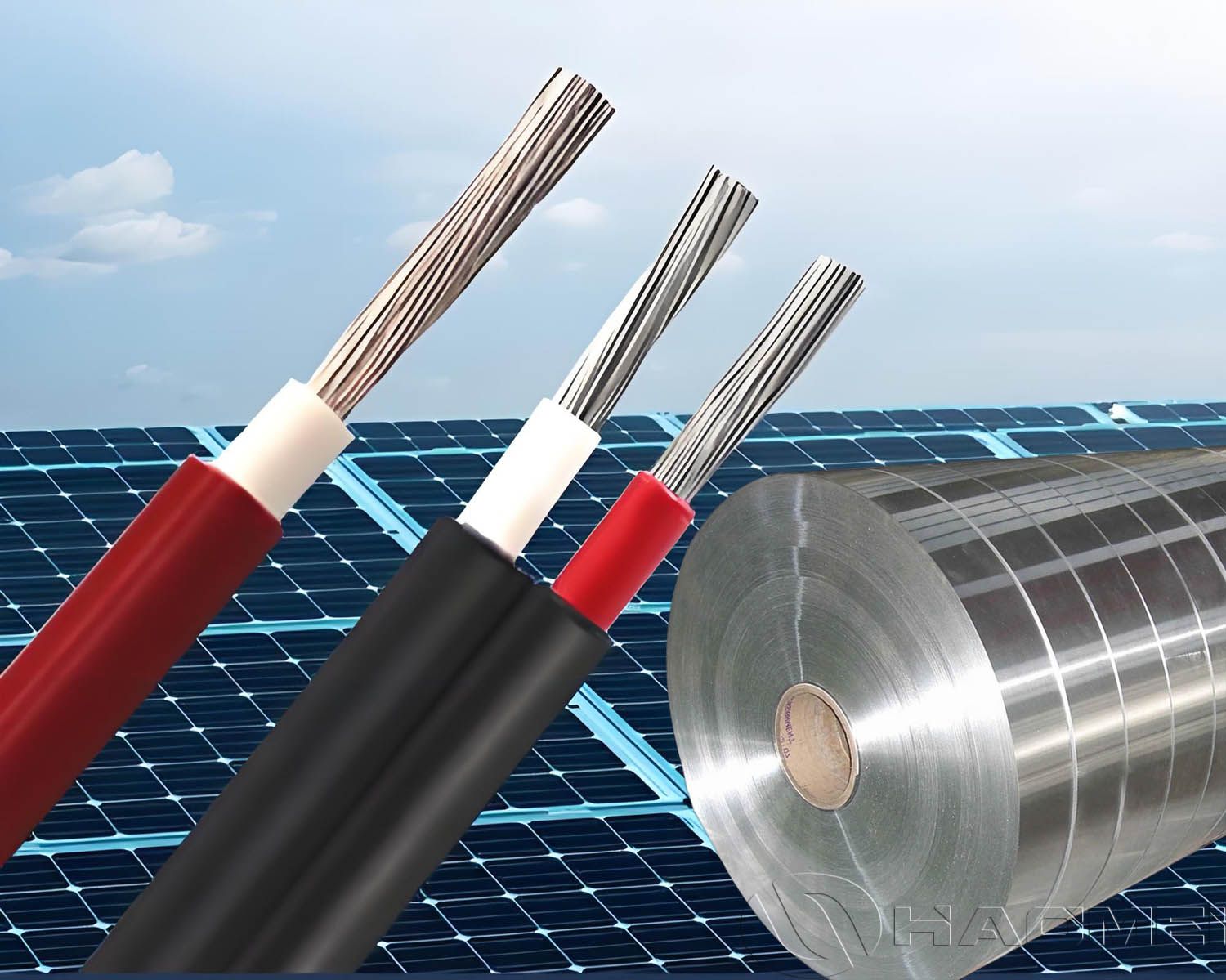
The aluminum alloy strip launched by HAOMEI Aluminum is becoming an important material in the photovoltaic cable industry thanks to its comprehensive advantages, including lightweight performance, corrosion resistance and controllable cost. From conductors to shielding layers, from armoring layers to protective binding tapes, aluminum strip products are playing an increasingly important role in photovoltaic cable applications.
What Is Aluminum Strip for Photovoltaic Cables?
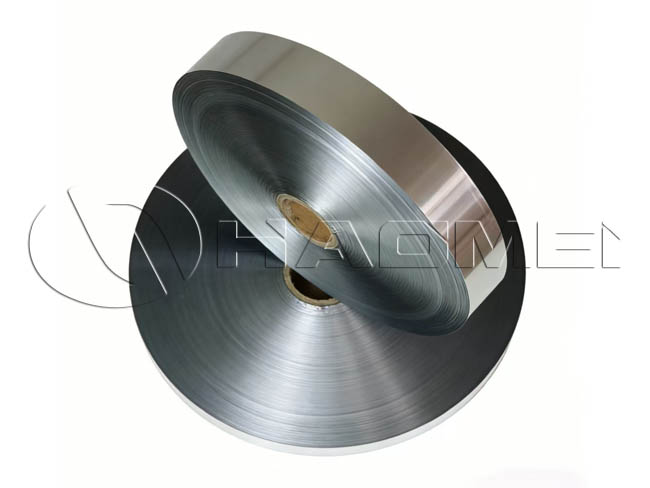
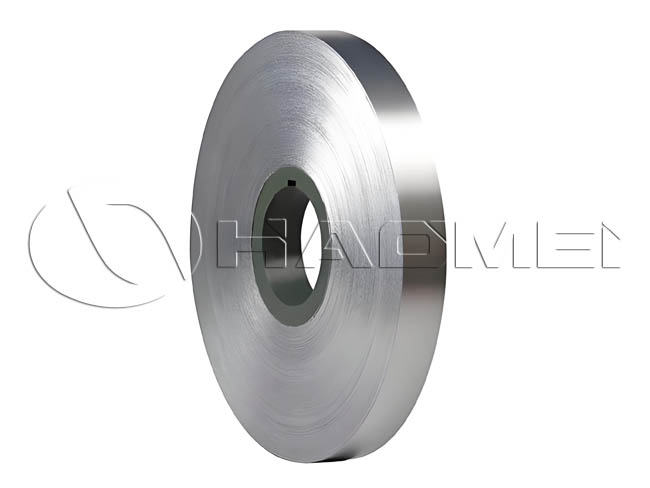
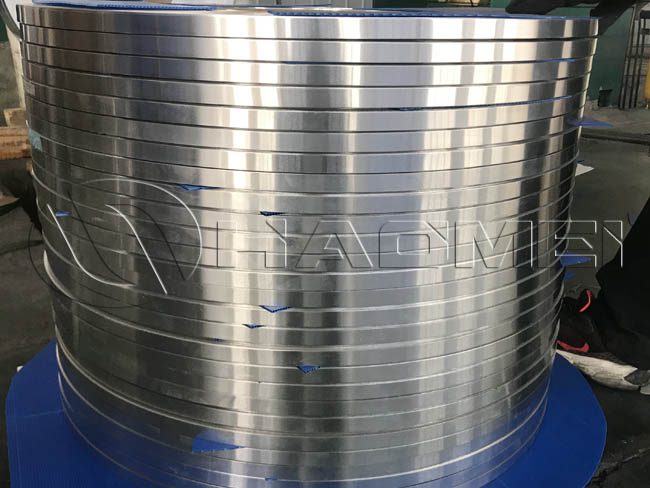
Aluminum strip for photovoltaic cables usually refers to precision-rolled industrial pure aluminum or aluminum alloy thin strip, with a thickness generally ranging from 0.15 mm to 0.5 mm. In the cable structure, it is usually wrapped outside the insulated core wire by longitudinal wrapping or helical wrapping, forming a metallic barrier.
To enhance bonding performance, the mainstream product currently used is aluminum-plastic composite tape, which means a layer of polyethylene, PE, or copolymer film is coated on the surface of aluminum foil.
Aluminum alloy cables, with their excellent electrical performance, safety performance, mechanical properties and lower application cost compared with copper-core cables, are expected to replace copper-core cables in large-scale photovoltaic power station applications in both low-voltage DC and high-voltage AC fields. Under the condition of meeting the same electrical performance requirements, aluminum alloy cables cost less than copper-core cables. As the amount of cable used increases, the cost reduction effect becomes more significant.
Product Forms and Application Scenarios of Aluminum Strip for Photovoltaic Cables
1. Shielding Layer
Aluminum-plastic composite tape performs the dual functions of shielding and waterproofing. In the structure of photovoltaic cables, aluminum-plastic composite tape is usually longitudinally wrapped outside the insulation layer. It works together with water-blocking yarn, water-blocking tape and other filling materials to form a reliable electromagnetic shielding layer and radial waterproof barrier.
This is especially important for photovoltaic cables laid in humid environments or areas with strong electromagnetic interference. It can effectively ensure stable signal transmission and long-term operational safety of the cable.
At present, pure aluminum strips such as 1050, 1060 and 1100 are the mainstream choice for shielding layers in photovoltaic cables due to their excellent electrical conductivity and ductility.
2. Armoring Layer
Aluminum alloy armoring strip is mainly used in scenarios requiring mechanical protection. Aluminum alloy strips represented by grades such as 5052, 5154 and 5754 can be formed into an interlocked armoring structure after processing, providing excellent compression resistance and impact resistance for cables.
This type of armored cable is particularly suitable for direct burial, rocky geological conditions, or desert photovoltaic power stations where there is a risk of animal bites. While ensuring cable safety, it can reduce weight by more than 40% compared with traditional steel tape armoring.
Core Advantages of Aluminum Strip for Photovoltaic Cables
1.Corrosion Resistance
The dense oxide film naturally formed on the surface of aluminum alloy gives it excellent corrosion resistance, allowing it to withstand harsh conditions such as ultraviolet radiation, drastic temperature changes and salt spray erosion.
2.Electromagnetic Shielding and Anti-Interference
As an excellent metallic conductor, aluminum strip can form an effective shielding layer to absorb and offset external electromagnetic field interference. It also reduces the influence of current fluctuations inside the cable on surrounding weak-current control signals.
3.Significant Cost Advantage
Compared with copper cables, aluminum strip materials are lower in price and can significantly reduce the construction cost of photovoltaic systems.
4.Lightweight and Easy to Install
The density of aluminum alloy is only about one-third that of steel. Its lightweight characteristics reduce logistics burdens and make construction and installation easier.
5.Excellent Creep Resistance
Different from traditional pure aluminum, aluminum alloy materials have stronger tensile strength and creep resistance. They can stabilize the physical and mechanical properties of cables and ensure long-term operational reliability.
6.High Strength and Toughness
The tensile strength of aluminum alloy conductors is higher than that of ordinary aluminum wires, while they also have good bending performance. This allows them to adapt to complex installation environments and long-distance laying.
7.Recyclable Green Material
Aluminum alloy has a high recycling rate and recycling value, which conforms to the green and sustainable development philosophy of the photovoltaic industry.
Key Quality Control Points for Aluminum Strip Products
1. Raw Material Control
High-purity aluminum ingots or aluminum alloy ingots are selected as raw materials. The impurity content is strictly controlled to ensure the purity and stable performance of the aluminum strip.
For recycled aluminum raw materials, the mixing ratio and quality must be strictly controlled to prevent impurities from affecting the electrical conductivity and corrosion resistance of the aluminum strip.
2. Production Process Control
The production process of aluminum strip includes melting and casting, rolling, annealing, slitting and other steps. The process parameters of each step must be strictly controlled.
During rolling, the thickness uniformity of the aluminum strip must be controlled to avoid uneven thickness. During annealing, temperature and time must be controlled to ensure that the hardness and ductility of the aluminum strip meet the requirements. During slitting, the cut edges must be smooth and burr-free to avoid scratching the cable insulation layer.
3. Finished Product Inspection Control
Finished aluminum strips must undergo strict inspection, including:
Dimensional inspection: thickness, width and flatness
Performance inspection: electrical conductivity, tensile strength, ductility and corrosion resistance
Appearance inspection: surface smoothness, no oil stains, no scratches and no oxidation spots
Non-conforming products are strictly prohibited from leaving the factory. At the same time, product quality certificates and inspection reports must be provided to ensure product quality traceability.
Future Development Trends
In the future, aluminum strip for photovoltaic cables will develop further toward high performance, customization, green low-carbon production and industrial collaboration.
By developing new high-strength and high-conductivity alloys and combining them with scenario-specific customization, aluminum strip products will achieve better adaptability to harsh environments. At the same time, the application of recycled aluminum will help realize low-carbon performance throughout the entire product life cycle.
Ultimately, through coordinated innovation across the entire industry chain and the improvement of relevant standards, a more competitive photovoltaic power transmission ecosystem will be established.
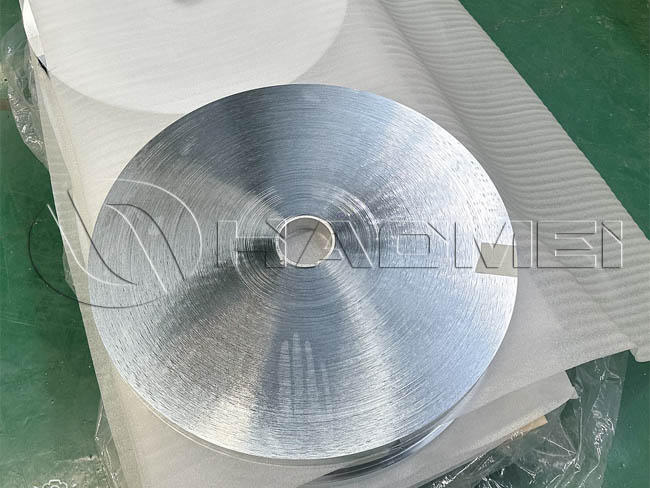
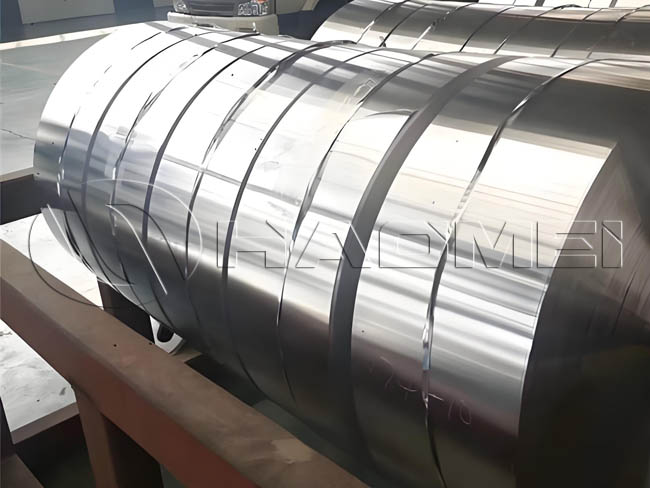
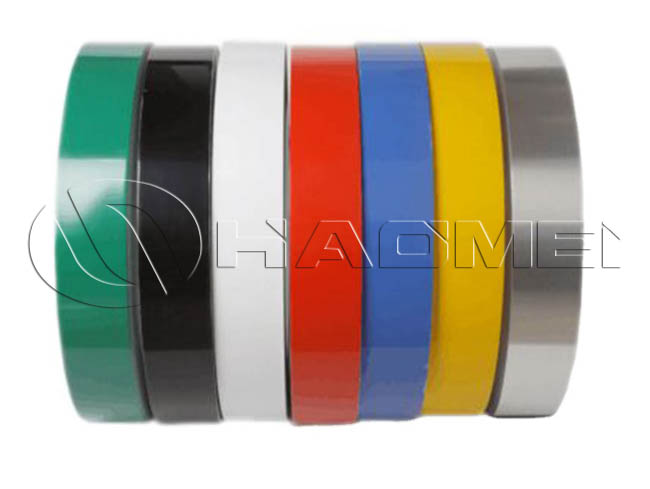
The aluminum strip for photovoltaic cables produced by HAOMEI Aluminum is a deep-processed aluminum product and can be regarded as a "narrow-width extension" of aluminum sheet. Its width, thickness and hardness can be flexibly adjusted according to the specifications of photovoltaic cables, such as single-core cables, multi-core cables and different cross-sectional sizes.
The width is usually between 10 mm and 1220 mm, while the thickness covers multiple specifications, including ultra-thin gauges of 0.1 mm to 0.2 mm and conventional gauges of 0.3 mm to 0.8 mm. It can meet the wrapping and covering requirements of different types of photovoltaic cables.
Our products are exported to more than 40 countries and regions worldwide. We can undertake large orders from 3 to 2000 tons, provide samples for testing, and offer direct factory sales with competitive prices. Customers are welcome to visit our factory.
Tags
- 5052 H32 Aluminum Alloy Strip for Armored Cables
- Interlocking Armored Aluminum Strip for Cable Outer Layer Protection
- 0.5 mm Aluminum Strip for Armored Cables
- Price per Ton of Aluminum Alloy Strip for Interlocked Cable Armor
- Lubricated Aluminum Strip for Interlocked Armored Cables
- 5000 Series Aluminum Alloy Strip for Interlocked Cable Armor