 Contact Us
Development Background
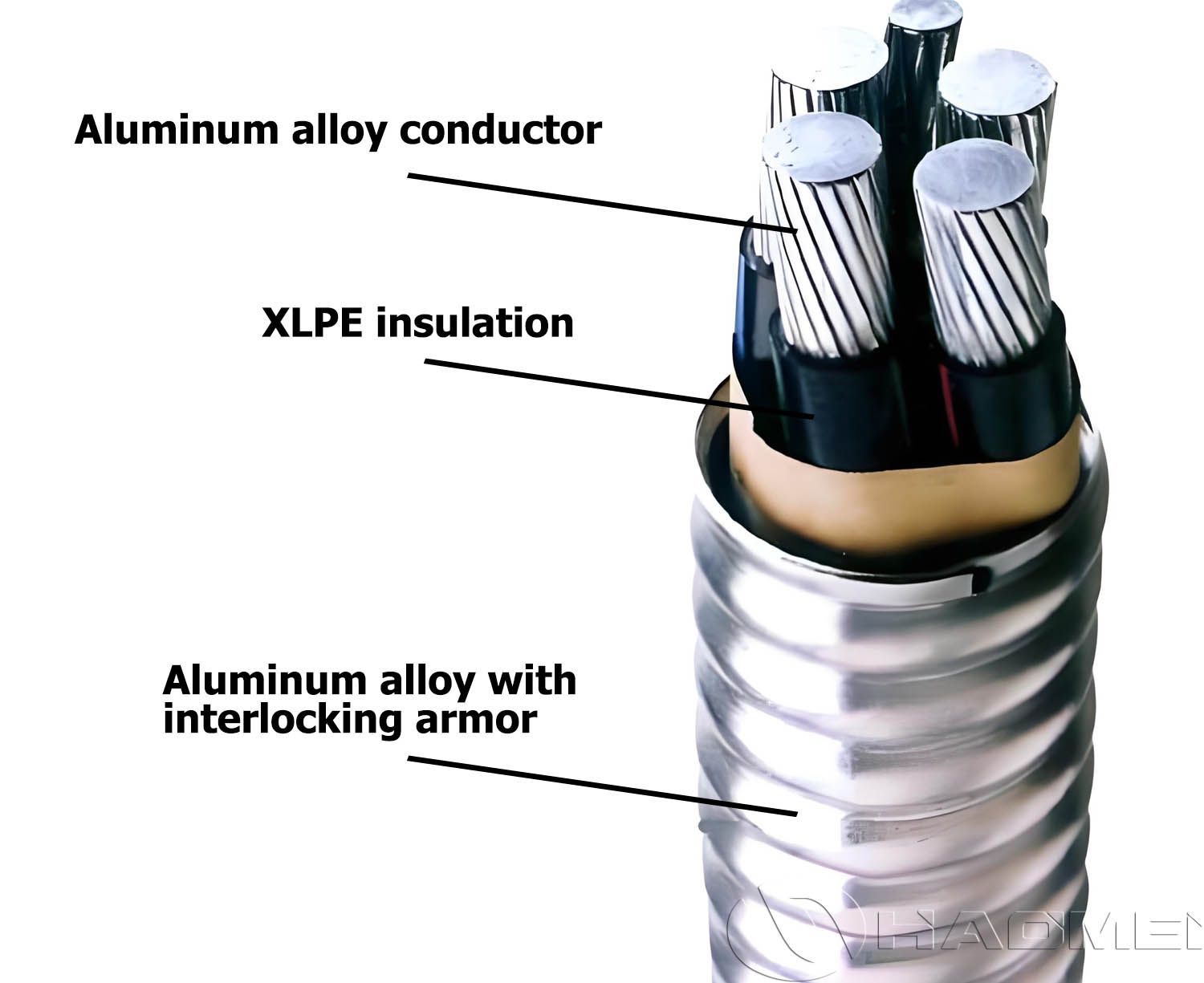
Interlocked armor is formed by rolling a 5000 series aluminum alloy strip such as 5052, 5154, or 5154A and then interlocking it into an "S" shape. Interlocked armor is a common outer protective structure for non-metallic sheathed cables and is widely used in various types of cables.
Interlocked armored cables have been used for more than 40 years in developed Western countries such as the United States and Canada. They are especially used in fire-resistant interlocked armored cables, which are designed for strict fire-resistant environments. Such applications have clear requirements for the electrical performance, fire resistance, and safety of intermediate joints in interlocked armored cables.
Understanding the Function of the Interlocked Armor Layer
Aluminum alloy interlocked armor technology uses special equipment to spirally wrap and interlock aluminum strips in a "Z" or "S" shape, forming a metal tube that combines both rigidity and flexibility. This structure gives the cable three core advantages:
High Compression and Impact Resistance
The unique interlocked structure can effectively resist external mechanical damage and protect the insulated core from damage under crushing or impact.
Excellent Bending Performance
Compared with steel tape, the bending radius of interlocked armored cable can be as small as 7 times the cable outer diameter. This not only makes installation easier in narrow cable trays or pipelines, but also greatly reduces construction difficulty.
Strong Fireproof Barrier
In the event of a fire, this dense metal armor layer can effectively isolate flames and prevent the internal insulation layer from melting or falling off due to high temperature, ensuring continuous power supply.
Aluminum Alloy Strip for Interlocked Armored Cable: 5052 and 5154
5052 Aluminum Strip
5052 aluminum strip is a widely used aluminum-magnesium alloy material with good corrosion resistance, weldability, and formability. Its strength is higher than that of pure aluminum, and it also offers good plasticity and processing stability. It is suitable for use as cable armor strip, pipeline insulation aluminum strip, transportation material, mechanical structural components, and more.
When used for fire-resistant cable interlocked armor, 5052 aluminum strip offers the following advantages:
Good corrosion resistance
Moderate strength
Stable bending and forming performance
Easy-to-control surface quality
Suitable for continuous mass production
Good balance between cost and performance
For most conventional fire-resistant cables and interlocked armored cables, 5052 aluminum strip is an economical and mature choice.
Characteristics of 5154 Aluminum Strip
5154 aluminum strip also belongs to the aluminum-magnesium alloy series. Compared with 5052, 5154 generally has a higher magnesium content, so it performs better in terms of strength and corrosion resistance. It is suitable for cable products that require higher armor strength, durability, and environmental resistance.
When used for fire-resistant cable interlocked armor, 5154 aluminum strip mainly offers the following advantages:
Relatively higher strength
Better corrosion resistance
Suitable for complex environments
Stable structure after forming
Stronger armor protection capability
In application scenarios such as rail transit, underground utility tunnels, petrochemical projects, coastal buildings, and humid environments, 5154 aluminum strip has excellent application value.
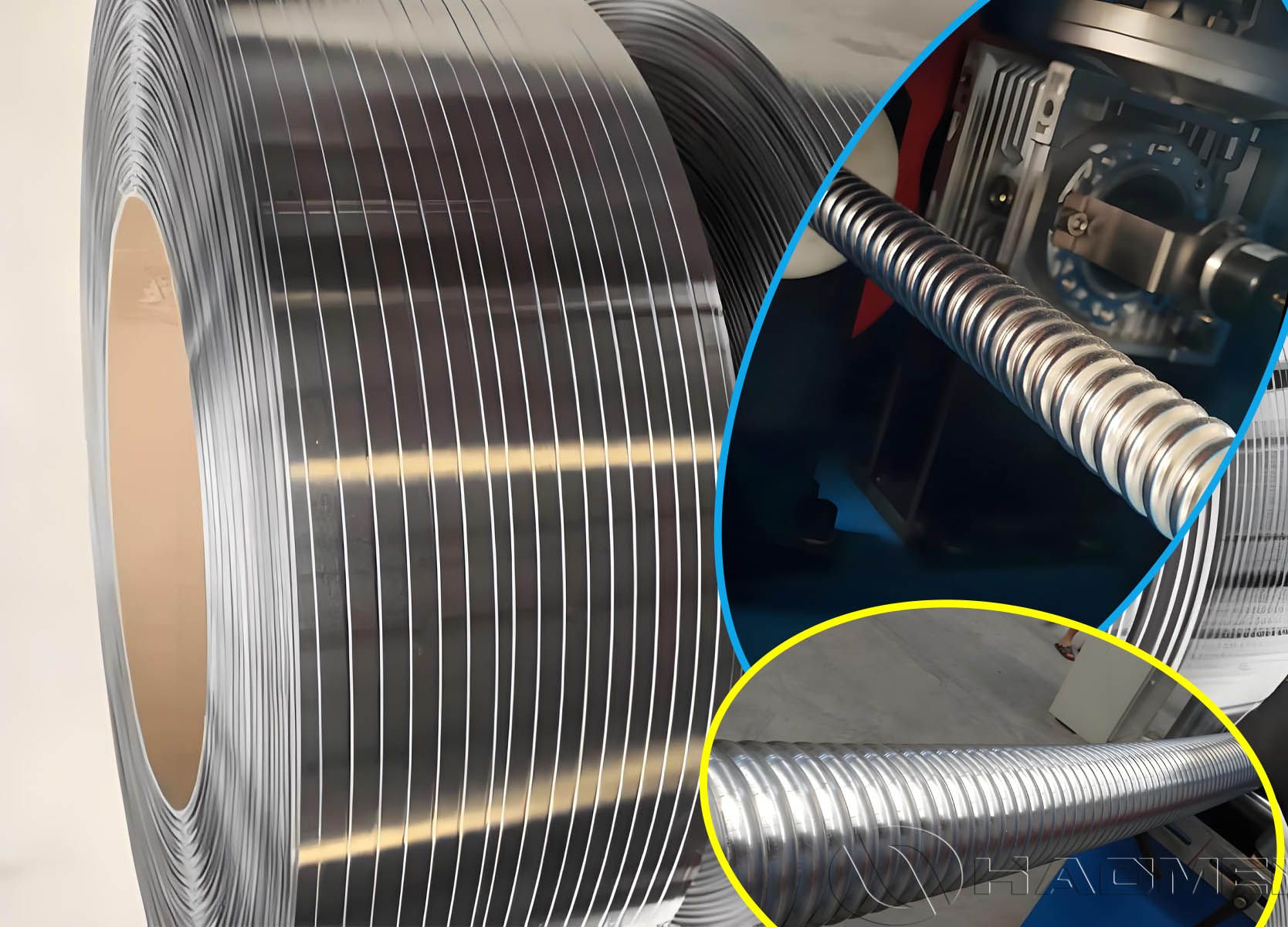
Why Are 5052/5154 Aluminum Strips Commonly Used for Fire-Resistant Cable Interlocked Armor?
1. Electrical Conductivity
Unlike steel tape, 5052/5154 aluminum alloy strips have good electrical conductivity. In the event of a short-circuit fault, they can quickly conduct fault current to the ground, protecting personnel and equipment safety.
2. Corrosion Resistance
The magnesium element in 5052 and 5154 alloys gives them much better corrosion resistance than pure aluminum. In neutral salt spray tests, high-quality aluminum alloy strips show extremely low surface corrosion rates. They not only have a long service life themselves, but also effectively protect internal cable cores from external acid, alkali, and salt corrosion.
3. Lightweight
Compared with steel tape, aluminum strip has a lower density and lighter weight. Using 5052 or 5154 aluminum strip as cable interlocked armor material can significantly reduce the overall weight of the cable and ease transportation, installation, and laying.
4. Formability
5052/5154 aluminum strips are not prone to cracking during processing, and their edge stability is good. They are suitable for continuous high-speed interlocked armor production and can reduce problems such as strip breakage, edge cracking, and poor forming.
5. Strength and Ductility
5052 and 5154 aluminum strips provide a good balance between strength and ductility, meeting the dual requirements of mechanical performance and processing performance for interlocked armor layers.
6. Smooth Appearance
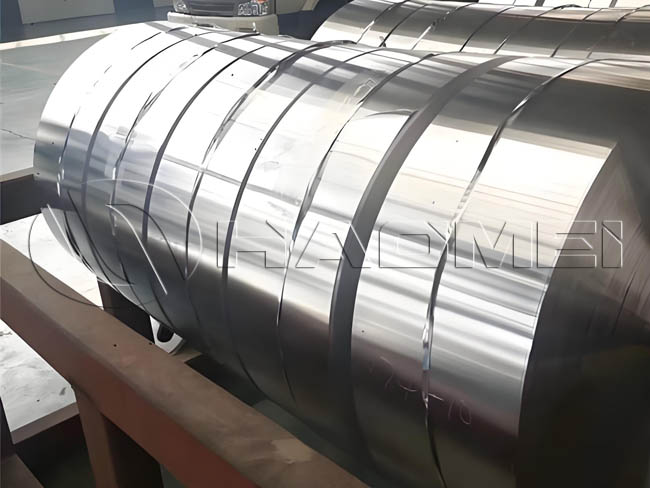
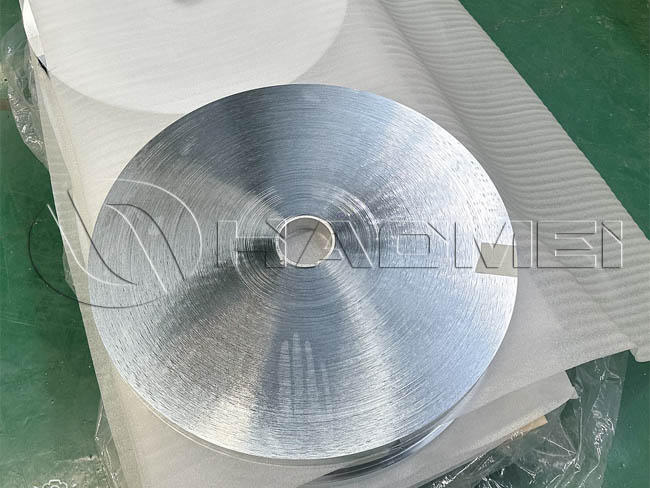
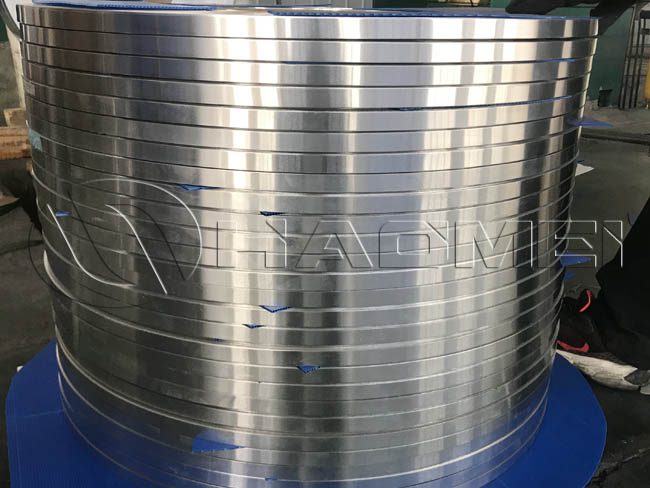
High-quality aluminum strips produced by HAOMEI Aluminum have flat and clean surfaces, with no obvious oil stains, scratches, indentations, oxidation spots, or other defects.
7. Non-Magnetic Property
5052/5154 aluminum alloys are non-magnetic materials, completely eliminating hysteresis loss.
Product Technical Parameters
| Item | Specification |
| Alloy Grade | 5052, 5154 |
| Temper | O, H12, H14, H16, H18, etc., customizable |
| Thickness | 0.20 mm–1.00 mm |
| Width | 10 mm–80 mm |
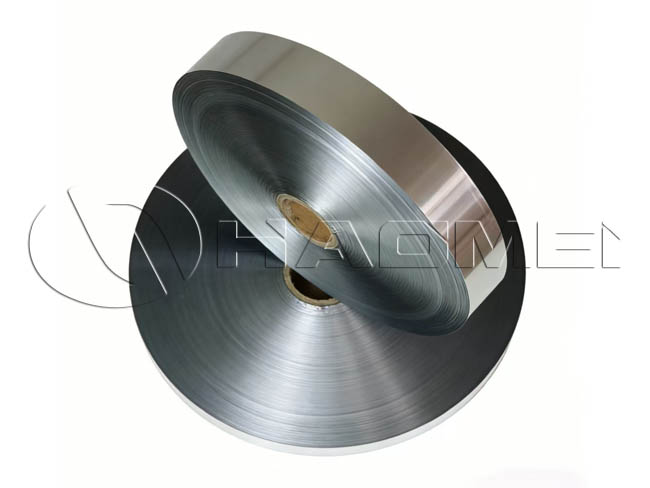
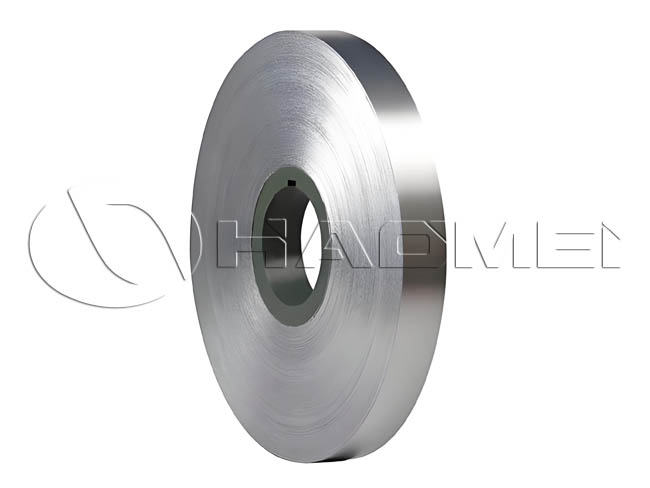
| Inner Diameter | 150 mm, 300 mm, 400 mm, 500 mm, etc. |
| Outer Diameter | Customized according to customer equipment and transportation requirements |
| Surface Condition | Bright, flat, clean, without obvious oil stains, black spots, indentations, or scratches |
| Edge Quality | Neatly slit, without obvious burrs, cracked edges, notches, or curled edges |
| Processing Method | Precision slitting, fixed-length recoiling, annealing treatment, protective packaging |
| Main Applications | Fire-resistant cable interlocked armor, flexible armored cable, special cable metal protective layer |
| MOQ | 1–3 tons |
Mechanical Properties
| Property | 5052 Aluminum Strip | 5154 Aluminum Strip |
| Tensile Strength (MPa) | 180–220 | 190–240 |
| Elongation (%) | 10–20 | 8–15 |
| Density (g/cm³) | 2.68 | 2.68 |
Common Specification Reference
Different types of fire-resistant cables have different requirements for aluminum strip thickness and width. The following are common specifications for reference:
| Thickness | Width | Application Direction |
| 0.20 mm–0.30 mm | 10 mm–25 mm | Small-size cables, light-duty interlocked armored cables |
| 0.30 mm–0.50 mm | 15 mm–40 mm | Conventional fire-resistant cables, building interlocked armored cables |
| 0.50 mm–0.80 mm | 20 mm–60 mm | Medium and large-size cables, cables with higher mechanical protection requirements |
| 0.80 mm–1.00 mm | 30 mm–80 mm | Large outer-diameter cables, industrial cables, and cables for complex environments |
Wide Range of Applications
Thanks to the many advantages of 5052/5154 aluminum alloy strips for interlocked armored cables, this material has been widely used in multiple key fields:
Key Construction Projects
High-rise residential buildings, office buildings, shopping malls, and other places with extremely high fire safety requirements.
New Energy Sector
Power transmission for photovoltaic power generation, wind power generation, and electric vehicle charging piles.
Industrial Manufacturing
Harsh environments with corrosive gases or liquids, such as steel, chemical, and paper-making industries.
Transportation Infrastructure
Airports, subways, high-speed railway stations, and other densely populated public places.
Role of 5052/5154 Aluminum Strip in Fire-Resistant Cables
Fire-resistant cables are designed to maintain power or signal transmission for a certain period under fire conditions. The interlocked armor layer alone does not determine the fire-resistance rating of a cable. The fire-resistant performance of a cable is usually determined by the conductor, insulation layer, fire-resistant layer, oxygen barrier layer, sheath material, and overall structure.
However, the interlocked armor layer made of 5052/5154 aluminum strip provides important external protection for fire-resistant cables, making them more reliable in actual use.
1. Protecting the Internal Fire-Resistant Structure
Fire-resistant cables usually contain mica tape, fire-resistant insulation layers, mineral insulation layers, or other fireproof structures. If the outside of the cable is impacted, compressed, or scratched, the internal fire-resistant layer may be damaged, affecting the overall cable performance. Interlocked armor aluminum alloy strip can effectively reduce this risk.
2. Improving Compression and Impact Resistance
At construction sites, cables may be affected by external forces such as trampling, dragging, and equipment collision. The metal armor layer can enhance the cable’s resistance to external mechanical damage and reduce damage during installation.
3. Enhancing Cable Bending Adaptability
The interlocked armor structure is formed by continuously locking aluminum strips together. Compared with traditional rigid metal sheaths, it has better flexibility. The cable is easier to bend, pass through pipes, and lay in cable trays, making it suitable for complex wiring layouts.
4. Improving Overall Cable Service Life
Aluminum-magnesium alloy has good environmental resistance and can reduce problems caused by corrosion and aging of the armor layer. Especially in humid underground spaces, tunnels, shafts, and similar environments, 5052/5154 aluminum strip helps cables maintain long-term stable external protection.
Product Quality Requirements
5052/5154 aluminum strips for fire-resistant cable interlocked armor must not only meet basic dimensional requirements, but also have stable processing performance. High-quality aluminum strips should generally meet the following requirements:
1. Uniform Thickness
The thickness of the aluminum strip should remain stable to avoid poor armor interlocking, insufficient local strength, or inconsistent cable outer diameter caused by uneven thickness.
2. Accurate Width
The width should meet the requirements of the armoring equipment. Excessive width deviation may cause unstable interlocking, affecting cable appearance and mechanical protection performance.
3. Flat Shape
The aluminum strip should have no obvious waves, wrinkles, warping, or other defects. Good flatness helps ensure smooth unwinding, stable forming, and higher continuous production efficiency.
4. Neat Edges
The edges should be free from obvious burrs, cracked edges, notches, and curled edges. Good edge quality can reduce production problems such as strip breakage, deviation, and sheath scratching.
5. Clean Surface
The surface should be free from serious oil stains, oxidation spots, black lines, indentations, scratches, and other defects. Stable surface quality helps improve the appearance quality of finished cables.
6. Stable Mechanical Properties
The material should have suitable strength and elongation for interlocked armor. It should be easy to bend and form continuously while ensuring that the armor layer has sufficient mechanical protection capability.
Shipping and Packaging
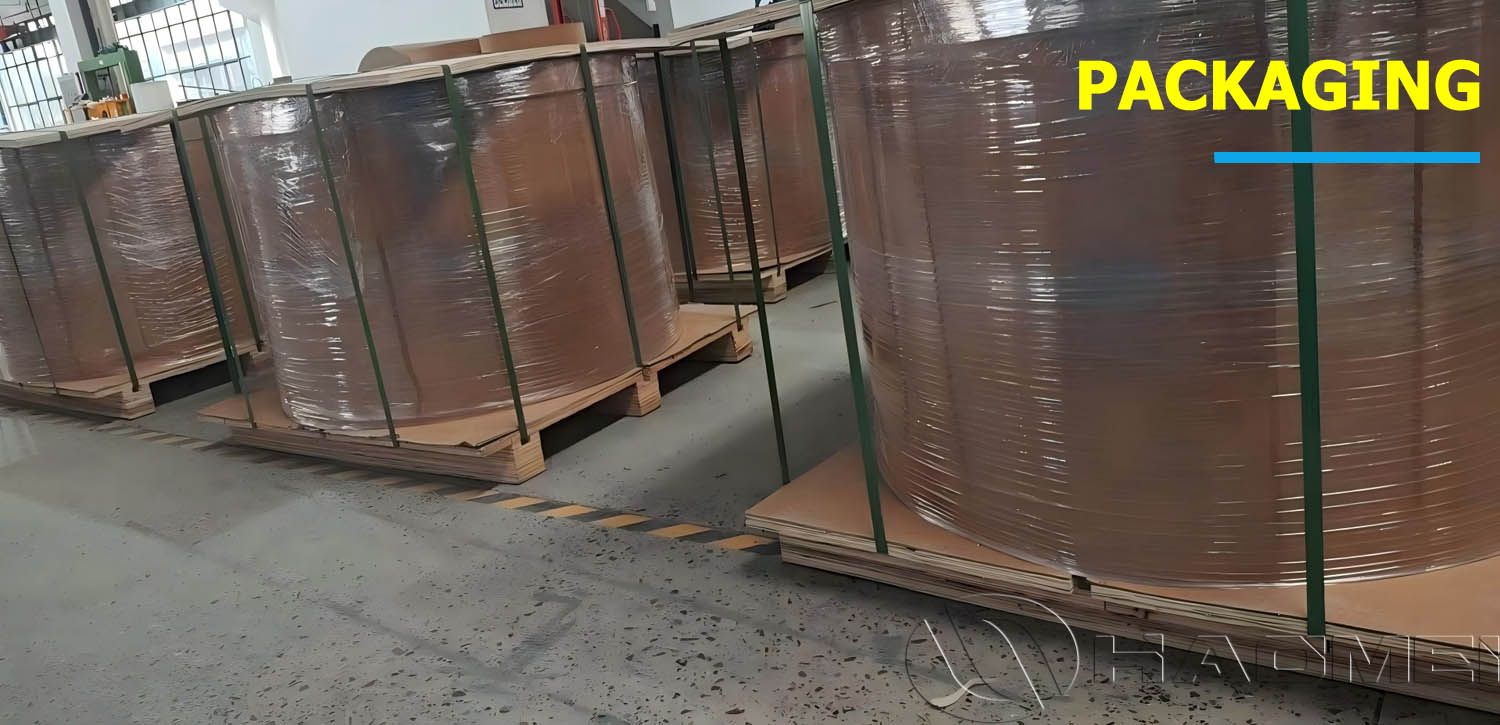
To prevent moisture, impact, edge damage, and other problems during transportation and storage, protective packaging is usually used for aluminum strips.
Packaging methods: moisture-proof paper, plastic film, wooden pallets, wooden cases, etc.
Coil protection: end-face protection, edge protection, and anti-collision protection
FAQ
Q1: Does the interlocked aluminum armor layer help reduce electromagnetic interference?
A: Aluminum alloy is a non-ferromagnetic material and does not generate magnetic loss heating commonly found in ordinary steel tape. At the same time, the interlocked metal layer forms a fully enclosed conductive layer, which provides significant electrostatic shielding and helps protect surrounding communication lines from interference.
Q2: What is the difference between 5052 aluminum strip and 5154 aluminum strip?
A: The main differences between 5052 aluminum strip and 5154 aluminum strip lie in alloy composition, strength, and corrosion resistance.
Generally, 5154 aluminum strip has a relatively higher magnesium content, so its strength and corrosion resistance are usually better than those of 5052 aluminum strip. 5052 aluminum strip, however, has the advantages of mature supply, stable processing performance, and relatively moderate cost.
Q3: What temper is commonly used for aluminum strip in fire-resistant cable interlocked armor?
A: Common tempers for fire-resistant cable interlocked armor aluminum strip include O temper and H temper. The specific temper should be selected according to the cable armoring equipment, forming process, cable outer diameter, and armor layer strength requirements.
Q4: What are the edge quality requirements for interlocked armor aluminum strip?
A: Interlocked armor aluminum strip has high requirements for edge quality. The edges of the aluminum strip should be neat and smooth, without obvious burrs, cracked edges, notches, curled edges, or other defects.
Q5: Can aluminum strip for fire-resistant cable interlocked armor be customized?
A: Yes. 5052/5154 aluminum strips can usually be customized according to customer requirements, including thickness, width, temper, coil weight, inner diameter, surface quality, edge quality, and other specifications.