 Contact Us
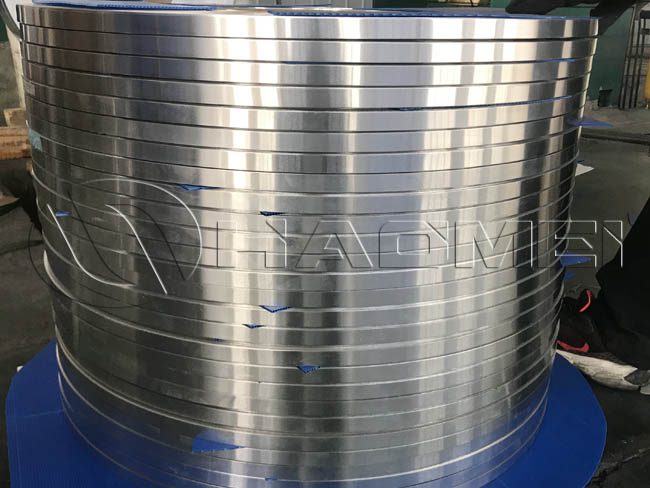
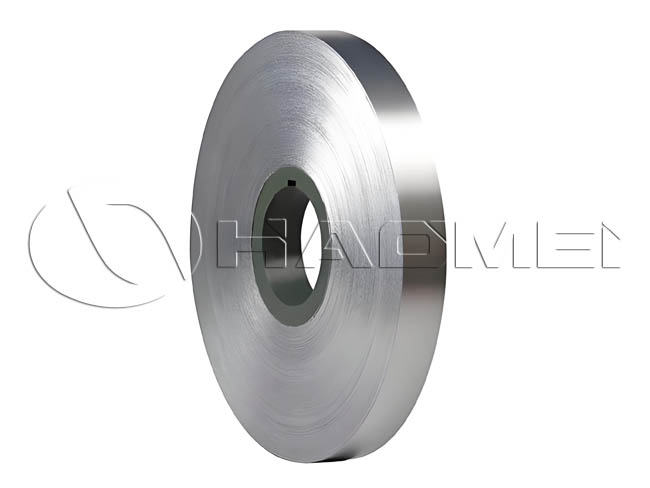
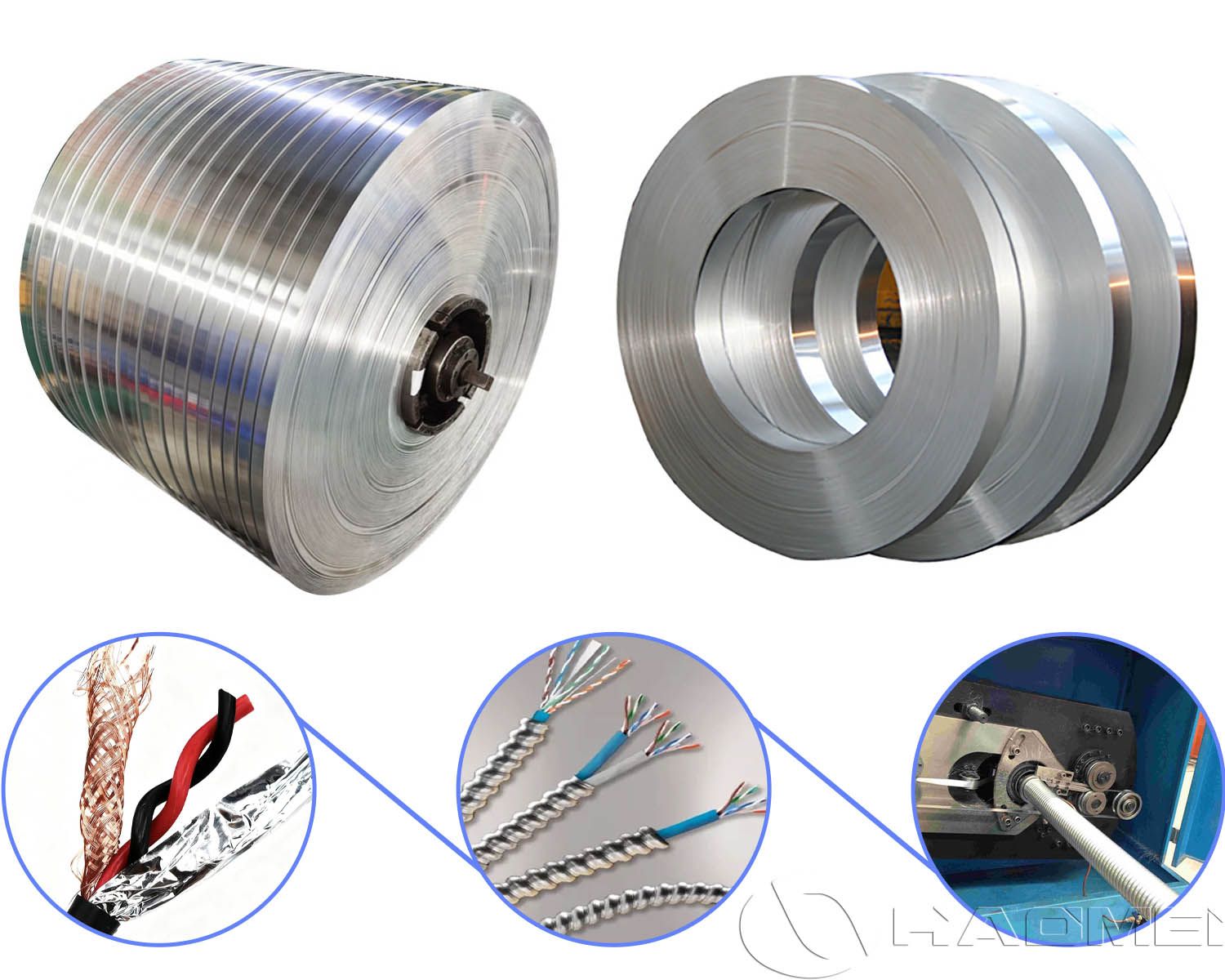
In the production of power cables and communication cables, cable armoring is a key protective layer that protects sensitive conductors from mechanical damage, moisture, and harsh environmental conditions. As a mainstream raw material for cable armoring, aluminum strip coils are gradually replacing traditional steel strips due to their advantages of lightweight, easy processing, corrosion resistance, and excellent cost performance. They have become the preferred material for the armoring of medium- and low-voltage cables, communication cables, and photovoltaic cables.
Among various aluminum strip materials, 1060 pure aluminum strip coils and 5052 aluminum-magnesium alloy strip coils are the two most widely used and highly adaptable products in the cable armoring field. This article will introduce them in detail.
Why Choose Aluminum Strip Coils as Cable Armoring Material?
Traditional cables often use steel tape armoring. However, in modern projects with higher standards and more complex working conditions, aluminum strip coils are showing irreplaceable advantages as an alternative material.
Eliminates Eddy Current Losses — Non-Magnetic
In high-current single-core AC cables, magnetic steel strips can generate serious eddy current losses, causing cable heating and power loss. Aluminum, as a non-magnetic metal, can provide electromagnetic shielding and perfectly solve this industry pain point.
Significant Lightweight Benefits
The density of aluminum is only about one-third that of steel. Using aluminum strip for armoring can greatly reduce the overall weight of the cable, thereby lowering transportation costs and reducing the difficulty of installation and laying.
Natural Corrosion-Resistant Barrier
Aluminum can quickly form a dense aluminum oxide protective film on its surface in the air. In harsh environments such as humidity and salt spray, its protective service life is far longer than that of ordinary steel strips.
Product Introduction
1060 Aluminum Strip for Cable Armoring
1060 aluminum strip belongs to the 1xxx series high-purity aluminum, with an aluminum content of ≥99.6%. It is an industrial pure aluminum with very high purity. Its composition is simple and contains almost no alloying elements, retaining only trace impurity elements. With high material purity and uniform microstructure, 1060 is one of the most basic and mature aluminum strip materials for cable armoring on the market. It features stable production processes and a high finished product rate.
Core Advantages of 1060 Aluminum Strip
1.Excellent Ductility and Plasticity
Pure aluminum is soft and highly plastic. This means that during the armoring and wrapping process, it can closely fit the cable core without easily cracking or breaking, making it very suitable for the forming of cables with complex cross-sections. Its elongation is approximately 5%.
2.Excellent Electrical and Thermal Conductivity
The electrical conductivity of pure aluminum is second only to copper, allowing it to serve as a current-carrying component in some designs. The conductivity of 1060 aluminum strip can usually meet the conductive requirements of transformer windings and other applications.
3.Good Corrosion Resistance
A dense oxide film easily forms on the surface of pure aluminum, giving it excellent corrosion resistance under normal environmental conditions.
4.Significant Cost Advantage
The production process of 1060 series aluminum is relatively simple and mature. Its price has a major advantage compared with alloy aluminum strips.
Common Tempers
1060 aluminum strip is an industrial pure aluminum with good ductility. Common tempers include O, H18, H22, H24, etc.
1060-O: Good softness, suitable for wrapping, bending, embossing, and other processing
1060-H18: Higher hardness and strength, but lower bending performance than O temper
1060-H22/H24: Moderate hardness, suitable for cable armoring requiring both strength and formability
Application Scenarios
1060 aluminum strip is more commonly used in applications where mechanical strength requirements are not high, but lightweight, conductivity, and corrosion resistance are emphasized. Examples include ordinary communication cable armoring, rodent- and termite-proof protective layers, and internal wrapping of some low-voltage power cables. In addition, 1060 aluminum strip is also an important conductive material for dry-type transformer windings.
5052 Aluminum Strip for Cable Armoring
5052 aluminum strip belongs to the 5xxx series aluminum-magnesium anti-rust alloy. Its main alloying element is magnesium, with a magnesium content of approximately 2.2%–2.8%. It is a representative lightweight, high-strength alloy material. Through magnesium alloying modification, 5052 completely improves the shortcomings of pure aluminum, such as low strength and weak deformation resistance, while retaining the core advantages of aluminum, including lightweight, corrosion resistance, and easy formability. It is a special material for medium- and high-end special cables and cable armoring under heavy-load working conditions.
Performance Advantages
1.Excellent Mechanical Properties
5052 aluminum strip has high tensile strength and fatigue resistance, maintaining a stable structure under external impact or long-term use.
2.Better Elongation
The elongation of 5052 is 12%–16%, which is about 200% higher than that of 1060, which is around 5%. Therefore, it is less likely to break during wrapping and bending.
3.Excellent Corrosion Resistance
As an anti-rust aluminum alloy, 5052 offers even better corrosion resistance than pure aluminum in special working conditions such as marine and humid environments.
4.Non-Magnetic Characteristics
For single-core AC cables, the use of steel tape can cause huge hysteresis losses and eddy current heating, which may lead to cable burnout. 5052 aluminum strip is non-magnetic and perfectly solves the heating problem of single-core armored cables. This is one of its core technical advantages.
5.Good Processing and Forming Performance
5052 alloy has good formability, weldability, and fatigue strength, making it suitable for complex processes such as interlocked armoring.
Common Tempers for 5052 Aluminum Strip
5052 aluminum strip is an aluminum-magnesium alloy with higher strength and better corrosion resistance than 1060 aluminum strip. Common tempers include O, H32, H34, H24, etc.
5052-O: Good flexibility, suitable for bending and forming
5052-H32: Moderate strength and good corrosion resistance; one of the commonly used tempers
5052-H34: Higher strength than H32, suitable for cables with higher mechanical protection requirements
5052-H24: Certain strength and good processing performance
Application Scenarios
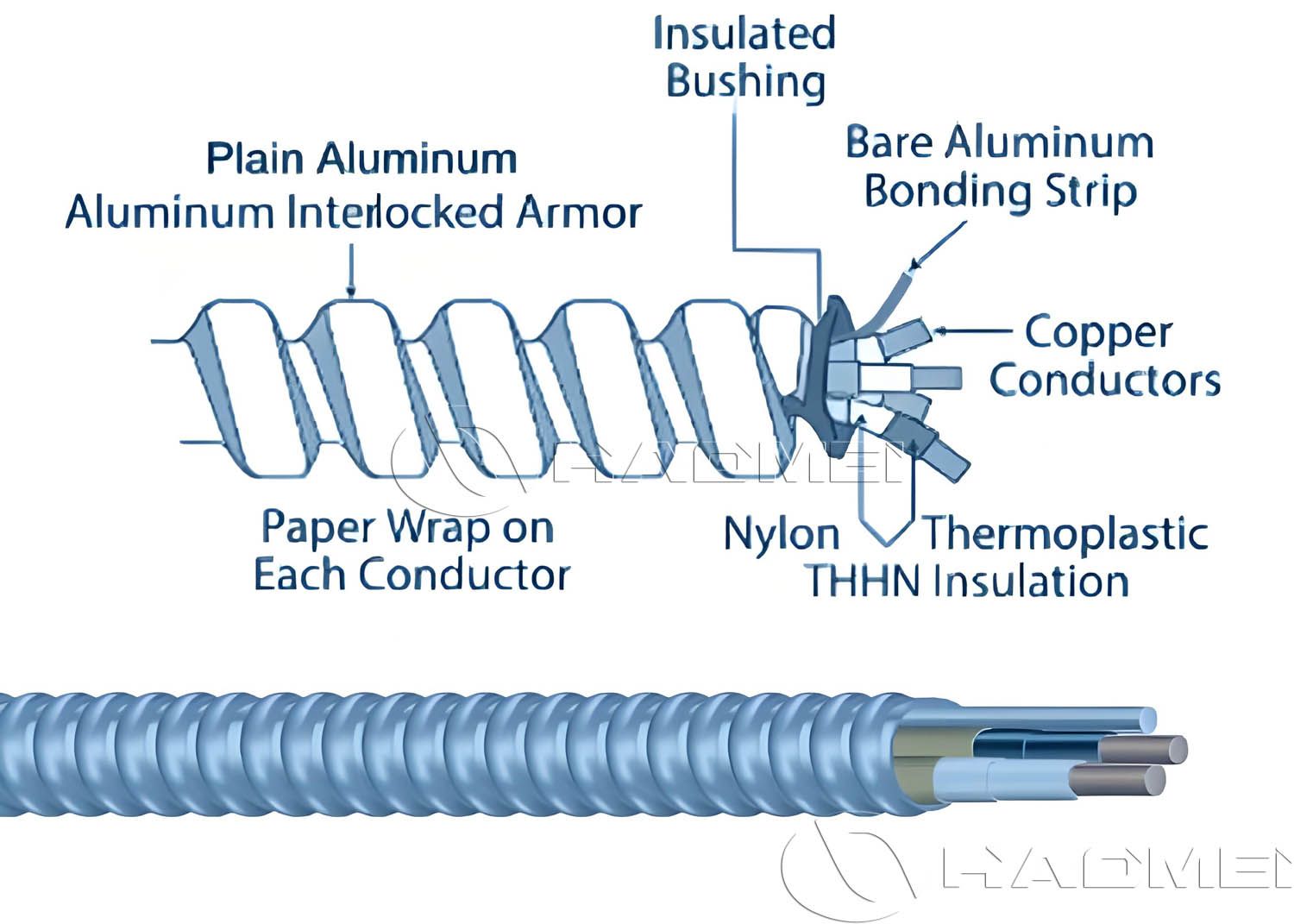
5052 aluminum strip is a main armoring material for power cables. Especially in long-span bridges, high-drop shafts, petrochemical plants, and single-core AC systems, 5052 aluminum strip plays a crucial role in ensuring the long-term dynamic operating safety of cables. It is also a standard configuration for the interlocked armoring layer of aluminum alloy cables, also known as AC cables.
Technical Parameters of Aluminum Strip for Armored Cables
| Item | Specification |
| Alloy | 1060, 5052 |
| Temper | O, H14, H18, H24, H26 |
| Thickness | 0.2 mm – 3.0 mm |
| Width | 10 mm – 800 mm |
| Inner Diameter | 150 / 200 / 300 / 400 / 508 mm |
| Conductivity Number (% IACS) | ≥30 |
| Resistivity Number Ω·mm²/m | ≤0.027548 |
| Elongation (%) | Min. 20 |
| Tensile Strength MPa | ≥55 |
| Density at 20°C | 2.71 kg/cm³ |
| Surface | Bright and smooth surface, free from oil stains |
| Packaging | Wooden pallet, eye-to-wall or eye-to-sky |
| Grade 1060 O Aluminum Strips Chemical Composition( | |||||||||
| Alloy | Al | Si | Fe | Mg | Zn | Mn | Ti | Cu | V |
| 1060 | 99.6% | 0.0431 | 0.203 | 0.0013 | 0.0093 | 0.0104 | 0.02 | 0.0022 | 0.0039 |
| Grade 5052 H34 Aluminum Strips Chemical Composition (%) | ||||||||||||
| Alloy | Si | Fe | Cu | Mn | Mg | Cr | Zn | Ni | Ti | Other:Each | Other:Total | Al |
| 5052 | 0.4 | 0.25 | 0.1 | 0.5 | 2.6-3.6 | 0.3 | 0.07 | - | 0.15 | 0.03 | - | remainder |
Quality Control Points for Aluminum Strip Used in Armored Cables
Dimensional Accuracy Control — Thickness and Width
The thickness tolerance of cable armoring aluminum stripmust be strictly controlled within ±0.02 mm. Uneven thickness will cause uneven stress during high-speed cable wrapping, leading to strip breakage or loose wrapping.
Edge Quality Control — Burr-Free
Slitting is a critical process. The edges of aluminum strip must be smooth, burr-free, and free from edge cracks. Any tiny burr may scratch the cable insulation liner during wrapping, resulting in serious safety risks.
Stable Mechanical Properties — Mechanical Testing
For Grade 1060, the primary focus of testing is its elongation, ensuring it possesses sufficient ductility to facilitate continuous bending and wrapping.
For Grade 5052, the primary focus is on its tensile strength and yield strength, ensuring its hardness meets the required standards and that it can provide a sufficiently pressure-resistant casing.
Surface Cleanliness — Oil-Free
The surface of aluminum strip must be dry and clean, without obvious rolling oil stains, scratches, or oxidation spots. Excessive surface oil will reduce the friction and tightness between the armoring layer and the inner and outer cable sheaths.
Product Packaging and Storage
Packaging Method
Moisture-proof film wrapping
Paper corner protection or plastic corner protection
Wooden pallet or wooden case packaging
External reinforcement with steel straps or packing straps
Clear labels indicating alloy grade, specification, temper, batch number, weight, and other information
Storage and Transportation Requirements
Avoid rain and humid environments
Avoid contact with acids, alkalis, and salts
Avoid impact on edges during loading and unloading
Long-term storage should be in a ventilated and dry environment
FAQ
Q: Can aluminum strip replace copper strip in cables?
A: Yes. Aluminum is an economical and lightweight alternative to copper, although its electrical conductivity is slightly lower.
Q: Is aluminum strip safe for underground cable installation?
A: Yes. Alloys such as 5052 have excellent corrosion resistance and are very suitable for underground applications.
Q: What is the general thickness of aluminum strip?
A: The commonly used thickness is generally 0.2–1.5 mm. The specific thickness should be determined according to the cable structure, armoring strength requirements, wrapping method, and customer standards.
Q: Can the width of aluminum strip be customized?
A: Yes. Aluminum strip can be slit according to customer requirements. The common width range is 10–600 mm, and it can also be customized according to cable production equipment and wrapping processes.
Q: What are the edge requirements for aluminum strip used in cable armoring?
A: The edges should be neat, free from obvious burrs, edge cracks, and curled edges. For high-speed wrapping production lines, low-burr or burr-free aluminum strip is recommended to avoid scratching the cable sheath or causing strip breakage.
Q: Can test reports be provided?
A: Yes. Material certificates, chemical composition reports, mechanical property reports, dimensional inspection reports, and third-party test reports can be provided according to customer requirements.