 Contact Us
In modern power and signal transmission and distribution systems, armored cables play a crucial role as the "underground arteries" of infrastructure. Aluminum alloy tape, with its advantages of lightweight structure, non-magnetic properties, corrosion resistance, and high cost performance, has gradually replaced traditional galvanized steel tape in many applications.
Among various aluminum alloy materials, 3003 aluminum alloy strip and 5052 aluminum alloy strip, as two representative non-heat-treatable alloys, are widely used in the metallic tape armor layer of interlocked armored cables.
Why Choose Aluminum Strip for the Metallic Layer of Interlocked Armored Cables?
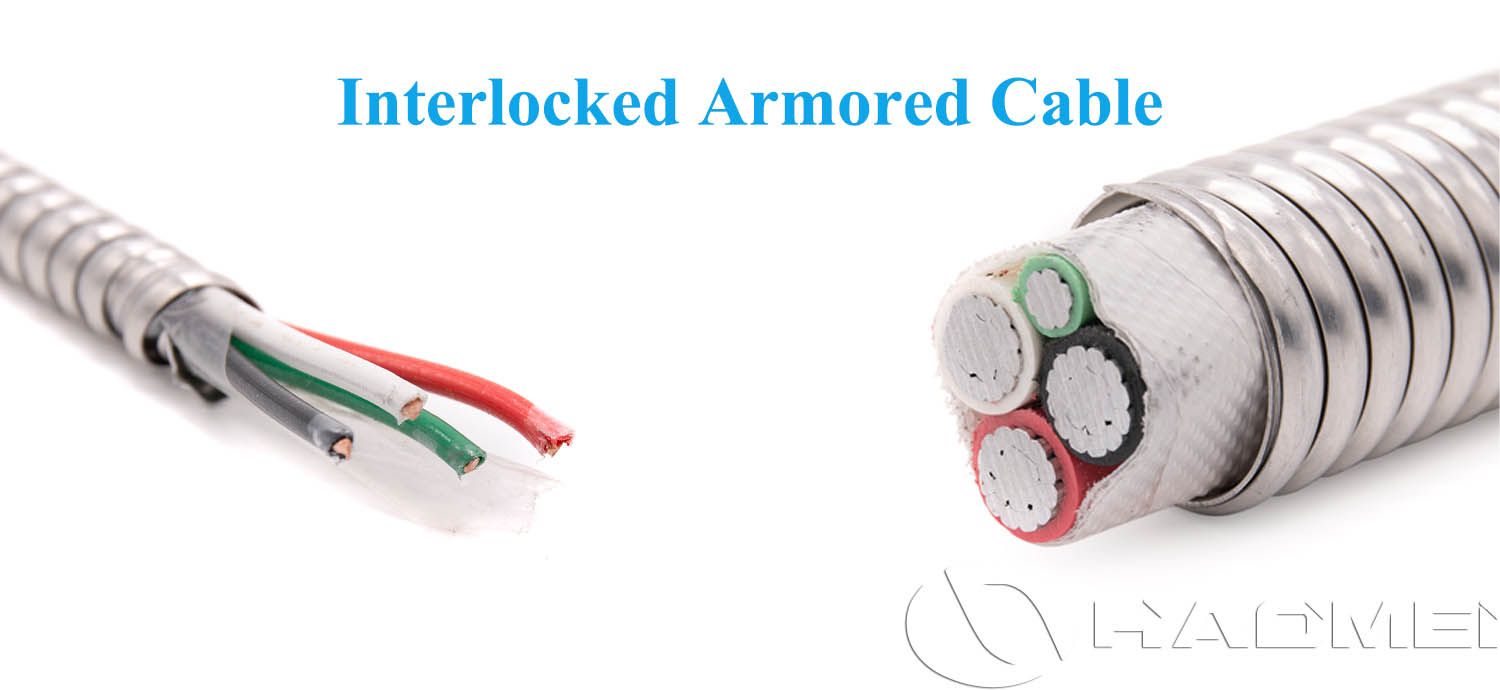
The manufacturing process of interlocked armor is highly specialized. An armoring machine continuously forms and interlocks aluminum strip around the cable core, creating a tightly engaged protective metal layer. This interlocked structure places high requirements on the physical properties of the aluminum strip.
Excellent Formability and Fatigue Resistance:During interlocked forming, the aluminum strip undergoes severe cold bending and reverse interlocking. Therefore, the material must have good elongation to ensure that it does not crack at the edges or deform during high-speed interlocking.
Moderate Strength:The aluminum strip must provide sufficient mechanical protection and compressive strength, but it should not be too hard. If the material is excessively hard, the overall flexibility of the cable will be reduced, making bending and installation more difficult.
Excellent Corrosion Resistance:Cables are often exposed to humid environments, salt spray, underground conditions, or industrial atmospheres for long periods. As the first protective barrier, the armor layer must have strong oxidation resistance and corrosion resistance.
Good Surface Quality:The surface of aluminum alloy strip for interlocked armored cables should be flat and clean, without obvious oil stains, oxidation spots, dents, scratches, cracks, inclusions, or other defects. Good surface quality not only supports smooth forming but also helps improve the appearance and service life of the cable.
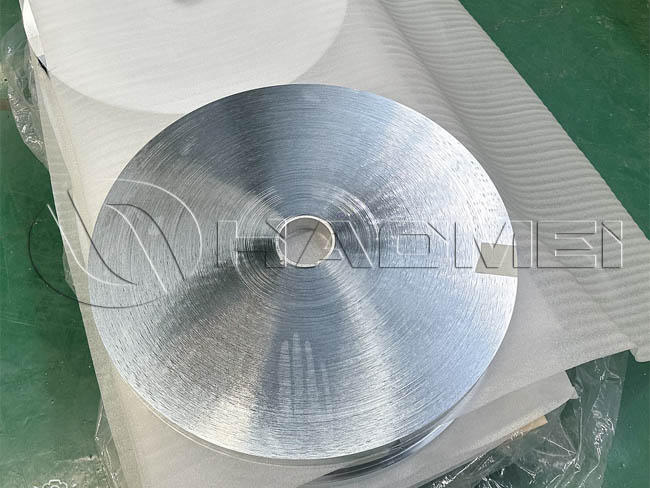
3003 Aluminum Strip
3003 aluminum strip belongs to the Al-Mn aluminum-manganese alloy series. The addition of manganese gives it slightly higher strength than 1000 series pure aluminum while retaining excellent ductility. It is one of the most widely used general-purpose anti-rust aluminum alloys.
Core Advantages of 3003 Aluminum Strip
(1). Excellent Processing and Softening Performance
After proper annealing treatment, such as H22 or H24 temper, 3003 aluminum strip has a relatively low work-hardening tendency and forms very smoothly. During the interlocking process, its edges fit closely and are less likely to develop stress microcracks.
(2). High Cost Performance
3003 aluminum strip has mature processing technology, stable supply, and relatively lower raw material and processing costs, making it highly economical for large-scale cable production.
(3). Good Corrosion Resistance
As an anti-rust aluminum alloy, 3003 offers good corrosion resistance in ordinary atmospheric environments, indoor applications, and general humid conditions.
Limitations of 3003 Aluminum Strip
The mechanical strength and hardness of 3003 are moderate. In environments involving high impact, heavy compression, or demanding mechanical protection, its protective performance is slightly lower than that of 5000 series aluminum alloys.
Application Fields of 3003 Cable Aluminum Strip
3003 aluminum strip is suitable for:
General building power distribution cables;
Commercial buildings and residential project cables;
Indoor cable tray installation;
General industrial plant cables;
Projects sensitive to weight, flexibility, and cost;
Applications where the corrosion environment is not particularly severe.
5052 Aluminum Strip
5052 aluminum strip belongs to the Al-Mg aluminum-magnesium alloy series. Magnesium is the main strengthening element and also plays a key role in improving corrosion resistance.
Compared with 3003, 5052 offers higher strength and better corrosion resistance, especially in humid environments, marine climates, and certain industrial atmospheres. In the field of cable armoring, 5052 aluminum strip is more commonly used in mid-to-high-end or special-environment cable products.
Core Advantages of 5052 Aluminum Strip
1. Higher Mechanical Strength
The tensile strength and yield strength of 5052 are significantly higher than those of 3003. This means that the interlocked armor layer made from 5052 aluminum strip has stronger resistance to compression, impact, and tearing.
2. Excellent Weather Resistance and Marine Corrosion Resistance
Al-Mg alloy performs extremely well in marine atmospheres, salt spray environments, and industrial pollution conditions. It helps protect the cable core from environmental corrosion.
3. Outstanding Fatigue Strength
In locations where cables are subject to frequent bending or vibration, such as cranes, ships, bridges, tunnels, and mobile equipment, 5052 aluminum strip is less likely to suffer from metal fatigue cracking.
Application Fields of 5052 Aluminum Strip
5052 aluminum strip is suitable for:
Cables used in coastal areas;
Cables exposed to humid, salt spray, or corrosive environments;
Underground utility tunnels, tunnels, and rail transit cable projects;
Industrial plants and chemical environments;
Cables requiring higher mechanical strength;
Key engineering projects such as high-end buildings, data centers, airports, and ports;
Projects with higher requirements for service life, safety, and stability.
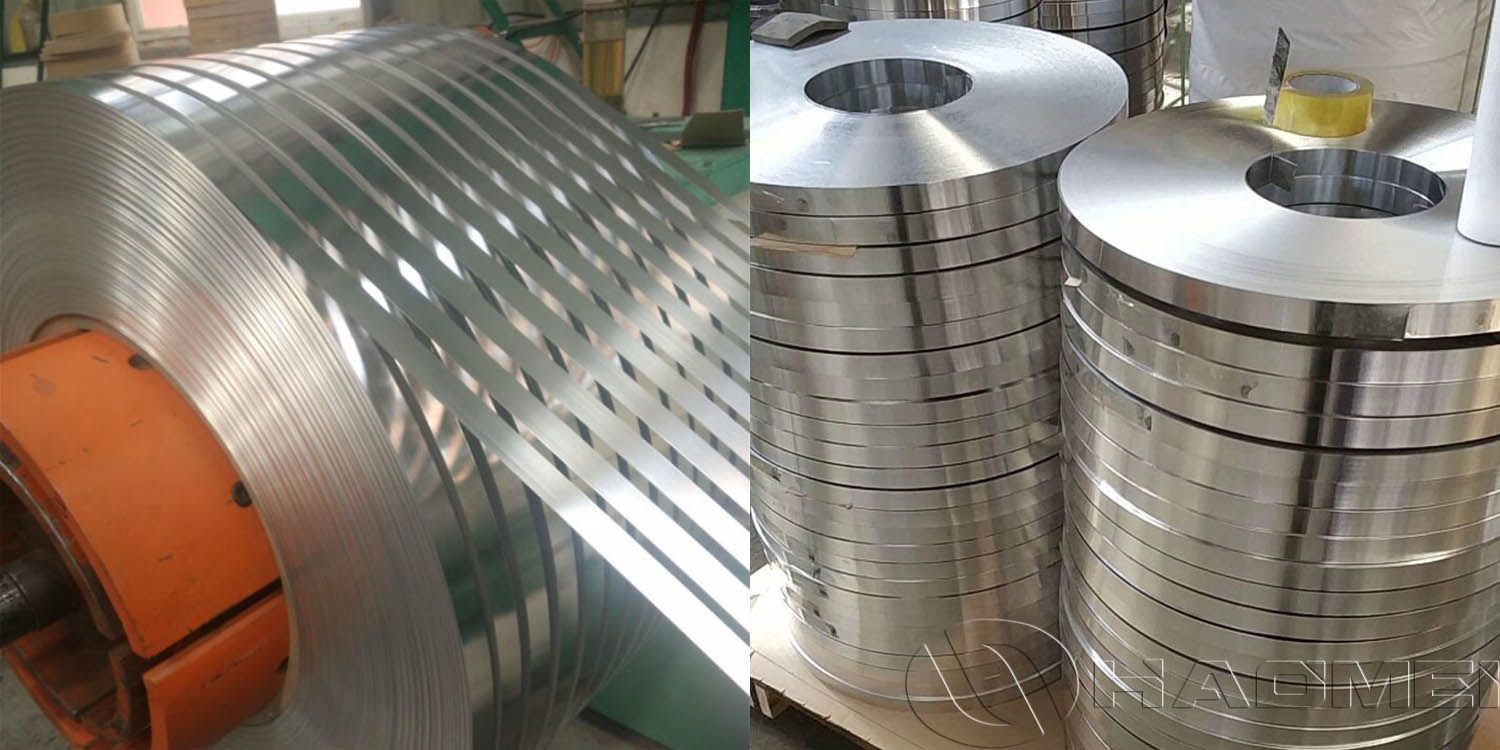
Main Differences Between 3003 and 5052 Aluminum Strips
1. Different Alloy Systems
3003 belongs to the aluminum-manganese alloy series, while 5052 belongs to the aluminum-magnesium alloy series. The different alloying elements determine their differences in strength, corrosion resistance, and processing performance.
2. Different Strength Levels
5052 generally has higher strength than 3003. If a project requires better resistance to compression, impact, or external mechanical damage, 5052 is the more suitable choice.
3003 has moderate strength and is more suitable for general applications. It can meet basic protection requirements while maintaining excellent formability.
3. Different Formability
3003 aluminum strip has better plasticity and is easier to form. It has stronger adaptability to different armoring equipment and processing conditions.
5052 also has good processing performance, but due to its higher strength, it requires more reasonable temper selection and stricter control of equipment parameters during forming.
4. Different Corrosion Resistance
Both alloys offer good corrosion resistance, but 5052 performs better in humid, salt spray, and marine atmospheric environments. If the cable is used for a long time in a high-corrosion-risk environment, 5052 should be given priority.
5. Different Costs
3003 aluminum strip is generally more economical and suitable for large-scale production of conventional cables. 5052 has a higher cost and is more suitable for high-performance, high-value-added, or special-environment cable products.
3003 vs 5052: Horizontal Performance Comparison
To clearly show the suitable application scenarios of the two materials, the following is a multidimensional comparison of 3003 and 5052 aluminum strips in similar cold-worked tempers, such as H22/H24.
| Parameter | 3003 Aluminum Alloy Strip | 5052 Aluminum Alloy Strip | Technical Interpretation and Application Impact |
| Tensile Strength | Approx. 140–160 MPa | Approx. 230–250 MPa | 5052 is about 56%–77% stronger, offering better compression and impact resistance. |
| Strength | Approx. 115 MPa, H24 | Approx. 150 MPa, H24 | 5052 has stronger resistance to permanent deformation and provides a more stable armor structure. |
| Elongation / Plasticity | Approx. 20%–28% | Approx. 15%–22% | 3003 has better plasticity and is suitable for smaller bending radii or tighter interlocking. |
| Corrosion Resistance | Good, suitable for freshwater and humid environments | Excellent, suitable for marine and industrial environments | 5052 has stronger resistance to salt spray and stress corrosion, resulting in longer service life. |
| Electrical / Thermal Conductivity | Higher, approx. 44% IACS | Lower, approx. 35% IACS | 3003 provides better heat dissipation and is suitable for shielding or heat-generating cables. |
| Cost Budget | Lower baseline cost | Higher, generally 15%–25% higher | 3003 offers better cost performance and is suitable for large-scale civil projects. |
| Typical Temper | O, H22, H24 | O, H32, H34 | Both are available in multiple tempers to meet different forming process requirements. |
Temper Selection for Aluminum Strip Used in Interlocked Armored Cables
The alloy grade of aluminum strip is important, but the temper is equally critical. Common tempers include H14, H24, H32, H34, etc. Different tempers correspond to different levels of hardness, strength, and elongation.
For interlocked armored cables, the aluminum strip should be neither too soft nor too hard.
If the material is too soft, it may reduce the supporting capability and mechanical protection performance of the armor layer. If the material is too hard, it will increase forming difficulty and may cause edge cracking or poor interlocking.
Therefore, when selecting aluminum strip for interlocked armoring, the cable manufacturer should consider the armoring equipment, cable diameter, strip thickness, strip width, forming speed, bending radius, and final performance requirements.
Influence of Aluminum Strip Quality on Interlocked Armored Cables
1. Thickness Accuracy Affects Armor Strength
The thickness of the aluminum strip directly affects the strength of the armor layer and the outer diameter of the cable. If the thickness is too thin, the protective ability of the armor will decrease. If it is too thick, the forming difficulty, cable weight, and production cost will increase.
2. Width Accuracy Affects Interlocking Stability
The interlocked armor structure relies on the mutual engagement of the aluminum strip edges. Unstable width can lead to inconsistent tightness of the interlocking, affecting both cable appearance and mechanical performance.
3. Edge Quality Affects Safety
Burrs, cracks, or curled edges may scratch the inner cable structure or damage the armoring equipment during high-speed production. Therefore, aluminum strip should be slit with high precision to ensure clean, smooth, and burr-free edges.
4. Surface Condition Affects Processing and Service Life
Surface scratches, oxidation spots, oil stains, dents, and other defects can affect the appearance of the armor layer and may become starting points for corrosion or cracking. High-quality aluminum strip should have a uniform, clean, and flat surface.
5. Coil Quality Affects Production Efficiency
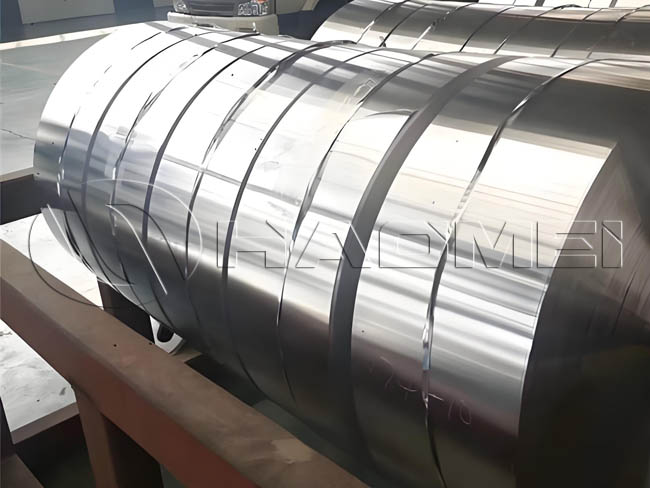
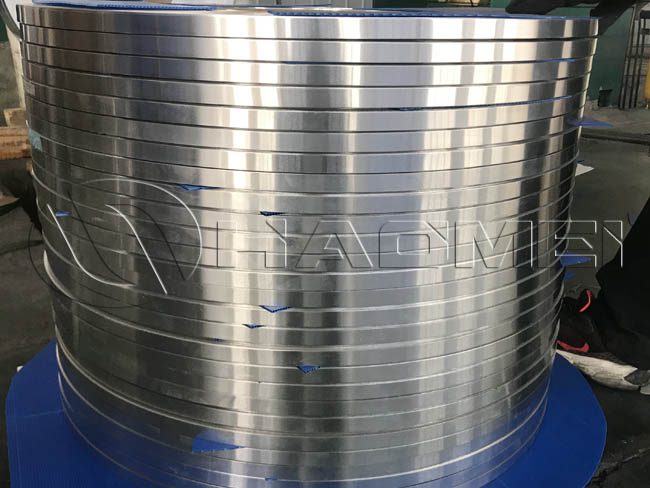
Interlocked armoring is usually a continuous production process. Aluminum strip coils should be neatly wound with uniform tension, without collapsed coils, loose coils, or obvious wavy edges. Poor coil quality can cause downtime, strip breakage, deviation, and reduced production efficiency.
How to Choose the Right Aluminum Strip Material?
In actual material selection, it is not correct to simply assume that "5052 is always better than 3003," nor is it advisable to choose 3003 only because of cost. The correct approach is to evaluate the cable application, installation environment, mechanical protection requirements, and budget comprehensively.
When to Choose 3003 Aluminum Strip
If the cable is mainly used in ordinary buildings, indoor power distribution systems, or general industrial environments, and there are no particularly strict requirements for mechanical strength or corrosion resistance, 3003 aluminum strip is usually the more economical and stable choice.
It has excellent formability, high production efficiency, moderate strength, and reasonable cost, making it suitable for large-scale production.
When to Choose 5052 Aluminum Strip
If the cable is used in coastal areas, underground humid environments, rail transit systems, tunnels, or industrial corrosive environments, or if the project has higher requirements for mechanical strength, durability, and safety, 5052 aluminum strip has more advantages.
Although its cost is higher, it can significantly improve the protective performance and service life of the cable armor layer.
For cable manufacturers, it is recommended to evaluate the characteristics of these two materials based on the customer’s specific installation environment, such as direct burial, conduit installation, or overhead installation, as well as voltage level and cost budget.