 Contact Us
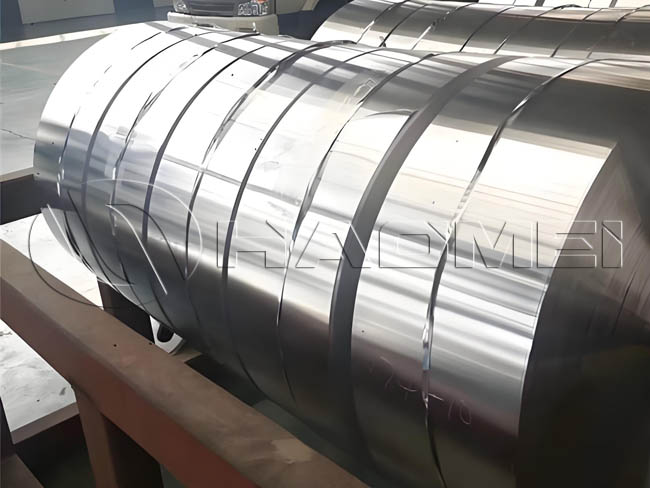
In power transmission and communication systems, armored cables play a key role in mechanical protection, environmental isolation, and long-term stable operation. Among various armoring materials, aluminum strip has gradually replaced steel strip and copper strip in many applications. The most commonly used aluminum strips include 5052 aluminum strip, 5154 aluminum strip, and 5154A aluminum strip.
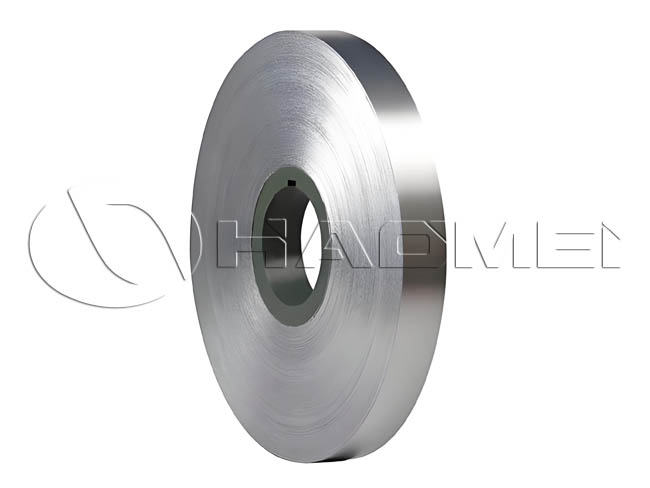
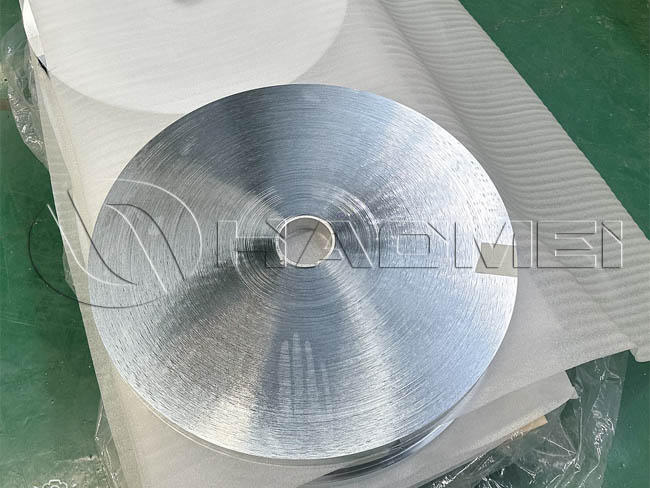
This article introduces in detail the "star material" in the cable manufacturing industry - 5154A H24 aluminum strip.
What Is 5154A H24 Aluminum Strip?
5154A aluminum strip belongs to the 5000 series Al-Mg alloy. Compared with common 1000 series pure aluminum or 3000 series Al-Mn alloys, 5154A contains a higher level of magnesium, usually above 3.0%.
The addition of magnesium significantly improves the tensile strength, hardness, and corrosion resistance of the material, especially in high-salt-spray environments such as marine applications.
The H24 temper means "strain-hardened and partially annealed." This temper provides a balance between strength and ductility, allowing the material to have sufficient rigidity while meeting processing requirements such as cable armoring, wrapping, and forming.
Compared with soft O temper, 5154A H24 aluminum strip achieves an excellent balance of strength, toughness, and bendability. It has moderate tensile strength and can withstand pulling force and lateral pressure during cable installation. It also offers good elongation, enabling tight wrapping around cable cores and compatibility with interlocked armor forming processes.
Production Process of 5154A Aluminum Strip for Armored Cables
Melting and Casting: High-purity raw materials are melted in a vacuum induction furnace.
Rolling: The ingot is rolled into aluminum strip with a thickness of 0.3–0.8 mm.
Solution Heat Treatment: Heated to 465±5°C and held for 30 minutes.
Cold Working: The strip is formed by cold drawing or cold pressing.
Artificial Aging: Aged at 120–180°C for 48–72 hours.
Surface Treatment: Chemical oxidation or oil coating is applied to improve corrosion resistance.
Main Application Forms of 5154A-H24 Aluminum Strip in Cables
1. Interlocked Armor
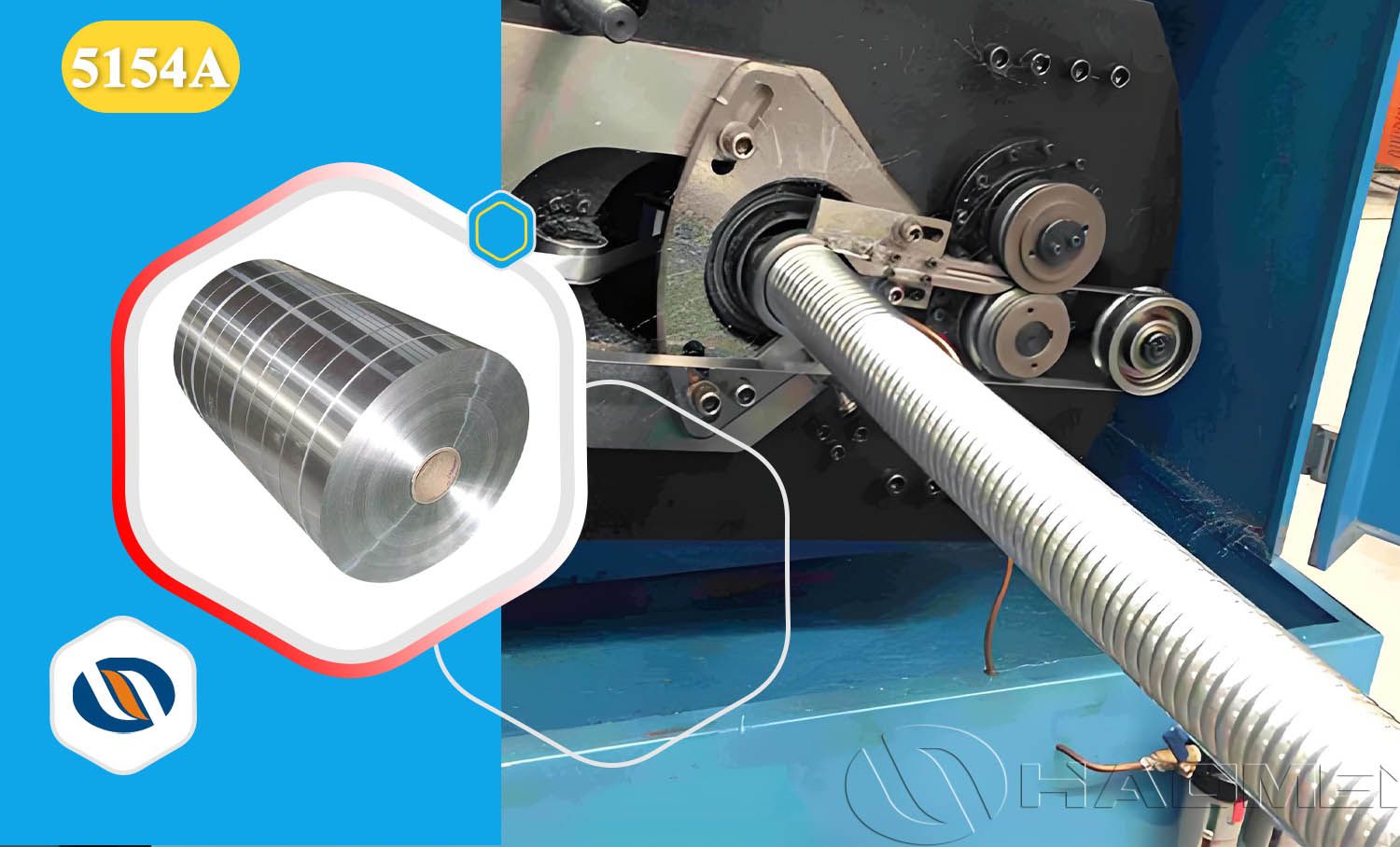
The aluminum strip is roll-formed by precision dies into a concave-convex interlocking structure, providing excellent compression resistance and bending performance.
This is the most representative application of 5154A-H24 aluminum strip. The strip is continuously roll-formed and locked into a flexible, snake-like tubular structure by a specialized interlocked armoring machine.
Because 5154A-H24 offers both tensile strength and bendability during stamping and forming, the formed interlocked structure has tight engagement and is not easy to loosen. This gives the cable excellent flexibility and lateral pressure resistance. It is widely used in high-rise buildings, data centers, and mining applications.
2. Tape Wrapping / Longitudinal Wrapping
In some control cables or communication optical cables, 5154A aluminum strip is applied around the cable core by longitudinal wrapping or tape wrapping.
In addition to providing physical protection, it can also utilize its good electrical conductivity to provide magnetic field shielding and grounding, helping prevent external electromagnetic interference, or EMI.
Chemical Composition (%)
Testing Standard: GB/T 3190-2020
| Item | Si | Fe | Cu | Mn | Mg | Cr | Zn | Ti | Al |
| Standard Value, Max. | 0.50 | 0.50 | 0.10 | 0.50 | 3.1–3.9 | 0.25 | 0.20 | 0.20 | remainder |
Mechanical Properties
Testing Standard: GB/T 3880-2024
| Test Item | Unit | Standard Value | Actual Value |
| Tensile Strength | MPa | 265 | 281 |
| Elongation | % | ≥10 | 12-15 |
| Thickness | mm | ±0.02 | Qualified |
| Width | mm | ±0.05 | Qualified |
Product Technical Parameters
| Item | Parameter Range |
| Alloy Grade | 5154A |
| Temper | H24 |
| Thickness | 0.20–2.50mm |
| Width | 20–1600mm |
| Length | 1000–16000mm |
| Density | 2.66 g/cm³ |
| Electrical Conductivity | ≈30–35 %IACS |
| Inner Diameter | 55–300 mm |
| Outer Diameter | 500–800 mm |
| Surface Condition | Bright / Embossed / Oiled |
| Edge Condition | Slit Edge / Round Edge |
| Standard | ASTM / EN / GB |
| MOQ | 1–3 tons |
Core Advantages of 5154A Aluminum Strip
1. Lightweight
The density of aluminum, approximately 2.7 g/cm³, is only about one-third that of steel, approximately 7.85 g/cm³.
Using 5154A aluminum strip instead of steel strip can significantly reduce the overall weight of cables. This not only lowers long-distance transportation costs, but also reduces the difficulty of on-site lifting and cable laying.
2. Non-Magnetic
5154A aluminum strip is a non-ferromagnetic material. When used in single-core AC cables, it does not generate eddy current losses like steel tape armor.
This helps avoid additional heating and energy loss, improving the operating efficiency and safety of the cable.
3. Excellent Corrosion and Rust Resistance
5154A aluminum strip can naturally form a dense aluminum oxide protective film on its surface. Combined with the electrochemical characteristics of magnesium, it offers strong resistance to pitting corrosion and stress corrosion.
This can significantly extend the service life of cables, up to more than 30 years in suitable applications.
4. Flexible and Easy to Process, Suitable for Interlocked Forming
The H24 half-hard temper gives the aluminum strip excellent bendability and formability. It can achieve 360° interlocked wrapping, with tight seams, no welds, and lateral pressure resistance of ≥4 kN, far exceeding the requirements of conventional steel tape armor standards.
The cable bending radius can be as low as 7 times the outer diameter, while steel tape armored cables usually require 12–15 times the outer diameter. This makes cable installation more flexible in narrow spaces, reduces stress concentration at bends, and lowers the risk of insulation damage.
It is also compatible with laser welding and ultrasonic welding, offering high processing efficiency and a high finished product rate.
5. Good Thermal Conductivity and Heat Dissipation
The thermal conductivity of 5154A aluminum strip reaches 127 W/(m·K), more than three times that of steel strip.
It can quickly dissipate heat generated during cable operation, reduce conductor temperature, increase cable ampacity, and extend the service life of the insulation layer.
Its heat dissipation advantage is especially significant in high-load and high-temperature environments, ensuring long-term stable cable operation.
6. Safety and Environmental Protection
Although aluminum strip has slightly lower hardness than steel strip, its strong metal armoring structure can still effectively resist damage from rodents, termites, and other biological threats, protecting the internal insulation layer.
In addition, aluminum strip is 100% recyclable, offering a high resource utilization rate.
Typical Application Scenarios of 5154A Aluminum Strip
1. Armor Layer for Power Cables
5154A aluminum strip is widely used in urban power grids, industrial plants, and power distribution trunks in high-rise buildings. It is especially suitable for single-core cable installation.
2. Communication Cables
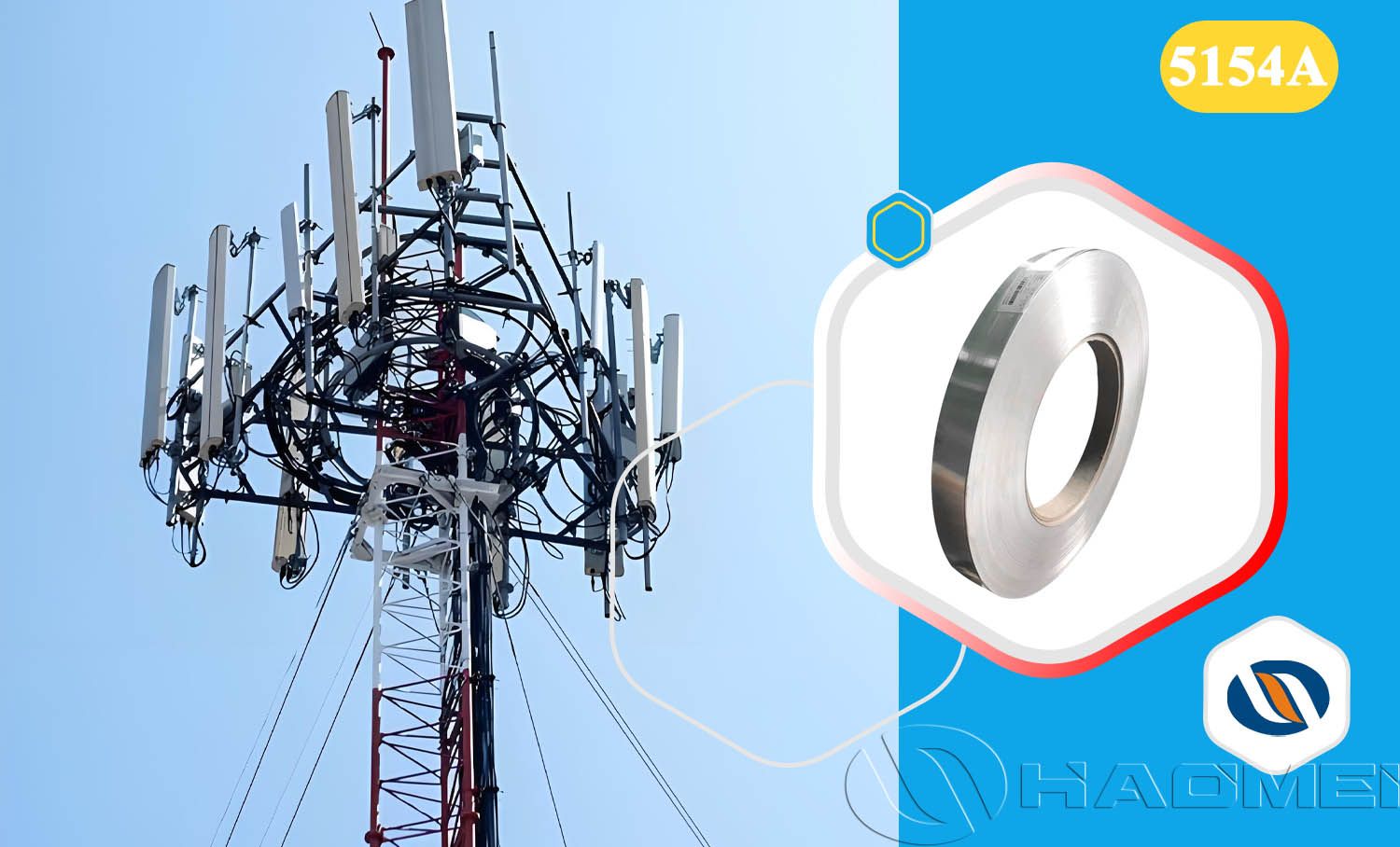
It can be used as an armor and shielding layer for communication optical cables, RF cables, and data cables.
It helps isolate external electromagnetic interference and ensures stable signal transmission. At the same time, it resists underground moisture and soil corrosion, extending the service life of communication lines.
Typical applications include 5G base stations, fiber-to-the-home projects, and rail transit communication systems.
3. Marine and Special Environment Cables
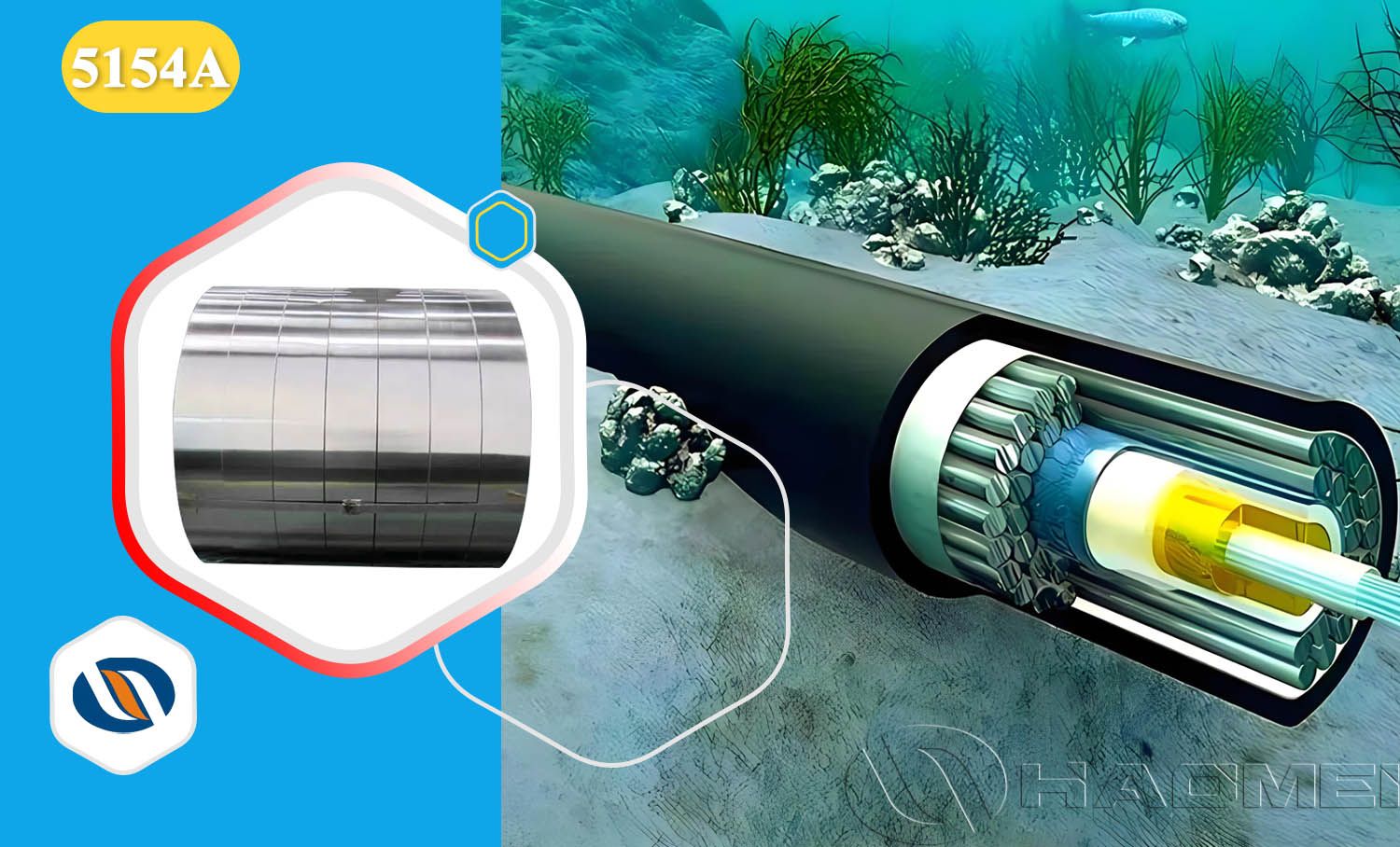
Marine Engineering:
Used for submarine cables and offshore wind power cables, offering seawater corrosion resistance and impact resistance against ocean currents.
Mining / Oilfield:
Used for ESP cables and mining cables, providing resistance to impact, oil contamination, and underground moisture.
Chemical / Coastal Areas:
Used for cables in chemical parks and coastal terminals, offering resistance to salt spray, acid, and alkali corrosion
Comparison with Common Armoring Materials
| Material | Strength | Weight | Corrosion Resistance | Formability | Typical Features |
| 5154A-H24 Aluminum Strip | Relatively high | Light | Excellent | Good | Suitable for high-performance aluminum alloy armored cables |
| 5052-H24 Aluminum Strip | Medium | Light | Good | Good | Commonly used Al-Mg alloy armoring material |
| 3003-H24 Aluminum Strip | Relatively low | Light | Fairly good | Good | Lower cost, but lower strength than 5154A |
| Galvanized Steel Strip | High | Heavy | Average | Average | High strength, but heavy and prone to magnetic losses |
| Stainless Steel Strip | High | Heavy | Excellent | Average | High cost, suitable for special environments |
Quality Requirements for Aluminum Strip Used in Cable Armoring
1. Slitting Edge Quality, Burr-Free
Cable armoring is performed at very high speeds. If burrs exist on the edges of the aluminum strip, they may easily scratch the internal insulation layer or outer sheath during wrapping or interlocking, causing insulation breakdown.
Therefore, the slit edges of the aluminum strip must be smooth and free from residual burrs.
2. Consistency of Mechanical Properties
The tensile strength and elongation of the aluminum strip must be highly consistent within the same coil and even within the same batch.
Excessive fluctuation may cause strip breakage and production downtime on high-speed interlocked armoring lines.
3. Number and Quality of Joints
Large-diameter coils with fewer joints are preferred.
If joints are present, they must be made by high-standard ultrasonic welding or cold pressure welding and ground flat. The strength of the welded joint should not be lower than that of the base material.
Common Supply Requirements
| Item | Common Requirements |
| Thickness | Customized according to customer requirements, such as 0.2–1.0 mm |
| Width | Slitting available according to customer requirements |
| Temper | Mainly H24; H14, H22, H26 and other tempers are also available depending on the process |
| Surface | Bright, flat, free from oil stains, severe scratches, and oxidation spots |
| Edge | Neatly slit, burr-free, and free from edge cracks |
| Coil Requirements | Neat coil shape, uniform tension, suitable for continuous unwinding |
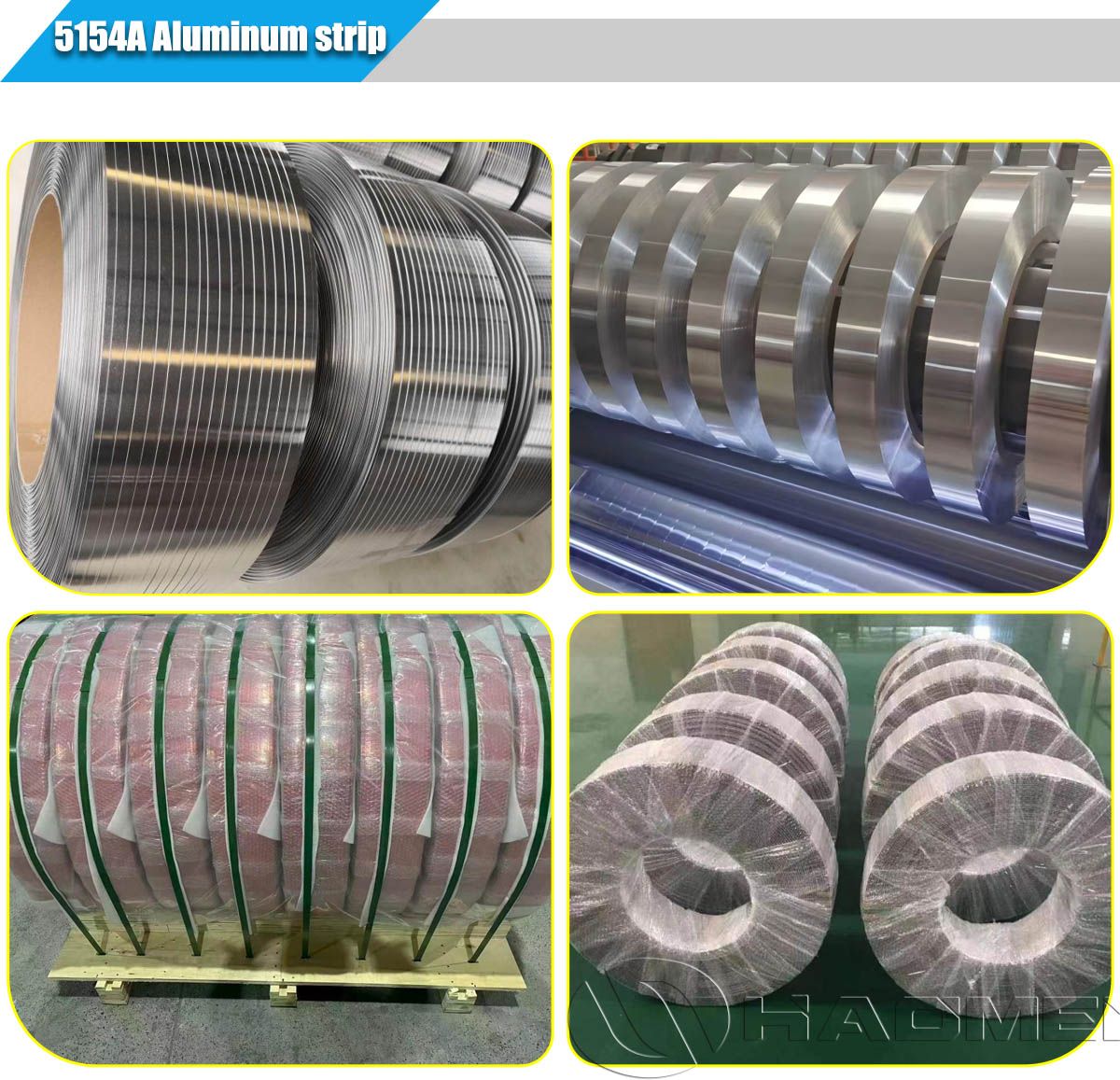
| Packaging | Moisture-proof packaging, fixed on wooden pallets or packed in wooden cases |