 Contact Us
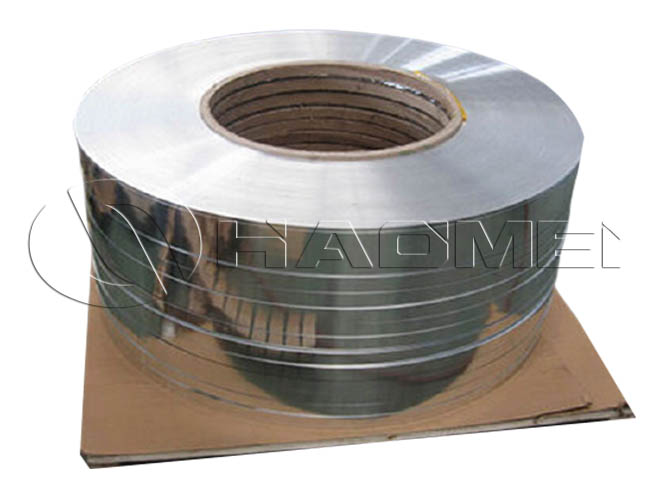
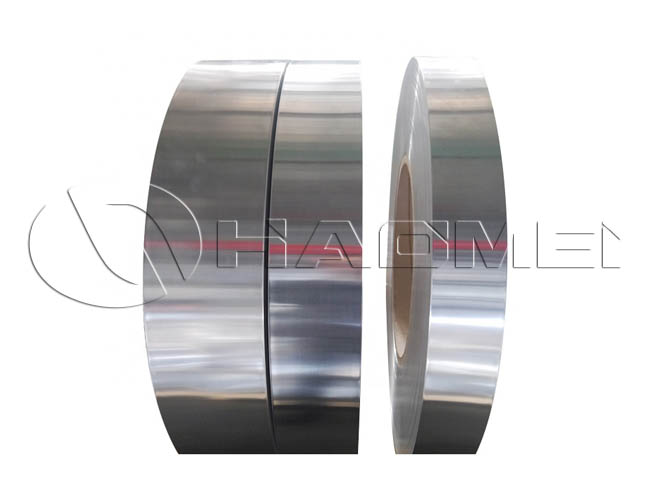
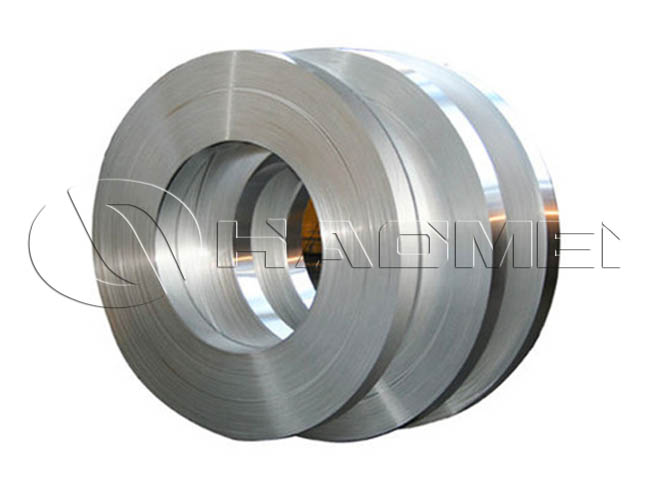
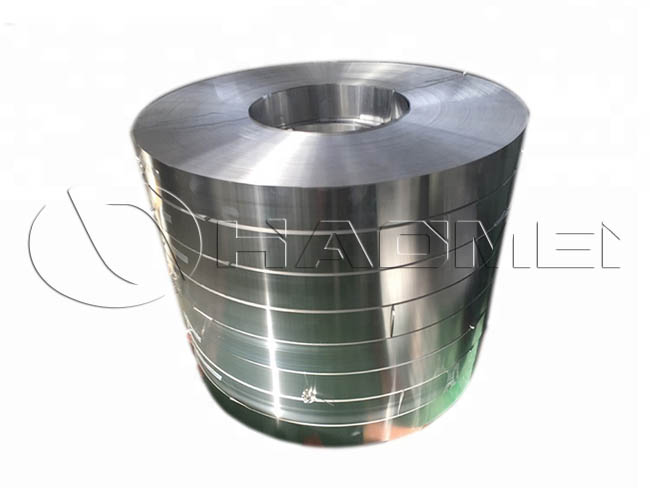
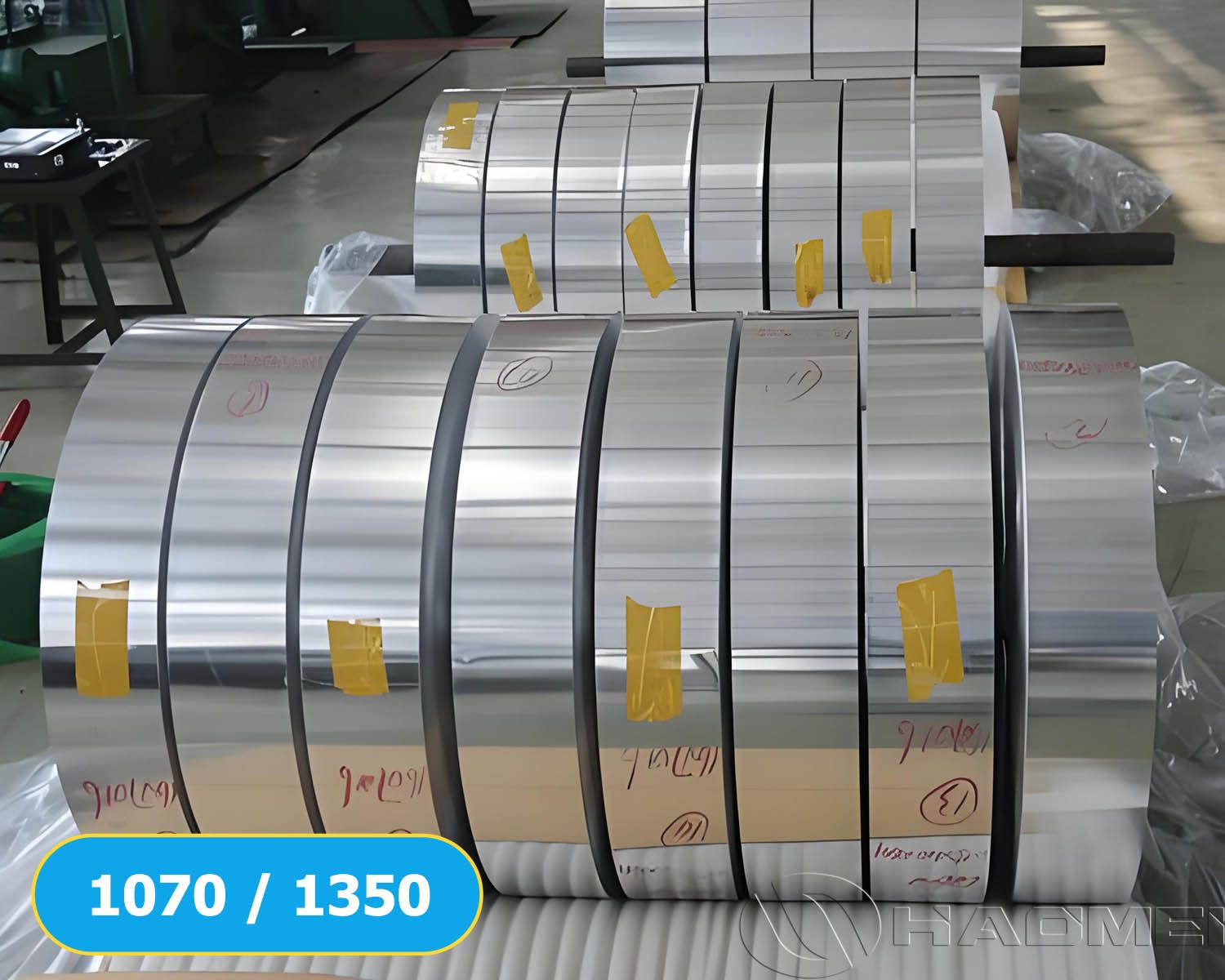
In modern power transmission and distribution projects, transformer efficiency, size, and cost control are key competitive factors. With the rapid improvement of smelting and processing technologies, high conductivity aluminum strip, also known as transformer aluminum strip, has been widely applied in dry-type transformers, oil-immersed transformers, and reactors.
Among them, 1070 and 1350 pure aluminum alloys have become ideal materials for replacing traditional copper wires and copper strips in the manufacture of high-efficiency transformer windings/coils, thanks to their electrical conductivity of over 61% IACS, excellent processability, and outstanding cost performance.
Core Material Analysis
1070 Aluminum Strip
1070 alloy is a high-purity representative of the 1xxx series pure aluminum, with electrical conductivity of ≥61% IACS. Its aluminum content is as high as over 99.7%, while impurity elements such as iron and silicon are strictly controlled at very low levels.
In materials science, impurity atoms can distort the aluminum lattice and significantly increase the probability of electron scattering, thereby reducing electrical conductivity. Therefore, 1070 aluminum strip achieves excellent electrical conductivity due to its extremely high purity.
Chemical Composition of 1070 Aluminum Strip
| Element | Al | Si | Fe | Cu | Mn | Mg | Zn | Ti | Other, Each | Total Impurities |
| Content Range (%) | 99.70–99.90 | ≤0.10 | ≤0.10 | ≤0.05 | ≤0.05 | ≤0.05 | ≤0.05 | ≤0.05 | ≤0.05 | ≤0.03 |
1350 Aluminum Strip
1350 alloy is not a general industrial pure aluminum, but a specific alloy developed for electrical conductors, with electrical conductivity of ≥62% IACS. Although its nominal purity is close to that of 1050 aluminum, at ≥99.50%, it has extremely strict individual control requirements for impurities that are most sensitive to electrical conductivity, including vanadium (V), titanium (Ti), chromium (Cr), and manganese (Mn).
This element control strategy enables 1350 aluminum strip to maintain high electrical conductivity while offering better creep resistance and welding stability than 1070 aluminum strip.
Chemical Composition of 1350 Aluminum Strip
| Element | Al | Si | Fe | Cu | Mn | Mg | Zn | Ti | Other, Each | Total Impurities |
| Content Range (%) | 99.50–99.70 | ≤0.20 | ≤0.20 | ≤0.10 | ≤0.10 | ≤0.10 | ≤0.10 | ≤0.10 | ≤0.05 | ≤0.40 |
Technical Parameters of Transformer Aluminum Strip
| Item | Specification |
| Alloy | 1070,1350 |
| Temper | O |
| Thickness | 0.2 mm, 0.3 mm, 0.5 mm, 0.8 mm, 1.0 mm, 1.5 mm, 2.0 mm, 3.0 mm; customizable upon request |
| Thickness Tolerance | ±0.01 mm |
| Width | 10 mm–1600 mm; customized narrow strips and wide strips available |
| Width Tolerance | ±0.1 mm |
| Electrical Conductivity | 1070 ≥61% IACS, 1350 ≥62% IACS |
| Surface Condition | Bright surface, matte surface; free from oil stains, scratches, and pinholes |
| MOQ | 1–3 tons |
Physical Properties
| Parameter | 1070 Aluminum strip | 1350 Aluminum strip |
| Electrical Conductivity, IACS % | 65%–70% | 63%–68% |
| Electrical Resistivity, μΩ·cm | 0.27–0.29 | 0.28–0.30 |
| Density, g/cm³ | 2.70 | 2.70 |
| Thermal Expansion Coefficient, ×10⁻⁶/K | 23.1 | 23.2 |
| Melting Point, °C | 660 | 660 |
Mechanical Properties — H14 Temper
| Parameter | Minimum Value | Test Method |
| Tensile Strength, MPa | 180 | ASTM E8 |
| Yield Strength, MPa | 150 | ASTM E8 |
| Elongation, % | 12 | ASTM E8 |
| Hardness, HB | 60 | ASTM E103 |
Production Process of Transformer Aluminum Strip
Production Flow
High-purity aluminum ingot melting → cast rolling / hot rolling → cold rolling → finishing → annealing → slitting → inspection
The production of aluminum strip that meets transformer winding requirements requires not only a suitable alloy composition, but also advanced manufacturing processes and strict quality control.
1. Melting and Cast Rolling
High-purity aluminum ingots are used. Through refining, degassing, and slag removal, the hydrogen content is strictly controlled to ensure a dense internal material structure.
2. Cold Rolling and Heat Treatment
Cold Rolling Process
The cast-rolled blank is cold rolled through multiple passes to precisely control thickness tolerance. The thickness of transformer aluminum strip is usually between 0.2 mm and 3.5 mm.
Annealing Treatment — O Temper
This is the key production step. Through full soft annealing, cold working stress is eliminated and a fully recrystallized structure is obtained. This structure, known as O temper, ensures that the aluminum strip has extremely low yield strength when winding high-voltage coils, preventing excessive stress from damaging the insulation layer.
3. Slitting and Edge Treatment — Key Technology
This is the core process that distinguishes transformer aluminum strip from ordinary aluminum sheet and strip.
Chamfering Treatment
The edges of the aluminum strip must be treated with arc chamfering, R-angle processing, or round-edge treatment to completely eliminate burrs.
Burr Control
The burr height is required to be no more than 0.02 mm, or even lower. Any tiny burr may pierce the inter-turn insulation film and cause high-voltage discharge breakdown.
Width Precision
The slitting width can be customized according to customer requirements, typically ranging from 10 mm to 1650 mm.
Core Features of Transformer Aluminum Strip
1. High Electrical Conductivity, Lower Energy Consumption
High-purity aluminum ensures low resistance, reduces energy loss during transformer operation, and improves overall efficiency.
2. Excellent Winding Processability
O-temper aluminum strip is soft and suitable for multi-layer tight winding. It is not easy to crack or break during processing.
3. Controllable Edge Quality
High-precision slitting and deburring treatment help avoid the risk of insulation breakdown during winding.
4. Good Thermal Conductivity
The thermal conductivity of aluminum is about 60% that of copper and much higher than that of steel. It can quickly dissipate heat generated during winding operation, reduce equipment temperature rise, prevent high-temperature aging, and extend the service life of insulating materials.
5. Corrosion Resistance
A dense Al₂O₃ oxide film naturally forms on the surface of aluminum, isolating it from air, moisture, acid, and alkaline corrosion. In humid, outdoor, and mildly corrosive environments, aluminum offers better corrosion resistance than copper and can effectively prevent winding oxidation and short circuits.
6.Cost and Weight Advantages
Compared with copper strip for transformer winding, aluminum strip can reduce costs by approximately 30%–50% and reduce weight by about 50%, making it suitable for cost-reduction designs in large-capacity equipment.
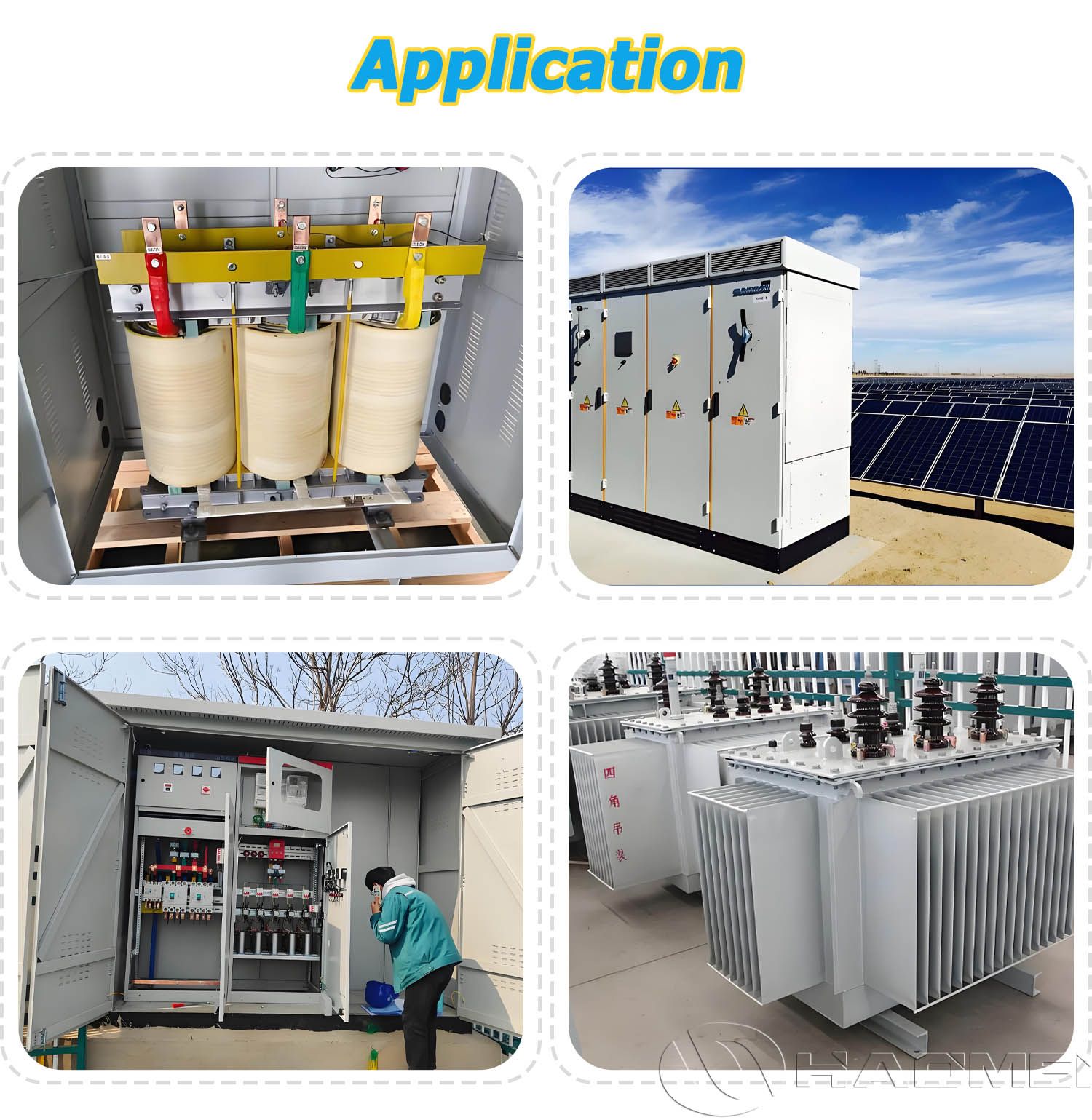
Application Fields of Transformer Aluminum Strip
Dry-type transformer windings
Oil-immersed transformer windings
Reactor coils
Distribution transformers
New energy power equipment, such as wind power and photovoltaic transformer systems
How to Choose the Right Aluminum Strip for Transformer Winding
By Voltage Level
For high-voltage and large transformers, such as 10 kV and above, 1350 aluminum strip is preferred due to its higher electrical conductivity and stronger stability.
For medium- and low-voltage, small- and medium-sized transformers, such as 0.4 kV, 1070 aluminum strip can be selected for better cost performance.
By Winding Type
For foil windings, O-temper aluminum strip is preferred because of its good plasticity and easy winding performance.
For wire-wound windings, H-temper aluminum strip can be selected according to requirements to balance strength and electrical conductivity.
By Operating Environment
For humid, outdoor, and high-temperature environments, 1350 aluminum strip is preferred due to its better corrosion resistance and high-temperature stability.
For ordinary indoor operating conditions, 1070 aluminum strip can be selected.
By Cost Budget
For limited budgets, 1070 aluminum strip is recommended.
For long-term high efficiency and low-loss requirements, 1350 aluminum strip is the better choice.