 Contact Us
In modern power systems, transformers are core equipment for energy conversion and transmission, and their performance directly affects the stability and efficiency of the entire power grid. With the continuous development of energy saving, emission reduction, and equipment lightweighting, transformer winding materials are also being optimized and upgraded. Among them, transformer aluminum strip, as a cost-effective conductive material, is gradually replacing some copper materials and is widely used in dry-type transformers, oil-immersed transformers, and new energy equipment.
Core Functions of Transformer Aluminum Strip
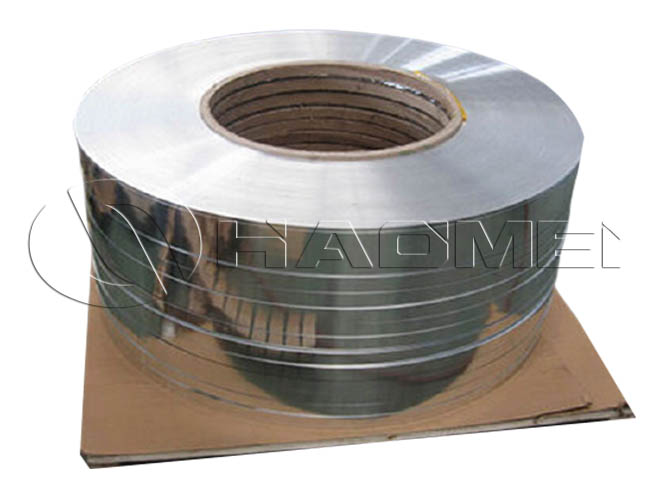
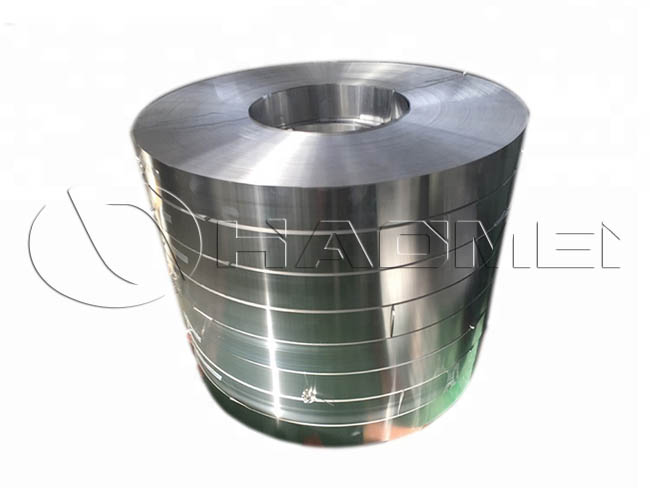
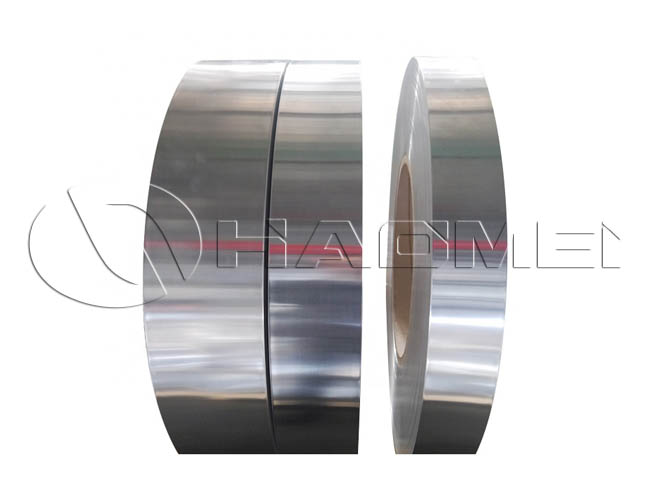
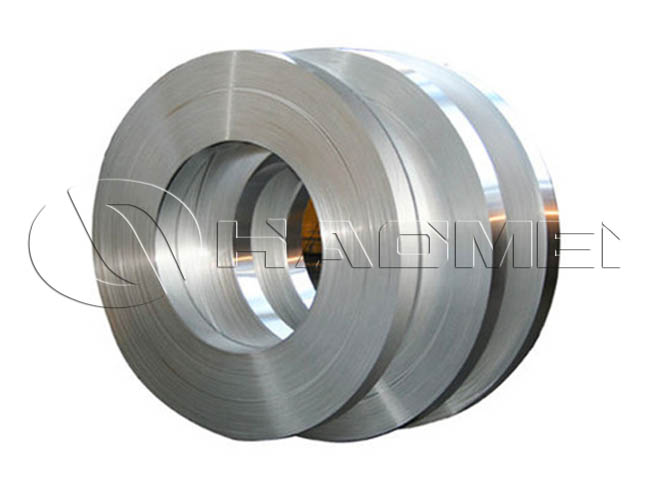
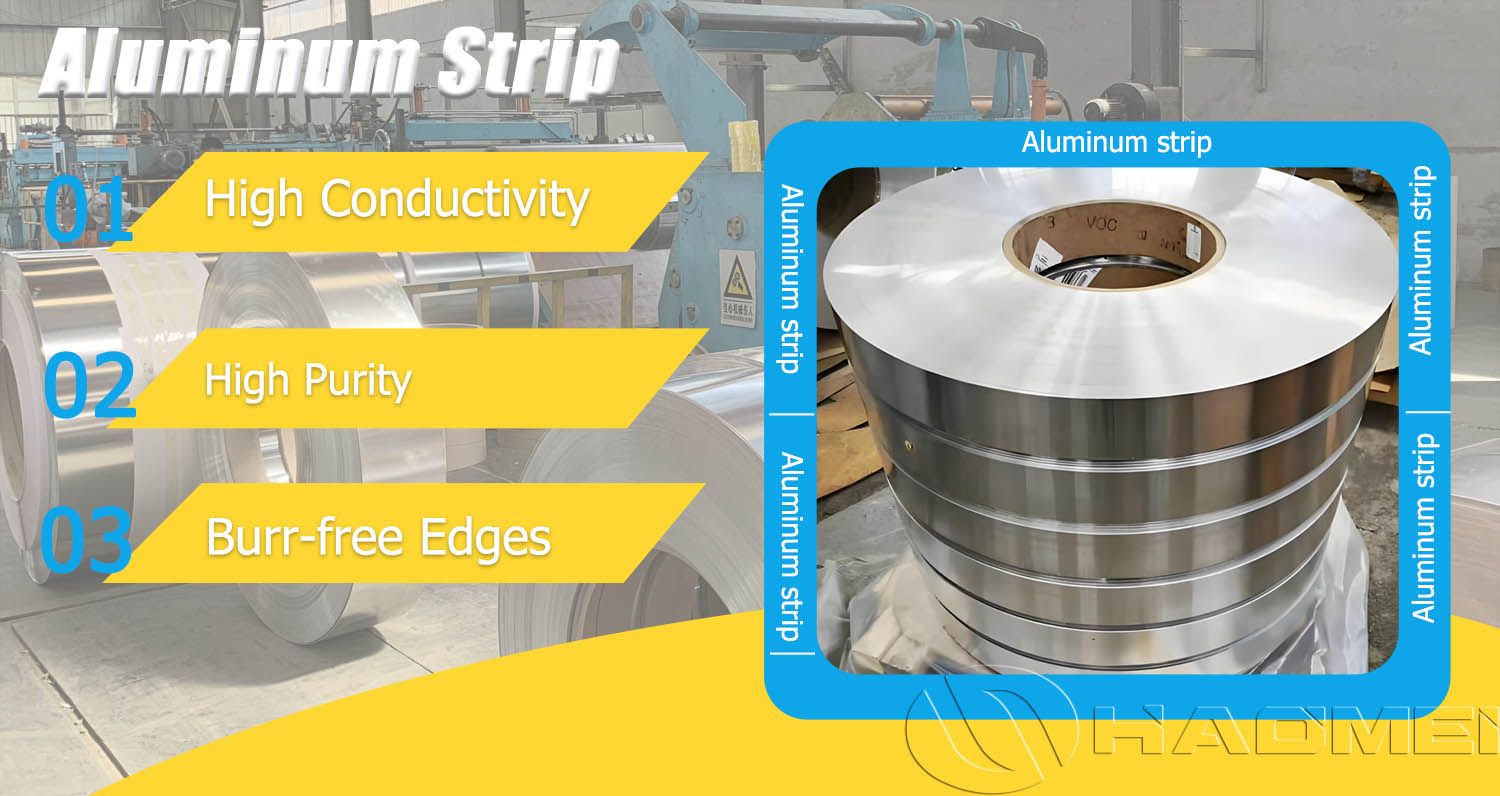
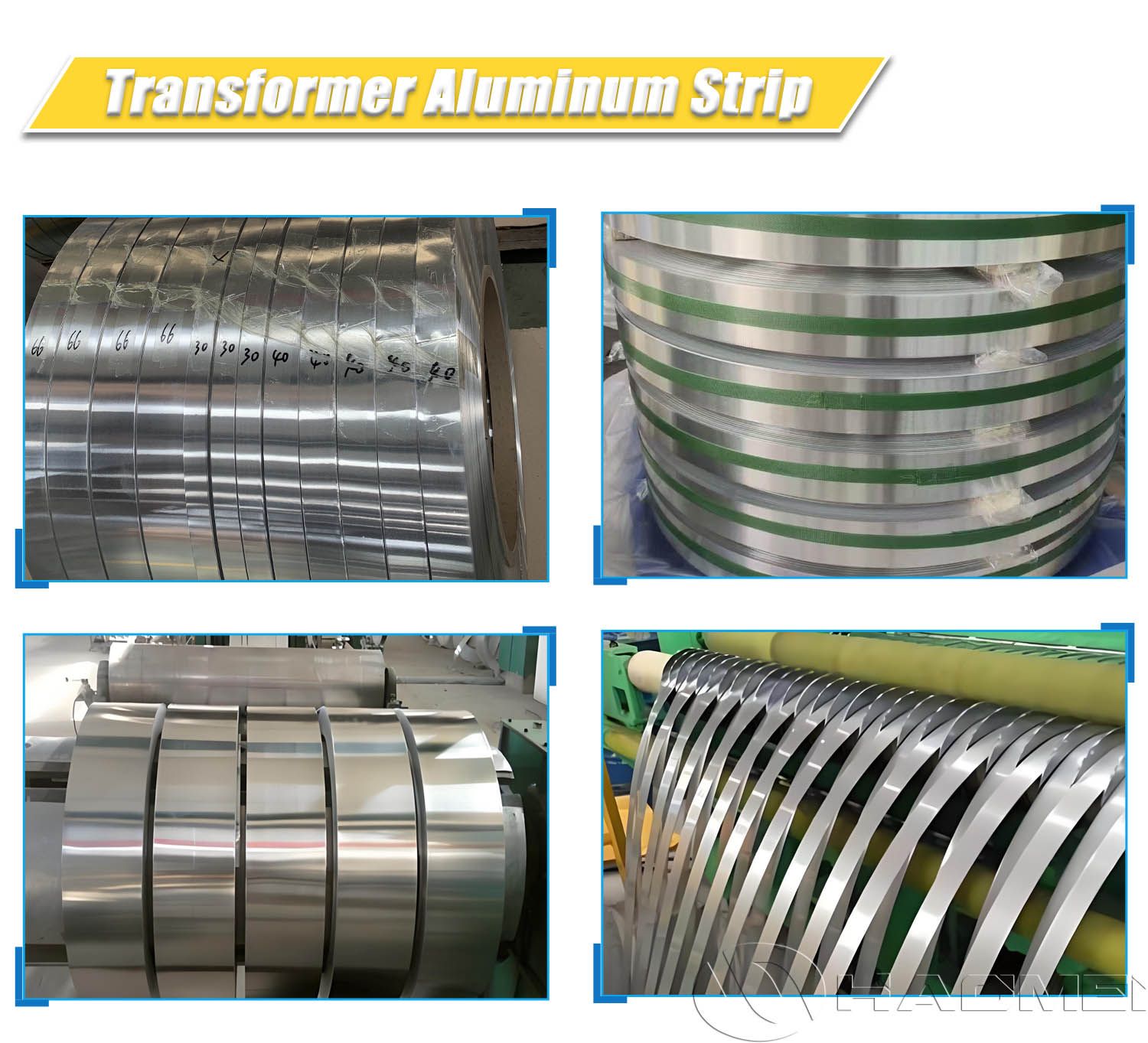
Transformer aluminum strip is mainly used to manufacture transformer windings. Commonly used grades include 1050, 1060, 1070, and 1350 aluminum strip, with electrical conductivity reaching over 61% IACS, thermal conductivity of approximately 237 W/(m·K), and a density of only 2.7 g/cm³. The surface is smooth and burr-free, and after annealing, it has excellent flexibility and good adhesion with insulation wrapping.
The core function of aluminum strip for transformer windings is to conduct electrical energy and achieve voltage conversion. Compared with traditional round wire windings, aluminum strip, as a flat conductor, offers a higher filling factor and better structural stability. It plays a key role in the following aspects:
1. Electrical Conductivity
As a conductive material in transformers, aluminum strip has good electrical conductivity. Firstly, aluminum strip has low resistivity, enabling it to conduct current effectively. Secondly, it has high current-carrying capacity and stable conductivity, allowing it to withstand high-load currents during transformer operation. In addition, aluminum strip has good contact performance and can maintain reliable contact with conductive components inside the transformer, ensuring smooth current transmission.
2. Heat Dissipation
Transformers generate a large amount of heat during operation. If the heat cannot be dissipated in time, it will affect the normal operation of the transformer. Aluminum strip has excellent heat dissipation performance and can quickly transfer the heat generated inside the transformer to the external environment.
Thanks to its excellent thermal conductivity and heat dissipation capability, aluminum strip effectively reduces the temperature rise of the transformer and ensures stable operation. At the same time, its heat dissipation function helps prevent equipment aging, insulation damage, and other problems caused by excessive temperature.
3. Protection Function
Transformer aluminum strip also provides a certain protective function. As an internal conductive component of the transformer, it not only transmits current but also offers mechanical protection. During transformer operation, aluminum strip can withstand certain mechanical stresses and protect other internal components from external damage.
In addition, as a conductive material, aluminum strip can effectively conduct electromagnetic fields and provide a shielding effect, reducing the impact of electromagnetic interference on the transformer.
Five Core Advantages of Aluminum Strip Compared with Copper Strip
1. Significant Cost Advantage
The market price of aluminum is much lower than that of copper. In large-scale production, aluminum strip can significantly reduce raw material costs. For manufacturers of medium- and low-voltage transformers and power distribution equipment, using aluminum strip can effectively improve product competitiveness.
2. Lightweight, Easy to Transport and Install
The density of aluminum is about 30% of that of copper. Under the same current-carrying capacity, aluminum strip windings are lighter. This not only reduces the overall weight of the equipment but also lowers transportation and installation costs, making it especially suitable for high-rise buildings and mobile power stations.
3. Excellent Corrosion Resistance
Aluminum naturally forms a dense oxide film in the air, giving it good oxidation and corrosion resistance. In humid or chemical environments, aluminum strip provides stable service life performance.
4. Superior Processing Performance
Aluminum strip has good ductility and plasticity. It is suitable for continuous rolling and precision slitting, enabling high-precision dimensional control, including thickness tolerance and edge burr control. It can meet the manufacturing requirements of high-end transformers.
5. Environmental Protection and Sustainability
Aluminum can be 100% recycled and reused, and the energy consumption for recycling aluminum is far lower than that required for primary aluminum production. The use of aluminum strip is in line with the development direction of green manufacturing and circular economy.
Product Specifications of Aluminum Strip
| Item | Specification |
| Alloy | 1050, 1060, 1070, 1350 |
| Temper | O |
| Thickness | 0.08-3.5 mm |
| Width | 10-1600 mm |
| Length | 1000-16000mm |
| Electrical Conductivity | ≥61% IACS |
| Electrical Resistivity | ≤2.826×10⁻⁸ Ω·m at 20°C |
| Thermal Conductivity | Approx. 237 W/(m·K) at 20°C |
| Density | 2.7 g/cm³ |
| Tensile Strength | ≥75 MPa |
| Elongation | ≥30% |
| Surface Quality | Smooth surface, burr-free, no oxidation spots, no scratches |
| Processing Performance | Suitable for cold rolling, stretching, winding, slitting, and complex winding structures |
| Applications | Dry-type transformers, oil-immersed transformers, reactors, current transformers, etc. |
| MOQ | 1–3 tons |
Application Scenarios of Aluminum Strip for Transformer Windings
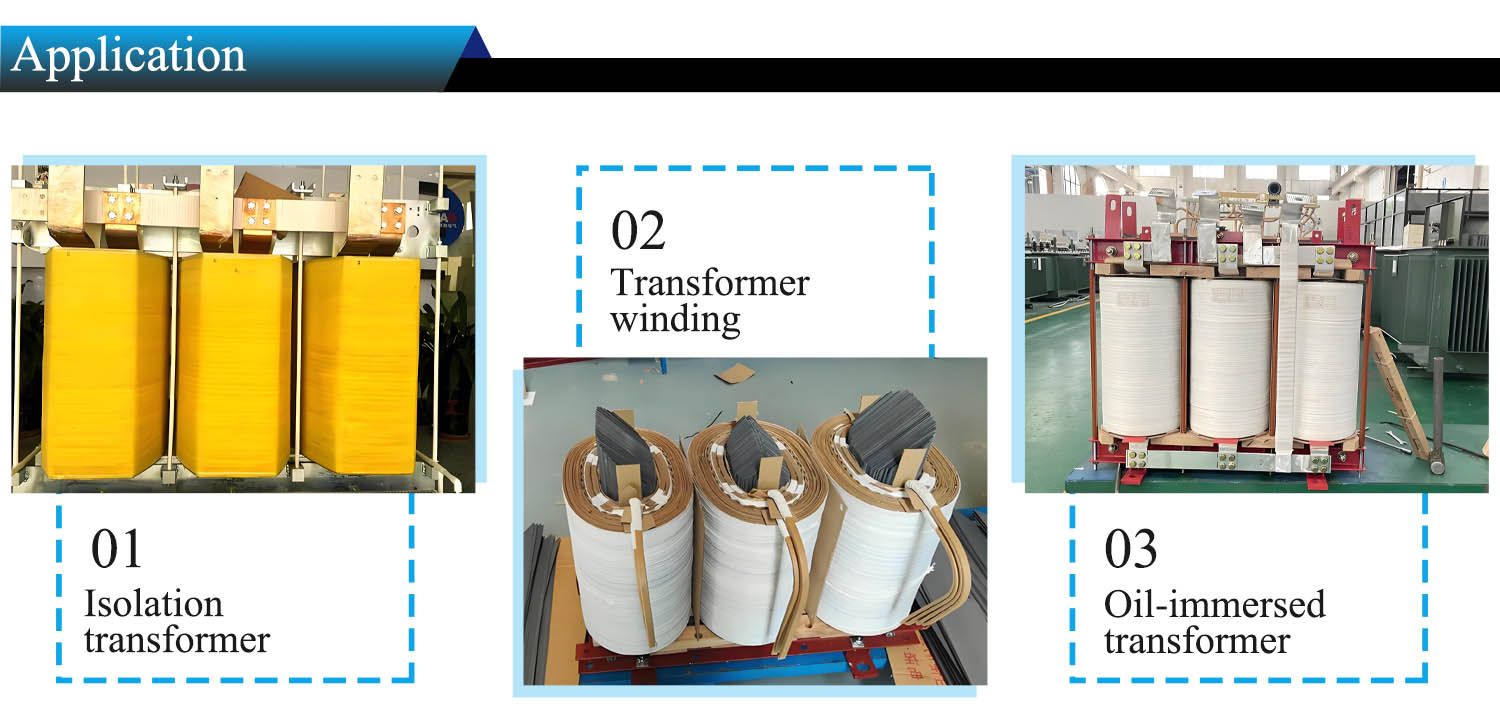
Dry-Type Distribution Transformers, SCB Series
Aluminum strip is used for low-voltage windings together with epoxy resin casting. It offers strong short-circuit resistance and controllable production costs.
Oil-Immersed Distribution Transformers, S13, S20, etc.
Aluminum strip has good compatibility with transformer oil and is suitable for power grid renovation and rural power grid upgrading projects.
Wind Power and Photovoltaic Step-Up Transformers
The lightweight design reduces the load on tower structures. Aluminum strip can be customized in large widths to meet the requirements of high-capacity transformers.
Rectifier Transformers and Reactors
Filter reactors wound with aluminum strip provide stable harmonic suppression performance and good economic efficiency.
Industry Standards for Transformer Aluminum Strip
Not all aluminum strips are suitable for the core components of transformers. High-quality transformer aluminum strip must meet the following strict requirements:
Electrical Conductivity
The conductivity is generally required to be above 61% IACS.
Material Purity
Aluminum material with a purity of over 99.6% is commonly used to minimize electrical resistance.
Edge Treatment
The edges must meet the standard of being burr-free and rounded to prevent puncturing the insulation layer and causing short circuits.
As a professional aluminum strip manufacturer, HAOMEI Aluminum supplies grades such as 1060, 1050, 1050A, 1070, 1070A, and 1350. These products feature high electrical conductivity, soft temper, smooth surface, and burr-free edges. They are ideal materials for producing dry-type transformers and are key raw materials for manufacturing transformer windings.
HAOMEI offers direct factory sales, competitive prices, sample supply, and exports to more than 40 countries and regions. We can undertake large orders from 1 ton to 2000 tons, with reliable after-sales service. Please feel free to contact us at any time.