 Contact Us
In the field of power transformer manufacturing, aluminum strip has become a key conductive material for dry-type and oil-immersed transformer windings due to its high conductivity, lightweight characteristics, and controllable cost. Among many technical indicators, conductivity is one of the most critical parameters, as it directly determines the energy consumption, temperature rise, and operational stability of the transformer.
What Is Transformer Aluminum Strip?
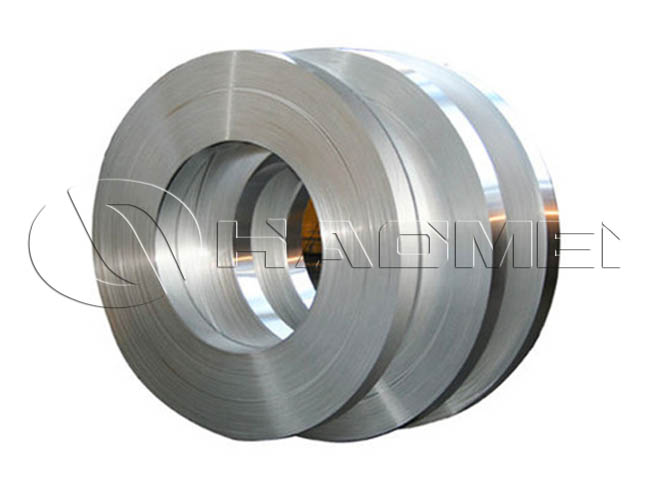
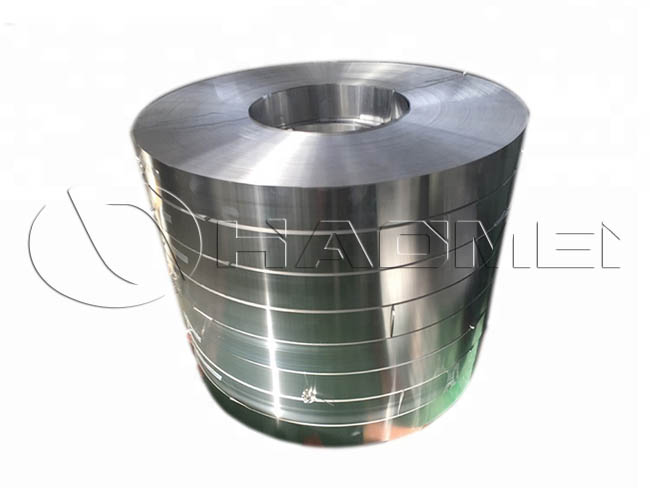
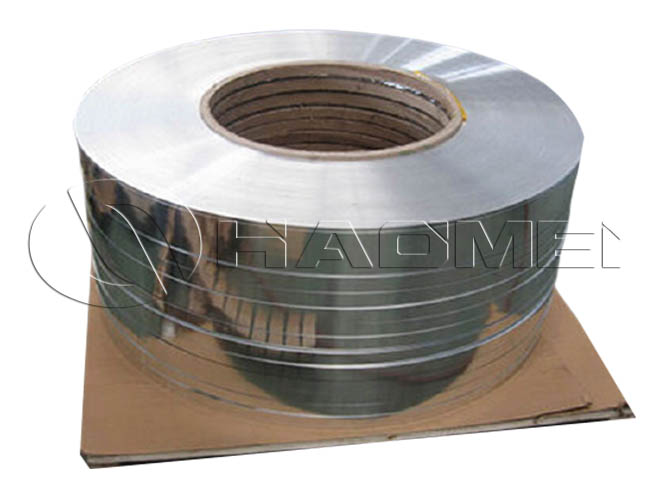
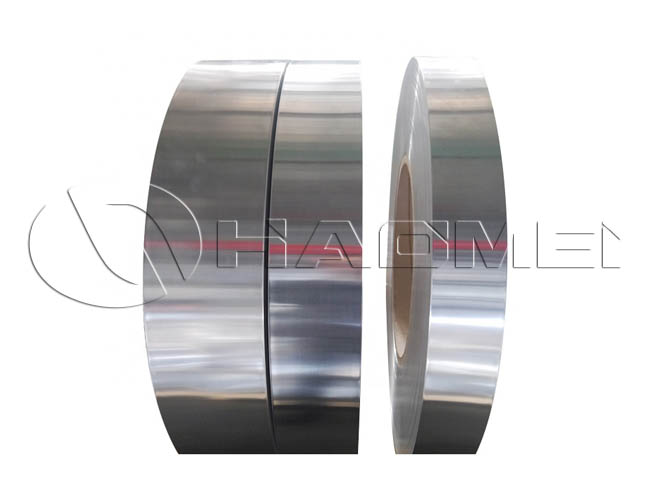
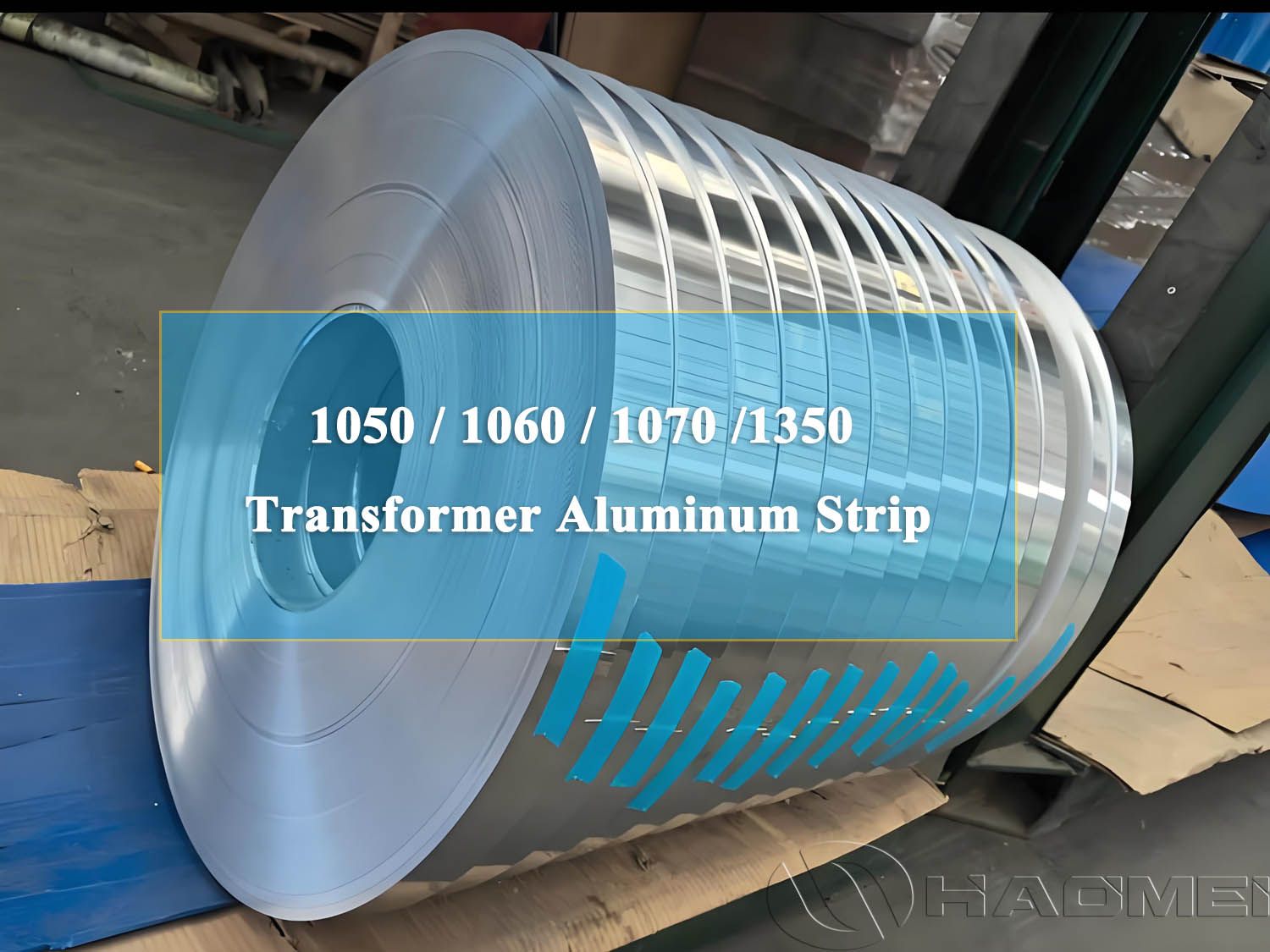
Transformer aluminum strip, as the name suggests, is a key raw material specially used for manufacturing transformer windings. It is made from high-purity aluminum ingots through melting, rolling, slitting, and other processes. It is mainly used in the high-voltage and low-voltage windings of dry-type transformers and power transmission equipment.
Common materials include:
1050 aluminum strip
1060 aluminum strip
1070 aluminum strip
1350 aluminum strip
Transformer aluminum strip is like the "conductive blood vessel" of a transformer. Electric current flows into and out of the transformer through it, completing voltage transformation and transmission. Therefore, its electrical conductivity directly determines the efficiency and energy consumption of the transformer.
Product Specifications
| Item | Specification |
| Alloy | 1050, 1060, 1070, 1350 |
| Temper | O |
| Thickness | 0.08mm ~ 3.0mm, commonly 0.2~3.0mm |
| Width | 20mm ~ 1650mm |
| Length | 1000mm ~ 16000mm |
| Coil Inner Diameter | 300mm or 500mm |
| Packaging | Wooden pallet |
| MOQ | 1–3 tons |
Temper: Why Is "O Temper" Required?
Transformer aluminum strip is usually required to be in O temper, also known as soft temper. "O" indicates the annealed soft state, and numbers may be used after it to indicate the degree of softness and annealing.
Why Must It Be O Temper?
1. Processing Requirements
The aluminum strip needs to be wound into transformer coils, so it must be soft and easy to bend and form.
2. Elongation Requirements
O temper aluminum strip has good elongation, usually ≥20%, and will not break during winding.
3. Electrical Conductivity
Fully annealed O temper aluminum strip has a more regular crystal lattice structure, resulting in better electrical conductivity.
If hard temper aluminum strip, such as H temper, is used, cracks or even breakage can easily occur during winding, making it impossible to manufacture transformer coils properly.
Core Conductivity Standard for Transformer Aluminum Strip
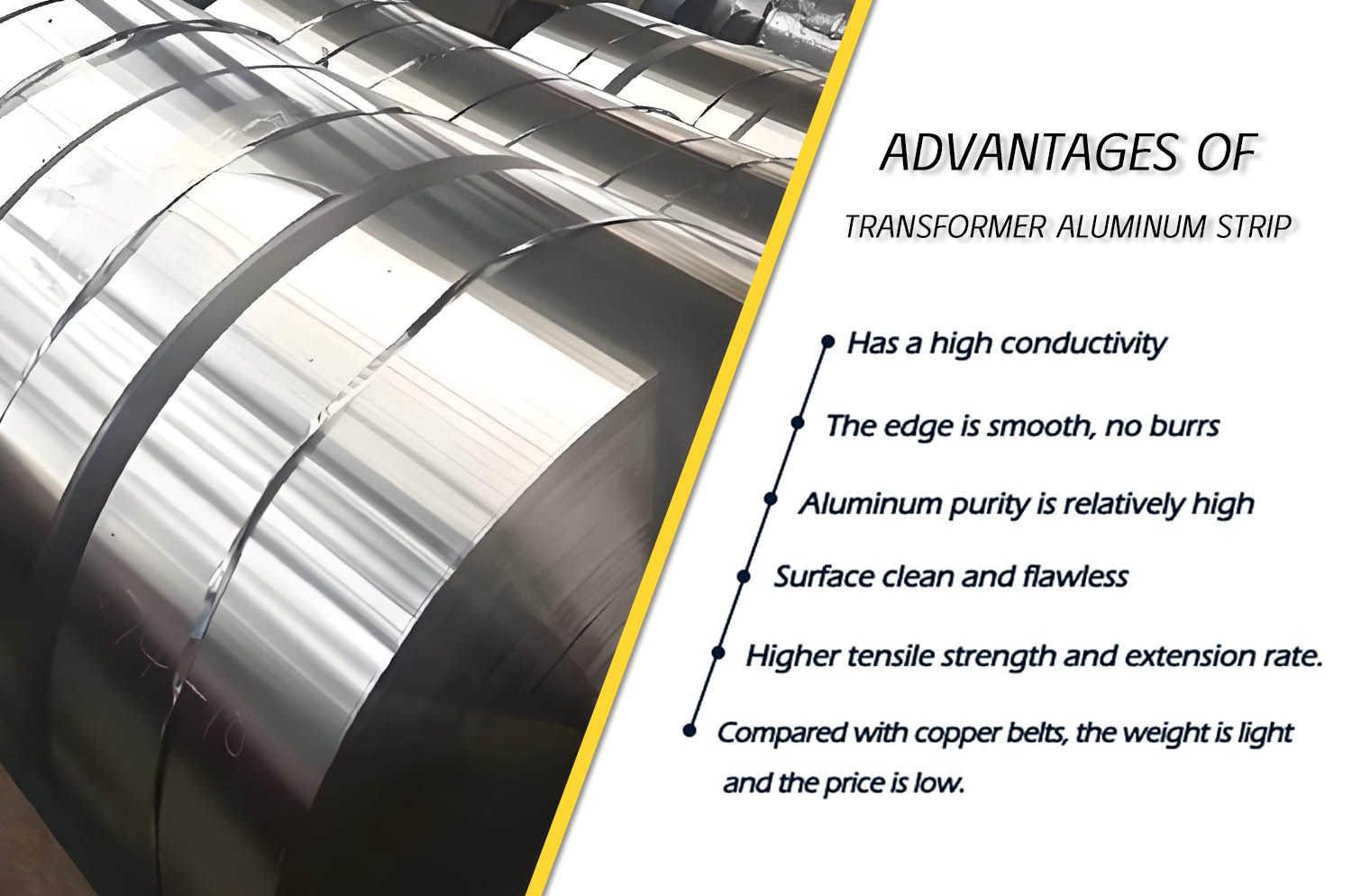
The conductivity of transformer aluminum strip must strictly follow the International Annealed Copper Standard, expressed as %IACS. IACS defines the conductivity of annealed copper as 100%, while the conductivity of high-quality transformer aluminum strip is usually between 61.5% and 63% IACS.
If the conductivity is lower than 61% IACS, it means the aluminum strip contains more internal impurities. This will greatly increase heat generation during transformer operation, reduce the rated capacity of the transformer, and shorten its service life.
Slight Differences Between Different Grades
Transformer aluminum strip is mostly made of 1-series industrial pure aluminum, such as 1050, 1060, 1070, and 1350. Due to differences in aluminum purity, generally from 99.5% to 99.7%, the conductivity requirements increase accordingly. The higher the purity, the higher the conductivity.
| Grade | Aluminum Purity ≥ | Temper | Conductivity Requirement, IACS | Main Application |
| 1050 | 99.5% | O | ≥60% | Economical dry-type transformers, low-voltage windings |
| 1060 | 99.6% | O | ≥61.5% | General-purpose transformers, most commonly used, high and low voltage windings |
| 1070 | 99.7% | O | ≥62.7% | High-end dry-type transformers, high-load working conditions |
| 1350 | 99.5% | O | ≥62% | Oil-immersed transformer windings, applications requiring high conductivity |
Why Is Aluminum Strip an Ideal Choice for Transformers?
Although the conductivity of aluminum is only about 62% that of copper, aluminum strip has irreplaceable advantages in practical applications.
1. Lightweight Advantage
The density of aluminum is only about one-third that of copper. Under the condition of achieving the same conductive capacity, the weight of aluminum windings is only about half that of copper windings. This is very beneficial for the transportation and installation of large transformers.
2. Strong Short-Circuit Resistance
Coils wound with aluminum strip are usually cylindrical structures. When a short circuit occurs, the axial force is evenly distributed. Compared with copper wire windings, aluminum strip windings have stronger resistance to mechanical stress damage.
3. Good Heat Dissipation
Aluminum strip windings dissipate heat naturally between layers, and aluminum has good thermal conductivity, making it less likely to form local overheating points.
4. Cost Effectiveness
In the global metal market, aluminum is much cheaper than copper and its price fluctuation is relatively smaller. This gives aluminum strip transformers a strong cost advantage.
Application Fields
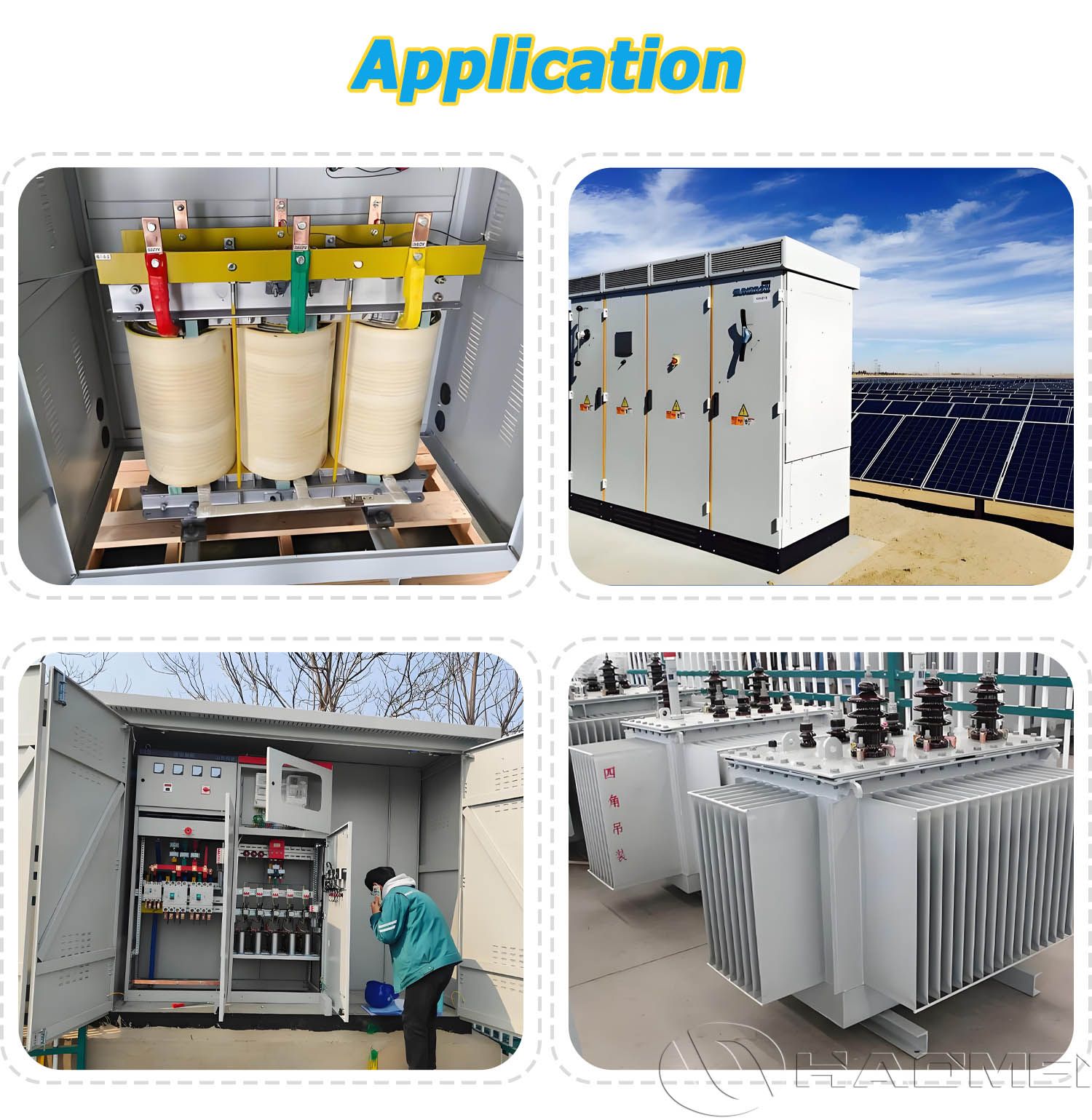
Transformer aluminum strip is widely used in:
High-voltage and low-voltage windings of dry-type transformers
Power transmission equipment
High-rise buildings and underground facilities
Commercial centers and residential areas
Hotels, restaurants, and coastal humid areas
Dry-type transformers using aluminum strip windings have the advantages of small size, light weight, good insulation performance, flame retardancy, no pollution, low partial discharge, moisture resistance, stable and reliable operation, low noise, and low maintenance cost.
Key Factors Affecting Aluminum Strip Conductivity
1. Material Purity
The ideal conductivity of pure aluminum is about 65% IACS, but industrial aluminum inevitably contains impurities such as iron (Fe), silicon (Si), copper (Cu), and vanadium (V). These impurities damage the integrity of the aluminum crystal lattice, increase the probability of free electron scattering, and directly reduce conductivity.
Among them, iron and silicon have the greatest influence. For every 0.1% increase in iron content, the conductivity of aluminum strip decreases by about 1%–1.5% IACS. Therefore, high-end aluminum strip must strictly control iron and silicon impurities to the lower limit.
2. Burr Requirements
For aluminum strip used in transformer windings, the edges must be smooth and free of burrs. Generally, the burr height is required to be less than 0.02mm.
If there are tiny burrs on the edge of the aluminum strip, they can easily pierce the insulation layer, causing inter-turn short circuits and even transformer burnout.
| Aluminum Strip Thickness (mm) | Burr Height Requirement (mm) |
| 0.2 ~ 1.0 | ≤0.015 |
| 1.1 ~ 1.5 | ≤0.02 |
| ≥1.6 | ≤0.03 |
3. Chamfering and Round-Edge Treatment
High-end transformer aluminum strip is processed with chamfered edges, also known as rounded edges. Compared with sharp right-angle edges, smooth rounded edges cause less damage to the insulation layer. During winding, the aluminum strip layers fit more closely and are less likely to form gaps.
This is similar to "polishing" the sharp edge of glass. It may seem like a small process, but it can greatly improve the reliability of the transformer.
4. Thickness and Width Tolerance
The dimensional accuracy of transformer aluminum strip must be strictly controlled, as it directly affects the coil filling factor and final impedance matching.
Thickness Tolerance
| Thickness (mm) | Allowable Tolerance (mm) |
| >0.4 ~ 0.8 | ±0.03 |
| >0.8 ~ 1.1 | ±0.04 |
| >1.1 ~ 1.4 | ±0.05 |
| >1.4 ~ 2.0 | ±0.06 |
| >2.0 ~ 2.5 | ±0.07 |
| >2.5 ~ 3.0 | ±0.08 |
Width Tolerance
| Width (mm) | Allowable Tolerance (mm) |
| ≤341 | ±0.5 |
| >340 ~ 1000 | ±1.0 |
5. Surface Quality
Oil-Free Surface
The surface must undergo strict degreasing treatment. Residual oil stains may decompose under the high temperature generated during transformer operation, which may cause insulation aging or contaminate transformer oil in oil-immersed transformers.
Flatness
The strip shape should be flat, without obvious waves or longitudinal tears.
How to Choose High-Quality Transformer Aluminum Strip?
When purchasing transformer aluminum strip, it is recommended to start from the following aspects:
1. Check the Chemical Composition Certificate
Ensure that the aluminum content reaches 99.6% for 1060 or 99.7% for 1070. Excessive impurity content, such as silicon and iron, will significantly reduce electrical conductivity.
2. Test the Actual Conductivity
Use a professional eddy current conductivity tester for on-site sampling inspection.
3. Check the Edge Processing Technology
Confirm whether the manufacturer has advanced round-edge processing technology or high-performance slitting equipment.
4. Check the Executive Standard
Confirm whether the product complies with the YS/T 713-2009 standard.