 Contact Us
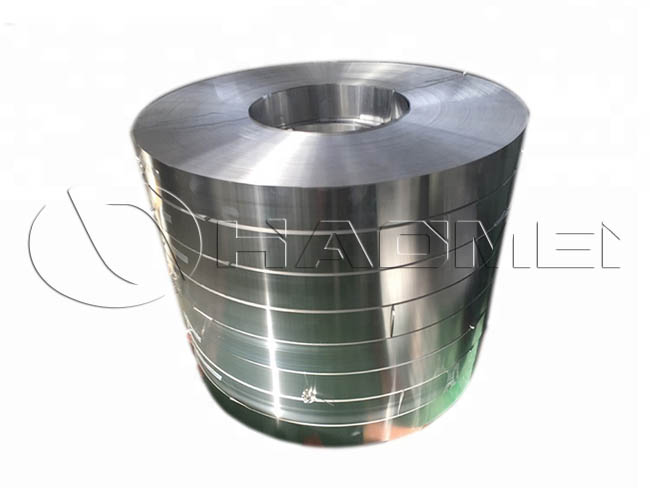
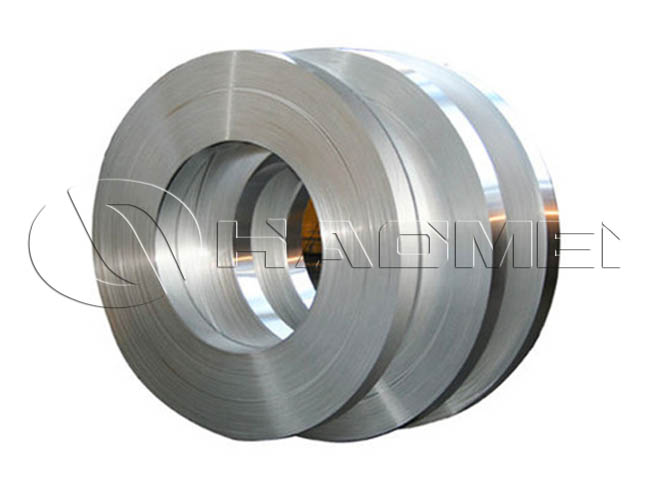
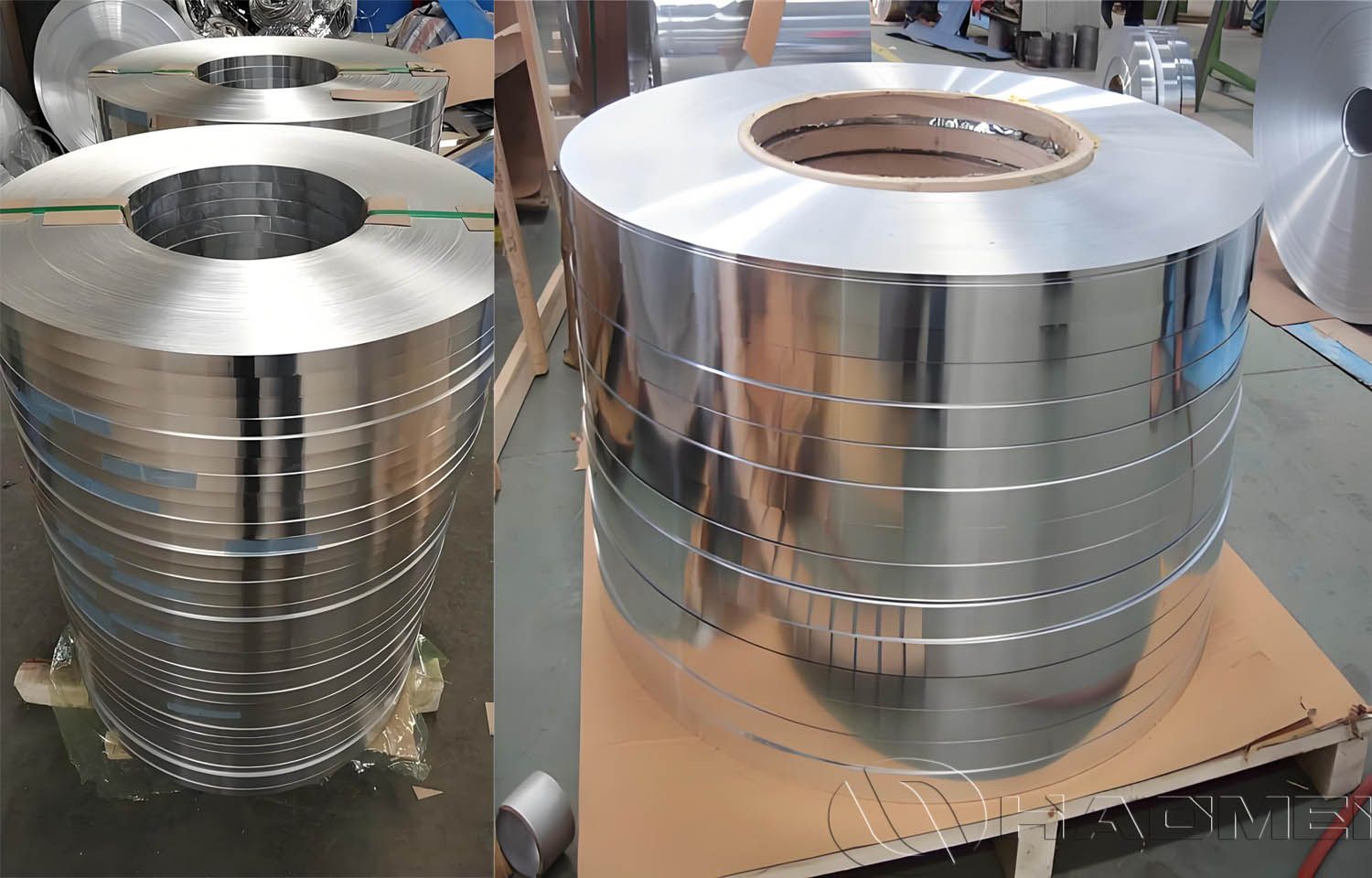
Transformer aluminum strip for Canada is a key material widely used in power transformer manufacturing, primarily for transformer winding conductors. Due to its good electrical conductivity, light weight, and cost advantages, aluminum strip has become an important conductor material in the transformer industry.
HAOMEI Aluminum supplies transformer winding aluminum strip to Canada, Mexico, the United States, South Korea, Thailand, Singapore, Malaysia, and more than 40 other countries. With competitive pricing, reliable quality, and stable export service, our transformer aluminum strip is well recognized by overseas customers.
Basic Characteristics of Transformer Aluminum Strip for Canada
Transformer aluminum strip is generally produced from high-purity aluminum with an aluminum content of more than 99.5%, ensuring good electrical conductivity. In the annealed O temper, aluminum strip typicall0y has an electrical conductivity of approximately 61% IACS, while copper is defined as 100% IACS.
Because aluminum has a significantly lower density than copper, aluminum winding strip can reduce the overall weight of a transformer while helping lower raw material costs.
In terms of mechanical properties, transformer winding aluminum strip offers good flexibility and tensile strength, enabling it to withstand bending and tension during the winding process. The surface of the aluminum strip may also be specially treated to improve oxidation resistance and help prevent corrosion during long-term use.
Transformer aluminum strip is available in different grades, dimensions, and tempers depending on its intended use. Common alloy grades include:1050, 1050A, 1060, 1070, 1070A, 1350
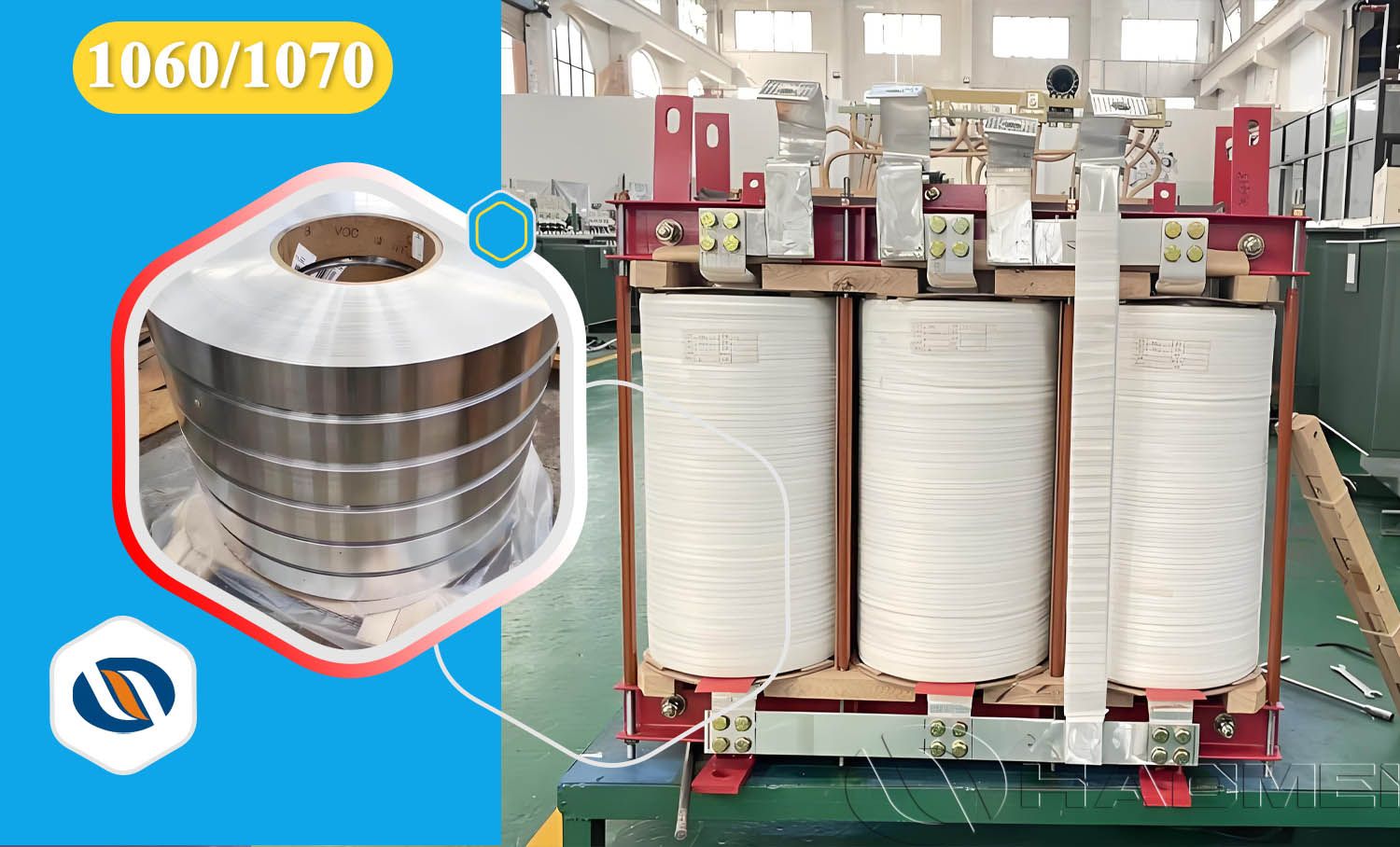
These grades generally contain more than 99.5% aluminum. Among them, 1060 and 1070 feature higher purity and better electrical conductivity.
The most common temper is O temper, also known as soft annealed temper. H tempers are also available, with the following numbers indicating different degrees of hardness and strain hardening or annealing conditions.
Transformer aluminum strip can be supplied in thicknesses ranging from approximately 0.08 mm to 3.00 mm. Standard widths may include 30 mm, 50 mm, and 80 mm, while customized widths are available according to customer requirements.
Production Process of Transformer Winding Aluminum Strip
The production of transformer aluminum strip mainly includes melting, rolling, annealing, and slitting.
Melting
High-purity aluminum ingots are melted at high temperatures. Small amounts of alloying elements may be added where necessary to optimize the mechanical properties of the material.
Rolling
The aluminum stock is processed through hot rolling and cold rolling to achieve the required thickness. This process helps ensure a smooth surface, stable thickness, and good flatness.
Annealing
The rolled aluminum strip is annealed to remove internal stress and improve ductility. Proper annealing is especially important for transformer winding applications, where the strip must withstand continuous bending and forming.
Slitting
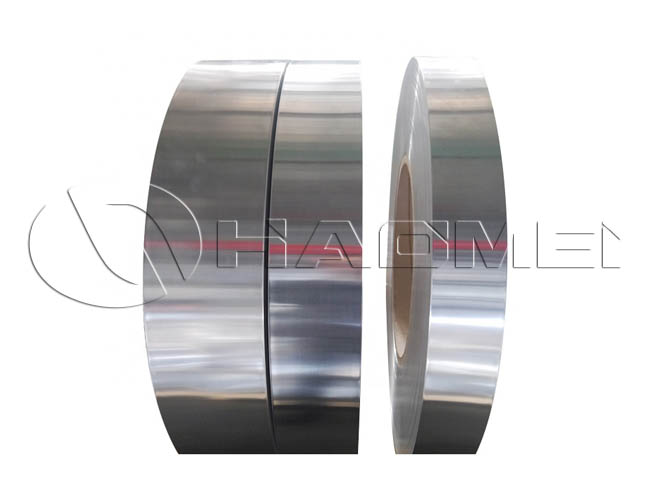
Wide aluminum coils are precision-slit into finished strips of different widths according to customer requirements. The strips are then cleaned, inspected, and packaged for shipment.
Strict control of these manufacturing processes ensures the stable quality, dimensional accuracy, and reliability of transformer aluminum strip.
Typical Specifications of Transformer Aluminum Strip
| Item | Typical Range |
| Alloy | 1050, 1060, 1070, 1350 |
| Temper | O, H12, H14, H16, H18, etc., customized upon request |
| Electrical Conductivity | Approximately 61% IACS |
| Thickness | 0.2–10 mm |
| Width | 20–600 mm |
| Length | ≥16,000 mm |
| Surface | Flat-rolled, clean, and free from obvious defects |
| Edge Condition | Smooth, flat, free from significant burrs and edge cracks |
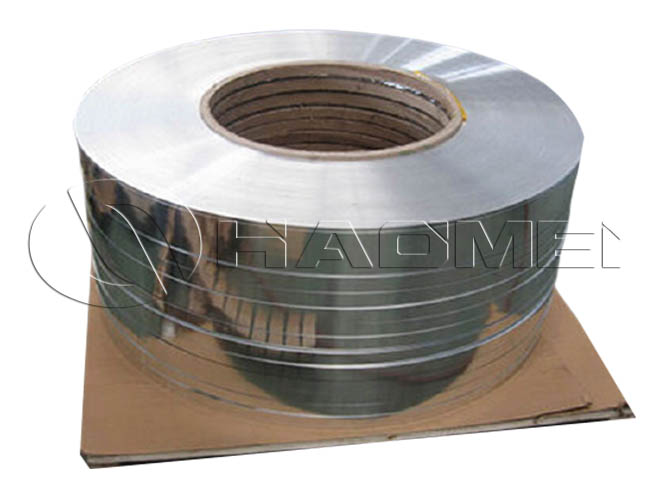
| Packaging | Wooden cases, pallets, or export-standard packaging |
| Supply Form | Coils and slit strips |
| MOQ | 3 tons |
Actual specifications, tolerances, coil weights, inner diameters, and packaging methods can be customized according to transformer design requirements and winding equipment.
Performance Advantages of Transformer Winding Aluminum Strip
Compared with copper conductors, transformer aluminum strip offers several important advantages.
1. Lower Material Cost
Aluminum is generally less expensive than copper. Using aluminum strip can significantly reduce the conductor cost of transformer production, especially for distribution transformers and cost-sensitive projects.
2. Light Weight
The density of aluminum is approximately one-third that of copper. Aluminum winding strip can reduce the total weight of the transformer, making transportation, handling, and installation more convenient.
3. Good Electrical Conductivity
Although aluminum has lower electrical conductivity than copper, the required electrical performance can be achieved by appropriately increasing the conductor cross-sectional area.
4. Good Corrosion Resistance
Aluminum naturally forms a protective oxide film on its surface. With suitable surface treatment and proper insulation design, transformer aluminum strip can provide good oxidation and corrosion resistance in a wide range of operating environments.
5. Excellent Processing Performance
1xxx-series pure aluminum strips have good ductility and formability. They are suitable for continuous winding, bending, folding, and other transformer coil manufacturing processes.
6. Surface Treatment of Transformer Aluminum Strip
To improve the corrosion resistance, surface cleanliness, and processing performance of aluminum strip, special surface treatments may be applied, including:
7. Oxidation Treatment
A uniform oxide film is formed on the aluminum surface to improve oxidation resistance and surface stability.
8. Oiling Treatment
A small amount of special moisture-resistant oil may be applied to the surface to reduce the risk of moisture exposure and oxidation during storage and transportation.
9. Electrolytic Treatment
Electrolytic processes may be used to enhance corrosion resistance and improve the overall surface condition of the aluminum strip.
The specific surface condition should always be selected according to the customer’s winding process, insulation system, storage conditions, and technical specifications.
Why Edge Quality Matters for Transformer Aluminum Strip
Edge quality is a critical factor that is often overlooked when purchasing transformer aluminum strip.
During transformer coil manufacturing, aluminum strip is usually wound continuously in multiple layers. If the strip edges contain excessive burrs, sharp corners, edge cracks, or irregular cuts, they may damage insulation paper, insulation film, or other dielectric materials.
This can increase the risk of insulation failure and reduce the long-term reliability of the transformer.
Therefore, high-quality transformer aluminum strip should be precision slit and subjected to strict edge-quality control.
An ideal transformer aluminum strip should provide:
Neat edges → Low burrs → Stable width → Smooth winding → Reduced risk of insulation damage
This is particularly important for high-voltage transformers, where the winding insulation system is a key factor affecting equipment safety and reliability.
Application Areas
Transformer aluminum strip for the Canadian market is commonly used in the following equipment and systems:
Pad-Mounted Oil-Filled Distribution Transformers: Pad-mounted transformers are widely used in suburban and residential distribution networks across Canada. Aluminum strip is commonly used for low-voltage foil windings in these transformer designs.
Dry-Type Cast Resin Transformers: Dry-type cast resin transformers are widely used in commercial buildings, data centers, hospitals, subway systems, and indoor power distribution facilities. They are oil-free and fire-resistant, and aluminum foil windings are frequently used in their coil structures.
Wind Power and Solar Step-Up Transformers: Transformer aluminum strip can be used in wind power transformers, photovoltaic step-up transformers, and shunt reactors supporting renewable energy systems.
Industrial Rectifier Transformers and Furnace Transformers: Aluminum strip is also suitable for industrial rectifier transformers, electric furnace transformers, grounding reactors, and other electrical equipment requiring reliable winding conductors.
Future Development Trends in the Canadian Transformer Aluminum Strip Market
The Canadian transformer aluminum strip market is expected to continue developing alongside grid modernization, renewable energy expansion, energy storage deployment, and demand for efficient distribution equipment.
Key future trends may include the following:
Smart Manufacturing
The use of automation, digital production management, and intelligent inspection systems will improve manufacturing efficiency, product consistency, and quality control.
New Material Development
New aluminum alloys and composite materials may be developed to further improve conductivity, mechanical strength, surface quality, and long-term reliability.
Green Production
Manufacturers will continue to reduce carbon emissions, energy consumption, and waste generation during aluminum production and processing. Low-carbon aluminum and recyclable packaging are likely to become increasingly important.
Market Expansion
As renewable energy projects, data centers, electrified transportation, and power distribution upgrades continue to grow, transformer aluminum strip will find new applications in emerging markets and advanced electrical equipment.