 Contact Us
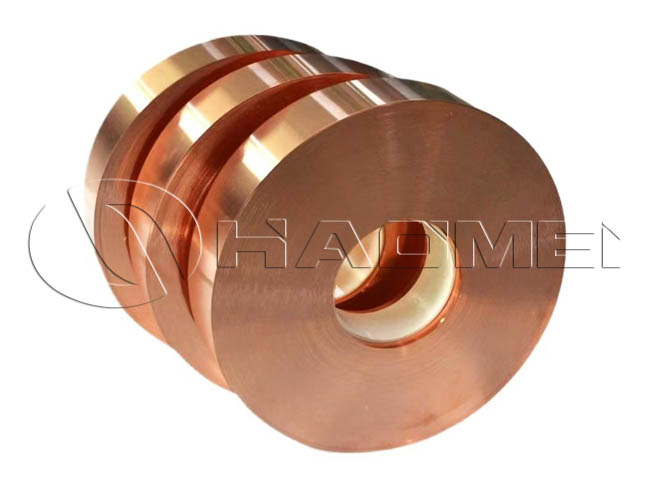
Hot-rolled copper strip for transformer windings refers to copper strip material used for winding transformer coils. Its main function is to carry current during transformer operation, making it a key conductive material in the electromagnetic conversion system of transformers.
"Hot-rolled copper strip" generally refers to strip-shaped copper material produced by rolling copper at high temperatures. During the rolling process, the copper billet is gradually reduced in thickness, extended, and formed into a strip with a specific width and thickness. After subsequent finishing, surface treatment, annealing, and slitting, it can be processed into copper strip products that meet the requirements of transformer winding applications.
C11000 is one of the most commonly used electrical copper grades internationally. It features high electrical conductivity, usually ≥99.8% IACS, and good forming performance. It is widely used in transformers, electrical connectors, busbars, copper bars, and other electrical applications.
Product Specifications
Product Name: Copper strip for transformer windings
Material Grades: T2, TU1, TU2, C11000, C10200, etc.
Copper Content: ≥99.95%
Temper: O, H
Thickness: 0.2 mm–5.0 mm
Width: 10 mm–600 mm
Electrical Conductivity: ≥99.95% IACS
Tensile Strength: 200–300 MPa
Elongation: ≥30%
Surface Roughness: Ra≤0.8 μm
Surface Condition: Bright, clean, oil-free, without obvious oxidation
Edge Condition: Round edge, slit edge, chamfered edge, or deburred edge
Standards: GB, ASTM, JIS, EN, or customer technical agreement
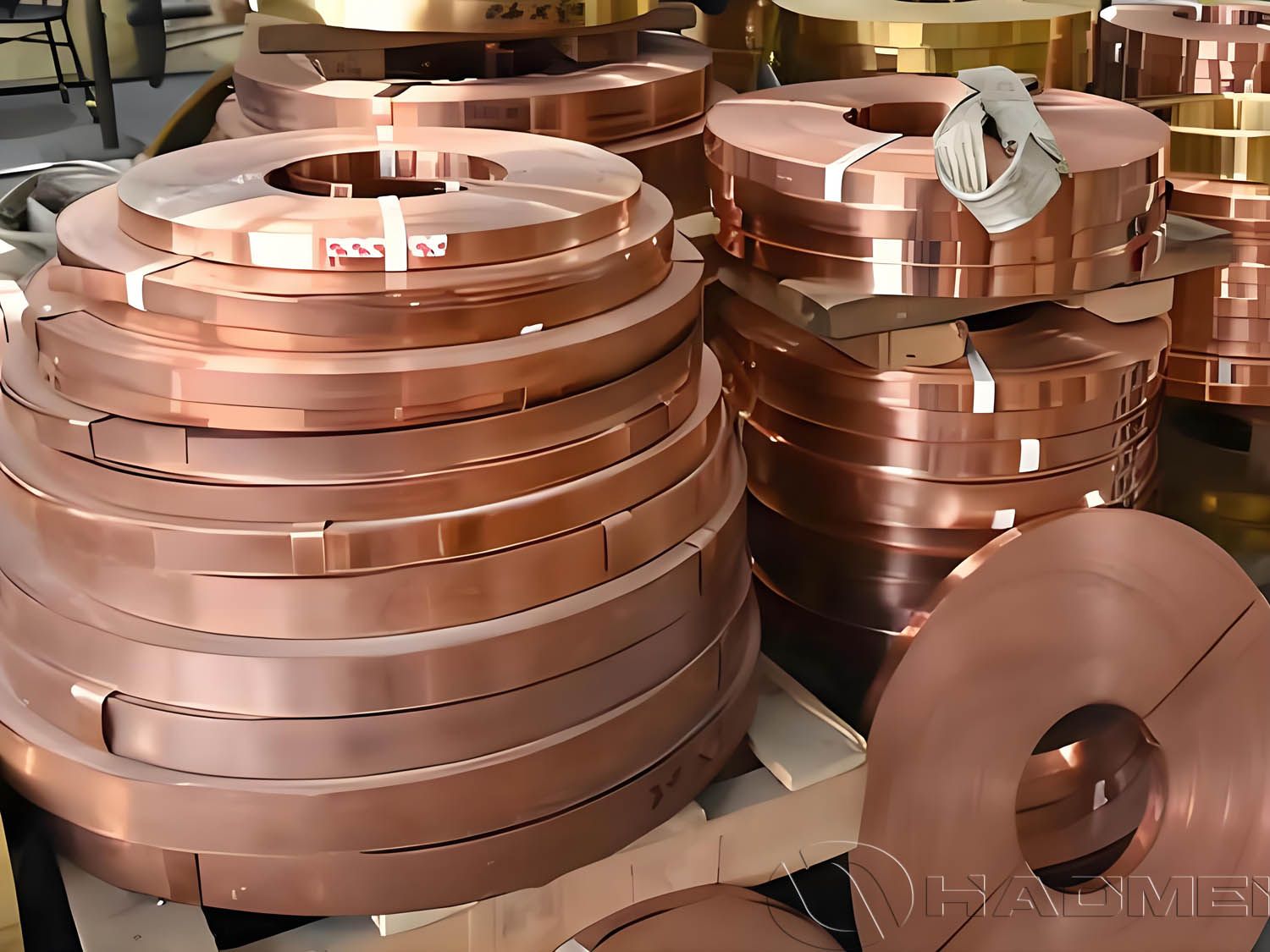
Packaging: Coil packaging, spool packaging, wooden case packaging, moisture-proof packaging, etc.
MOQ: 1–3 tons
Why Has Copper Strip Become the Mainstream Choice for Transformer Windings?
1.Excellent Electrical Conductivity
Copper has excellent electrical conductivity. Its conductivity at 20°C is about 58 MS/m, much higher than that of aluminum and many other metals. Windings made from copper have very low electrical resistance. High-quality transformer copper strip can achieve conductivity of 98%–100% IACS or above.
2.Strong Current-Carrying Capacity and Smaller Volume
Copper is stronger and can carry nearly twice the current of aluminum. Under the same capacity and energy-efficiency requirements, copper-wound transformers are significantly smaller and lighter than aluminum-wound transformers. They also require less core steel and fewer other physical components.
3.Excellent Resistance to Mechanical Stress
Copper is harder, more ductile, and has a lower coefficient of thermal expansion than aluminum. It can better withstand electromagnetic force impact caused by high-frequency currents. After winding, the structure remains stable and is not easy to loosen, effectively extending transformer service life and reducing maintenance costs.
4.Good Thermal Stability
Copper strip is not prone to softening or deformation in high-temperature environments, typically from 60°C to 150°C or even higher. It can maintain long-term electrical conductivity and structural integrity, preventing accelerated aging of insulating materials caused by conductor failure.
5.Resistance to Skin Effect
In high-frequency, high-power transformers, using flat copper strip instead of round wire for winding can significantly reduce the skin effect, which is the phenomenon where high-frequency current tends to flow near the conductor surface. This helps reduce additional losses caused by increased AC resistance.
Production Process of Hot-Rolled Copper Strip
The production of hot-rolled copper strip for transformer windings is a highly precise process, mainly including the following steps:
1. Melting and Casting
High-purity cathode copper with a copper content of ≥99.95% is selected and melted in an induction furnace. Deoxidation treatment is carried out to ensure material purity. The molten copper is then cast into copper flat ingots through horizontal continuous casting or vertical continuous casting.
2. Hot Rolling
The cast ingots are heated to 800–900°C for hot continuous rolling. Through multiple rolling passes, such as 220 mm → 205 mm → 175 mm → ... → 15 mm, the cast structure is broken down and an initial strip billet is formed. The final rolling temperature should be ≥580°C.
3. Surface Milling
The upper and lower surfaces of the cast billet are milled to remove the surface layer containing casting defects.
4. Cold Rolling
After hot rolling, the strip undergoes multiple cold rolling passes, including rough rolling and finish rolling, until it reaches the target thickness. Modern high-precision rolling mills are equipped with AGC, or automatic gauge control, and automatic flatness control systems, allowing thickness tolerance to be controlled at the micron level.
5. Annealing
After cold rolling, the material becomes harder and more brittle. It must be annealed in a protective atmosphere, such as in a bell-type furnace or bright annealing furnace, to restore plasticity and electrical conductivity. The annealing temperature is usually 480–520°C, with a holding time of 5–8 hours.
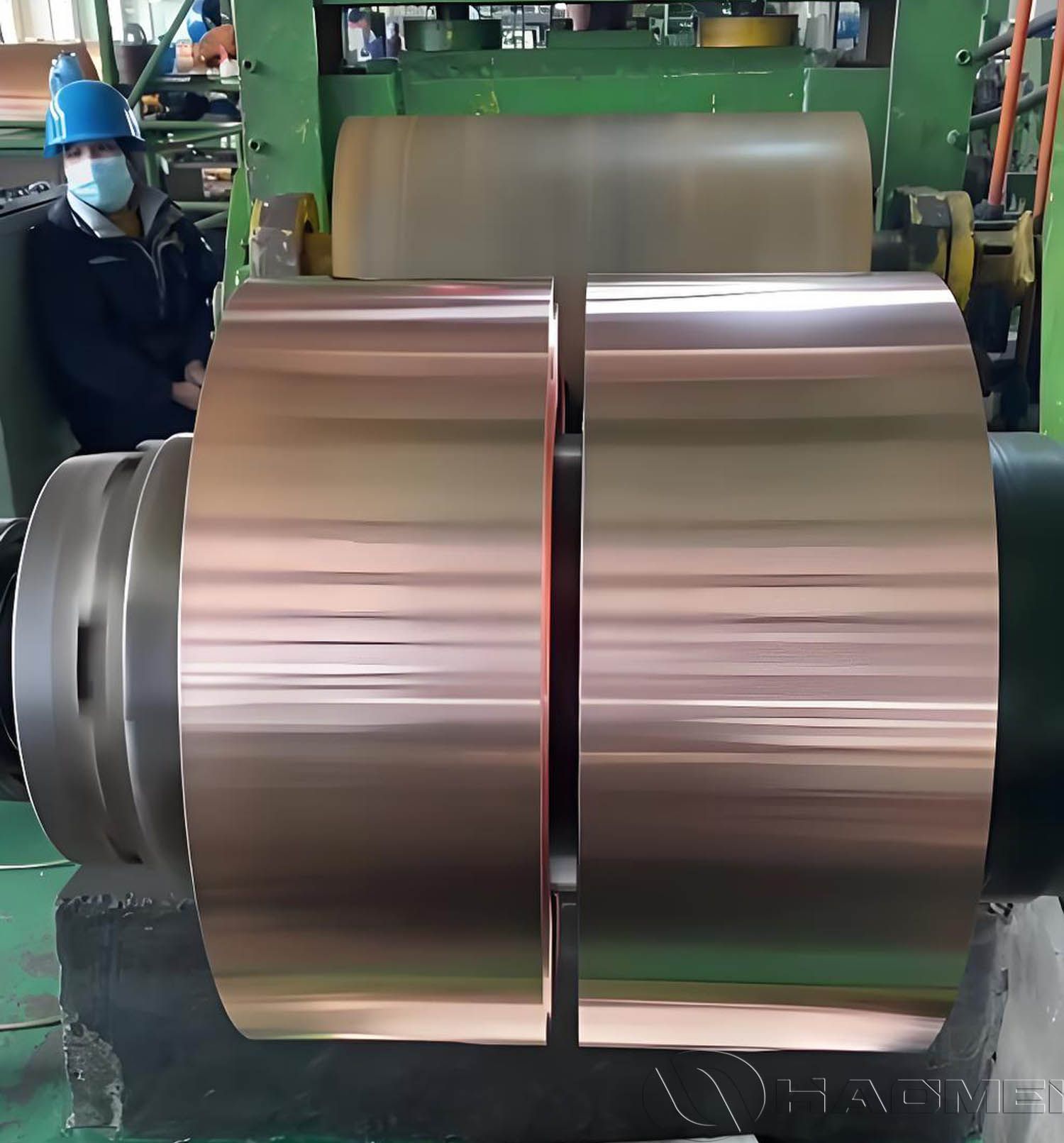
6. Finishing and Slitting
The strip is tension-leveled to eliminate internal stress, and then precisely slit according to the width required by the customer. This ensures accurate dimensions and burr-free edges.
Application Fields
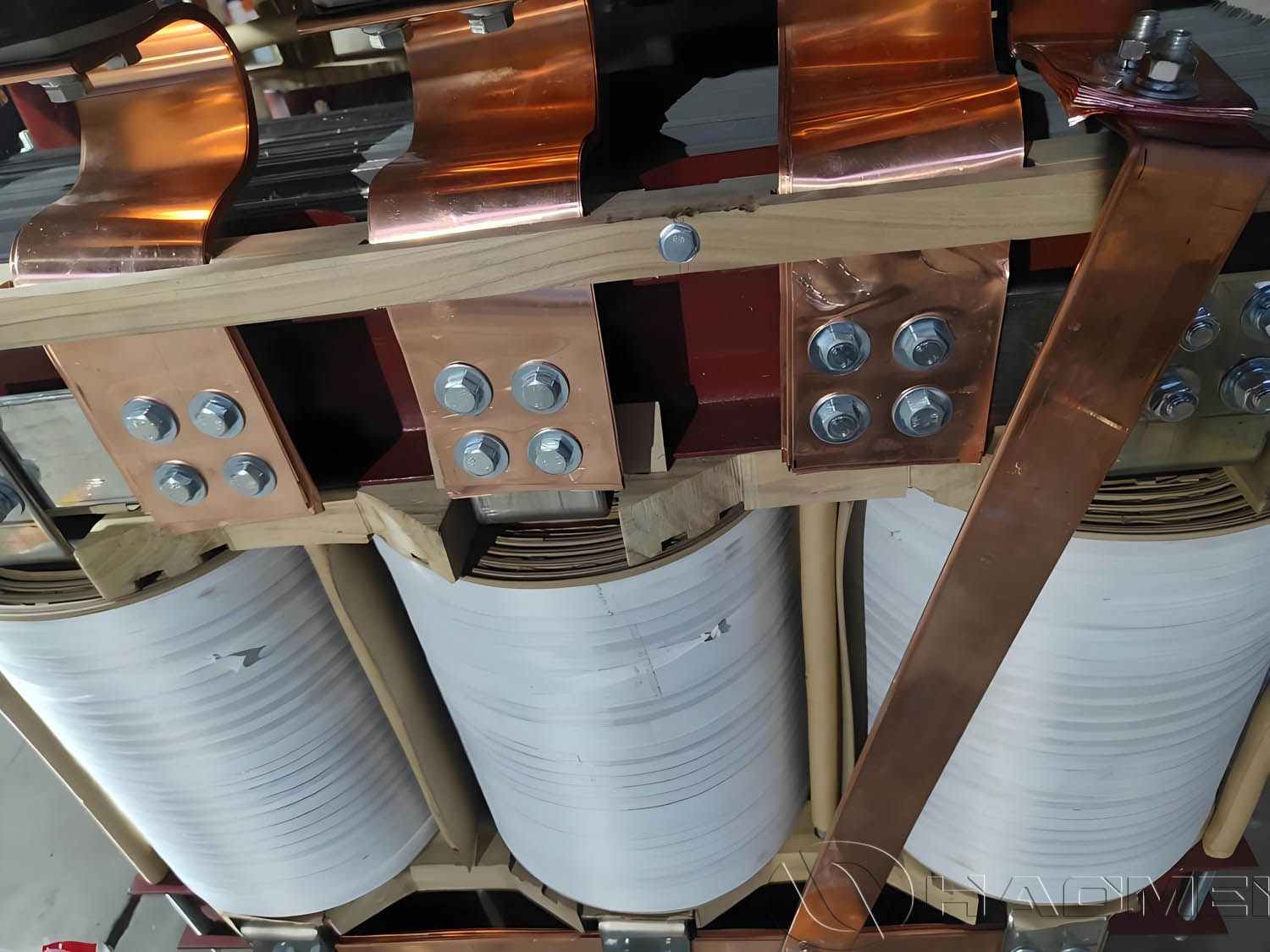
transformer winding copper strip is widely used in:
Dry-type transformers
Oil-immersed transformers
Power transformers
Distribution transformers
Reactors and instrument transformers
New energy and industrial electrical equipment
Advantages of Copper Strip Windings Compared with Round Copper Wire
In some transformer designs, copper strip windings offer significant advantages over traditional round copper wire windings.
1. Higher Space Utilization
Flat copper strip has a regular cross-section and can be arranged closely after winding. This improves the winding fill factor and makes the coil structure more compact.
2. Better Heat Dissipation
Copper strip has a larger contact area with insulation layers and cooling media, which is beneficial for heat conduction and heat dissipation. This helps reduce winding temperature rise.
3. Strong Mechanical Stability
Copper strip windings have a stable structure and offer good resistance to deformation under short-circuit current impact or electromagnetic forces.
4. Suitable for High-Current Windings
For low-voltage, high-current windings, copper strip provides a larger conductive cross-sectional area, reducing the number of parallel wires required and improving manufacturing efficiency.
5. Neat Winding Appearance
After winding, copper strip coils have clear layers and a regular structure, which is beneficial for subsequent insulation treatment, resin casting, and assembly.