 Contact Us
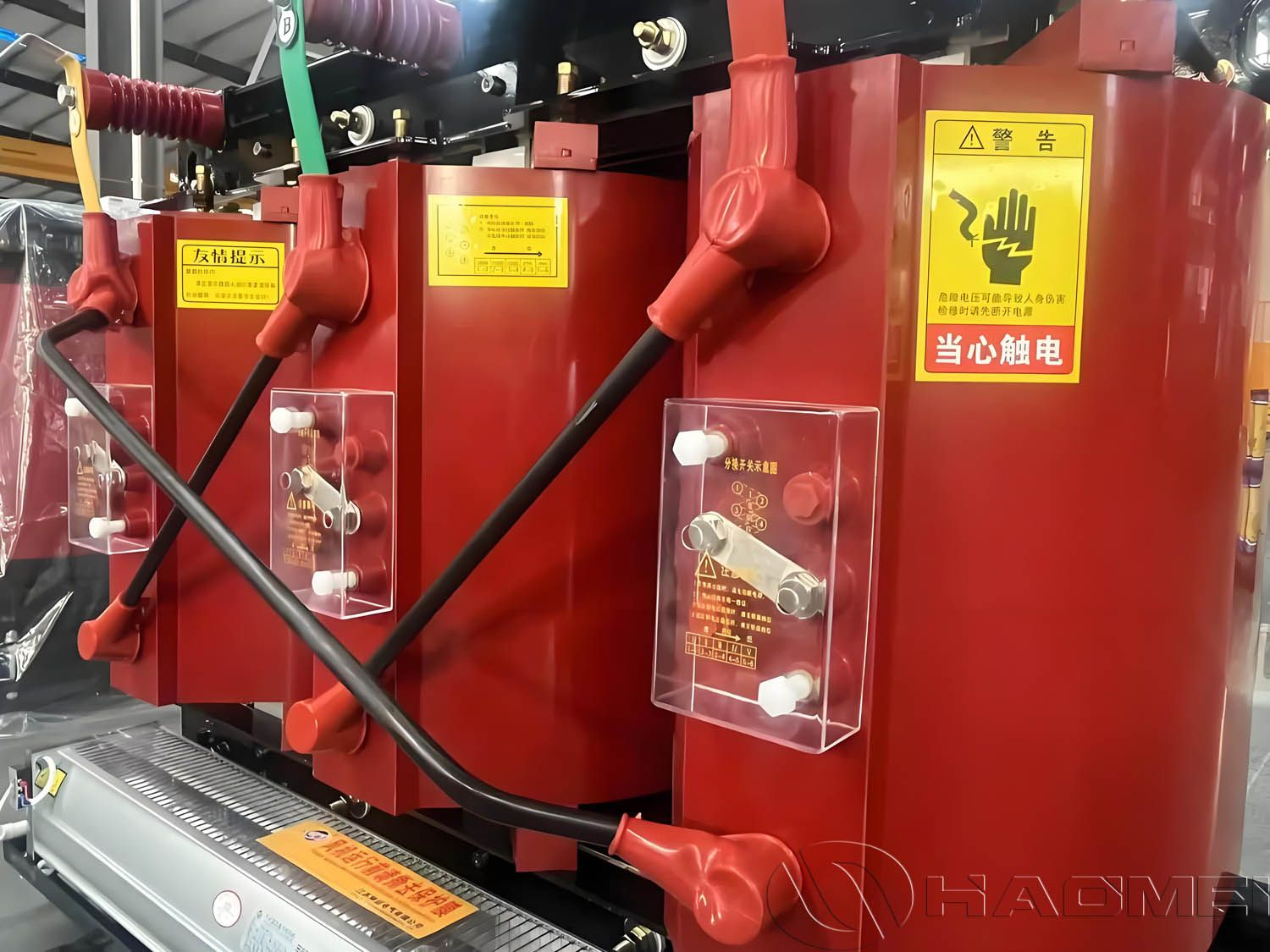
Unlike oil-immersed transformers, dry-type transformers do not require an oil tank or cooling oil. Instead, they rely on air convection and epoxy resin solid insulation for heat dissipation and insulation. Therefore, they are widely installed in commercial buildings, data centers, hospitals, subways, industrial and mining enterprises, and other places with high fire safety requirements.
In the core structure of a dry-type transformer, the winding material determines its key performance, efficiency, and service life. The use of copper strip or copper foil for both high-voltage and low-voltage windings has become a standard configuration in modern epoxy resin dry-type transformers.
Product Introduction
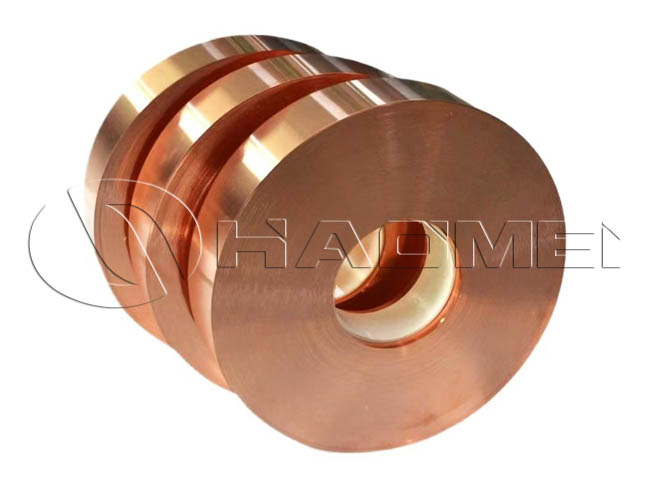
Copper strip for dry-type transformer windings refers to a strip-shaped conductive material made from high-purity electrolytic copper through processes such as melting, casting, hot rolling, cold rolling, annealing, and slitting. It is mainly used in transformer windings and is responsible for power transmission and electromagnetic energy conversion.
The copper purity is usually above 99.90%, with extremely low electrical resistivity and excellent electrical and thermal conductivity. It can effectively reduce winding losses and improve transformer operating efficiency.
Specifications of Copper Strip for Transformer Windings
| Item | Parameter |
| Material | C11000 (T2), Cu-ETP, TP2 |
| Copper Purity | ≥99.90% |
| Electrical Conductivity | ≥100% IACS |
| Temper | O soft temper, H half-hard temper, customizable |
| Thickness | 0.10–3.00 mm |
| Width | 10–600 mm |
| Thickness Tolerance | ±0.003 to ±0.020 mm, depending on specification |
| Surface | Bright, free of oil stains, scratches, and oxidation |
| Packaging | Moisture-proof and oxidation-proof export packaging |
Why Is Copper Strip Suitable for Dry-Type Transformer Windings?
1. Extremely High Electrical Conductivity
Copper is one of the best conductive materials, with electrical conductivity reaching 97%–102% IACS according to the International Annealed Copper Standard. When windings are made of 99.9% oxygen-free copper, the conductivity can be about 40% higher than aluminum, while load loss can be reduced by 15%–20%.
2. Good Heat Dissipation Performance
Dry-type transformers have high requirements for heat dissipation. Copper strip has a flat strip structure, which can form a larger heat conduction and heat dissipation area after winding. This helps transfer heat outward more efficiently and reduces the risk of local overheating.
3. Excellent Corrosion Resistance
Copper naturally forms a thin and strong oxide film in the air. This film can effectively protect the internal metal from moisture and corrosion in industrial environments. This self-protective property makes copper strip highly suitable for long-term operation in various environments.
4. Outstanding Mechanical Strength
Dry-type transformers generate heat and electromagnetic forces during operation, so copper strip must have sufficient mechanical strength to resist these stresses. High-strength copper strip ensures the long-term stability of the winding structure and helps prevent deformation or damage.
5. Good Plasticity
Copper strip has excellent plasticity and can be easily punched, stretched, formed, and processed. This makes it very suitable for building complex winding structures.
Core Applications of Copper Strip in Dry-Type Transformer Windings
1. Primary and Secondary Windings
Copper strip is the most basic structural material in dry-type transformer winding systems. Both primary and secondary windings are usually constructed using copper strip through coil winding, flat winding, or other winding methods. These windings realize electrical energy transformation through specific connection methods.
2. Cooling System
To improve the efficiency and reliability of dry-type transformers, heat dissipation structures are often integrated into the windings. Copper strip can work together with these heat dissipation components to form an efficient cooling system, helping release generated heat into the surrounding environment in time.
3. Shielding Structure
In some high-precision dry-type transformers, copper strip is used as a shielding structure to reduce electromagnetic interference and improve system stability.
4. Connecting Conductors
When connections are required between windings, copper strip is also commonly used as a connecting conductor. Due to its high current-carrying capacity, it ensures the reliability of connection points.
Manufacturing Process and Quality Requirements of Transformer Copper Strip
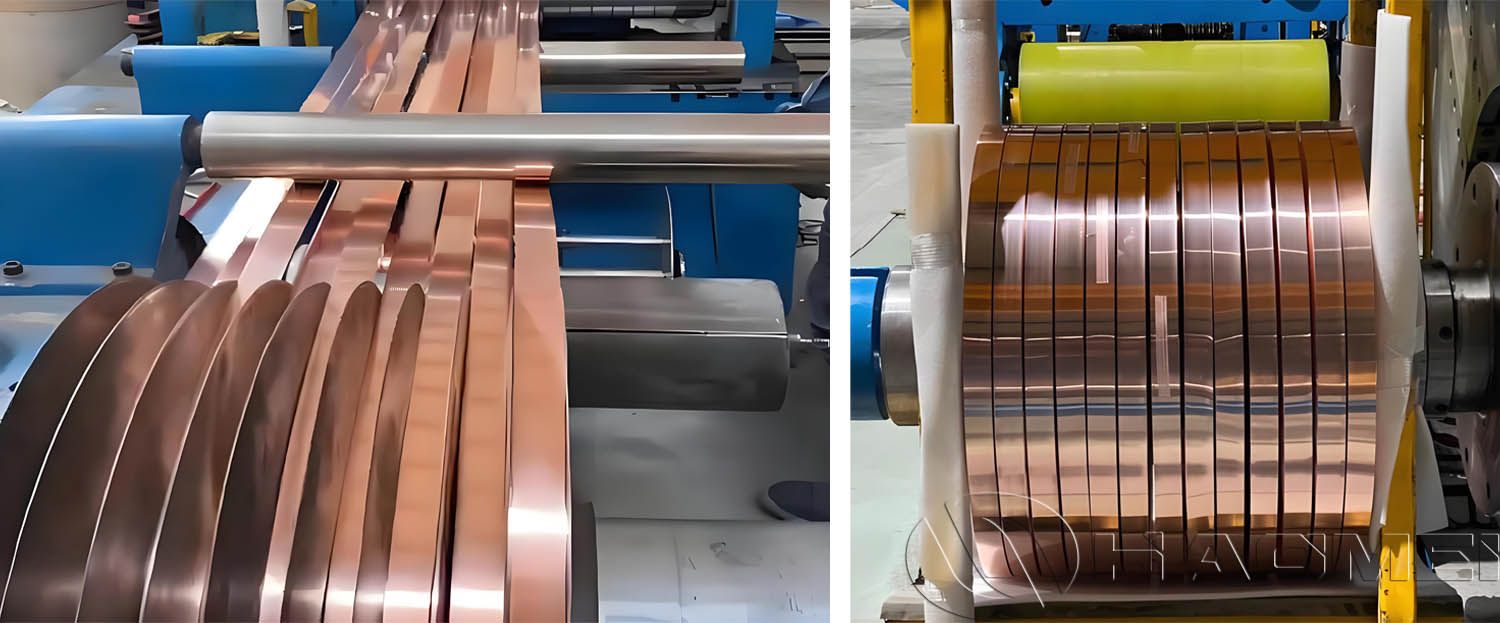
The production of copper strip involves more than just flattening the copper. Starting with the melting and casting of electrolytic copper, the process entails multiple stages, including upward continuous casting, continuous extrusion, surface milling, rolling, annealing, cleaning and passivation, straightening, slitting, and edge chamfering.
Among these, the annealing process is particularly critical. Annealing is typically conducted at temperatures between 360°C and 550°C with a holding period of several hours, utilizing a protective atmosphere of pure nitrogen or a mixture of hydrogen and nitrogen. The objective is to eliminate microstructural non-uniformity, ensuring consistent material properties and electrical conductivity, as well as a surface free from oxidation or discoloration.
Finished copper strips must meet strict performance standards: tensile strength (σb) ≥ 195 MPa, elongation (δ10) ≥ 35%, Vickers hardness (HV) of 46–65, and electrical conductivity for T2 copper ≥ 98% IACS. The strip must be flat and straight, with a lateral curvature (camber) not exceeding 2 mm/m and edges free of burrs (or with burrs limited to less than 0.02 mm).
Copper Strip vs. Aluminum Strip: How to Choose?
Copper strip and aluminum strip are two mainstream options for transformer winding materials. Aluminum strip has the advantages of lower cost, lower density, and lighter weight. However, the electrical conductivity of copper strip is about 40% higher than that of aluminum, and load loss can be reduced by 15%–20%.
Copper also offers much better thermal stability and short-circuit resistance than aluminum. Therefore, in applications where energy efficiency, reliability, and long-term operating cost are important, copper strip remains the preferred choice.