 Contact Us
In the manufacturing of power transmission and distribution equipment such as transformers, reactors, and instrument transformers, the purity and soft-temper processing performance of conductive copper materials directly determine the equipment’s electrical efficiency, heat dissipation capability, and service life.
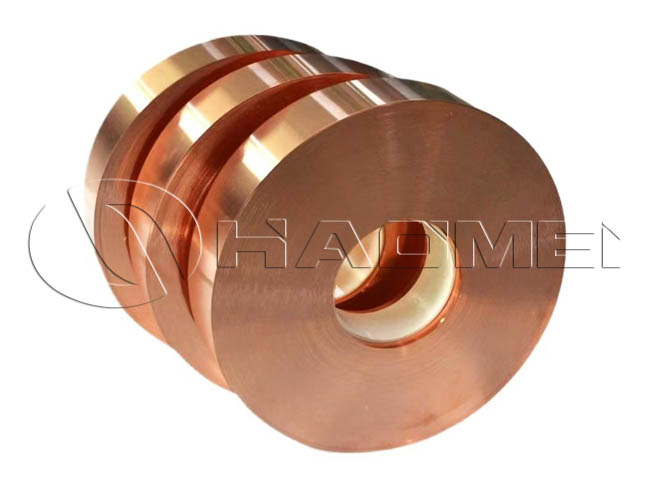
As a high-purity electrolytic copper material, C11000 copper strip is widely used in the electrical industry. Among its various tempers, O temper fully annealed copper strip is a core material for transformer windings, conductive connections, and busbars. With its excellent electrical conductivity, outstanding bending ductility, and stable thermal conductivity, it has become a mainstream choice for power equipment manufacturers.
What Is C11000 O Temper Copper Strip?
C11000 O temper copper strip is a high-purity copper material specially designed for transformer winding applications. With a copper content of ≥99.90%, it offers extremely high electrical conductivity, typically reaching ≥99.80% IACS, along with excellent ductility. These properties allow it to meet the demanding winding and forming requirements of transformer production.
The O temper refers to a fully annealed soft condition. After rolling, the copper strip undergoes high-temperature stress-relief annealing, which eliminates work hardening and internal residual stress caused by cold rolling. As a result, the copper grains are fully recovered and evenly distributed, giving the material a soft texture and maximum plasticity. This distinguishes it from H-series half-hard and hard temper copper strips.
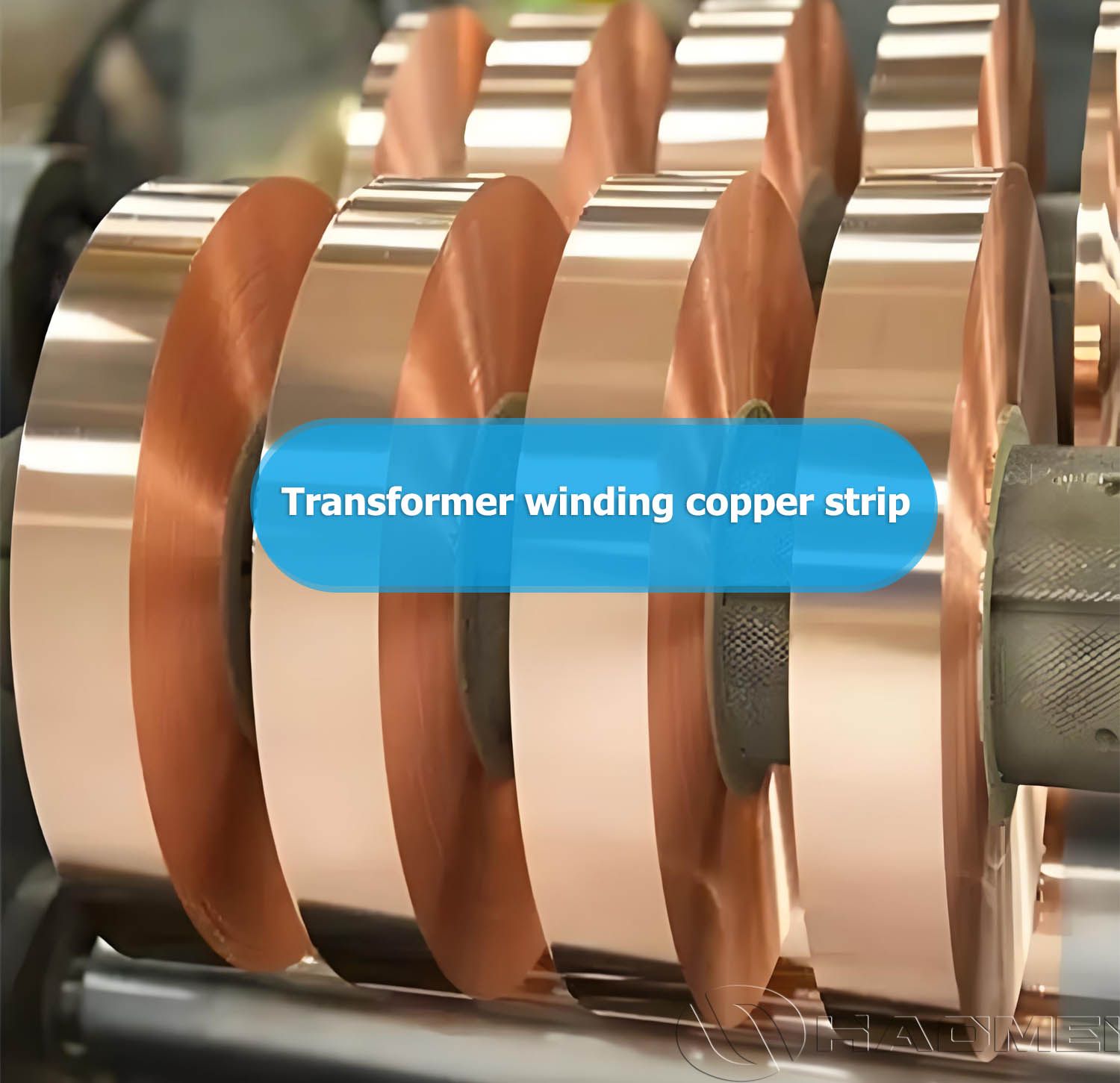
Transformer working conditions are demanding. Windings require multi-layer winding and bending, while terminal connection parts often require stamping, bending, and close fitting. Hard temper copper strips are prone to cracking and springback during bending, making them unsuitable for such processing requirements. Therefore, the industry generally prefers C11000 O temper soft copper strip for transformer applications.
Technical Parameters
| Item | Parameter |
| Product Name | C11000 O Temper Copper Strip for Transformers |
| Material Grade | C11000 / Cu-ETP |
| Copper Content | ≥99.90% |
| Temper | O Temper / Annealed |
| Electrical Conductivity | ≥100% IACS |
| Thickness | 0.08–3.00 mm, customizable |
| Width | 5–600 mm, customizable |
| Length | 1000–16000 mm, customizable |
| Tensile Strength | 200–260 MPa, reference value |
| Elongation | ≥30%, reference value |
| Surface | Bright, oxidation-free, burr-free |
| Edge Type | Slit Edge, Rounded Edge |
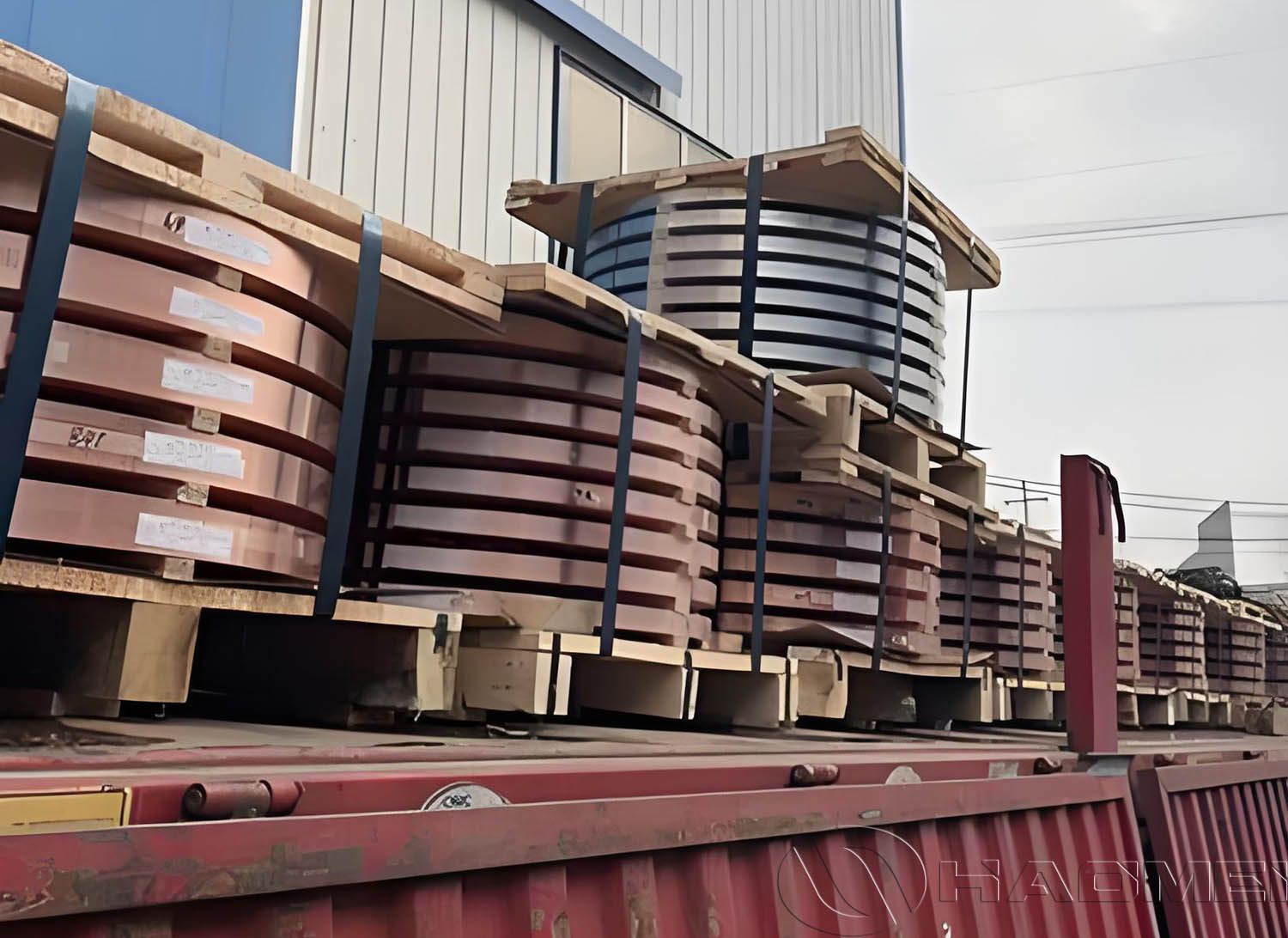
| Packaging | Wooden pallet, export moisture-proof packaging |
Why Is C11000 O Temper Copper Strip Suitable for Transformers?
1. Ultra-High Conductivity, Lower Copper Loss
At 20°C, the electrical conductivity of C11000 copper strip can reach 100% IACS or above. Its extremely low electrical resistivity helps reduce no-load and load losses, significantly improving transformer efficiency and meeting modern energy-saving standards.
2. Fully Soft O Temper, Bendable Without Cracking
C11000 O temper copper strip offers much higher elongation than hard temper copper materials. It bends smoothly with minimal springback and fits tightly during winding. This helps prevent bending cracks and breakage, greatly improving processing yield.
3. Excellent Thermal Conductivity for Rapid Heat Dissipation
High-purity copper has outstanding thermal conductivity. With a uniform grain structure and low internal stress, C11000 O temper copper strip provides stable and efficient heat transfer. This helps slow down insulation aging and improves the operational safety of transformers.
4. Smooth Surface, Strong Insulation Adhesion
The flat and defect-free surface allows insulation materials to adhere tightly and securely. This helps prevent insulation peeling, electrical breakdown, and leakage. Its good oxidation resistance also helps reduce surface pretreatment costs.
5. Stable Purity and Long Fatigue Life
Strict control of oxygen and impurities ensures stable material purity and reduces the risk of hydrogen embrittlement. The O temper annealing process eliminates internal stress and improves resistance to repeated deformation fatigue, making the strip suitable for both dry-type and oil-immersed transformers.
Application Fields
1. Power Transformers
Oil-immersed transformers
Dry-type transformers
Distribution transformers
Power transformers
2. New Energy Industry
Photovoltaic step-up transformers
Wind power transformers
Energy storage system transformers
3. Electrical Equipment
Reactors
Inductors
Voltage stabilizers
Welding machines
High-frequency transformers
4. Industrial Equipment
Large generators
Motor windings
Switchgear
High and low voltage distribution equipment
Quality Requirements for Transformer Winding Copper Strip
1. Burr-Free Edge Treatment
Burr-free edge quality is one of the most critical technical requirements for transformer copper strip. After slitting, copper strip edges inevitably produce burrs. High-end transformer winding copper strips must undergo special rounded edge or edge conditioning treatment to control burr height at the micron level, usually within 0.01–0.02 mm.
A smooth chamfered or rounded edge ensures uniform electric field distribution under repeated voltage impulses, effectively preventing partial discharge and insulation damage.
2. Strict Surface Cleanliness and Flatness
The copper strip surface must be free from oxidation spots, oil stains, scratches, dents, and other defects. Residual rolling oil may decompose and volatilize under long-term high-temperature transformer operation, contaminating transformer oil or damaging the insulation layer of dry-type transformers.
Therefore, cleaning and passivation before delivery are essential to ensure stable electrical performance and insulation reliability.
3. Tight Thickness Tolerance and Shape Control
Transformer coils require a high degree of symmetry and dimensional regularity. If the copper strip has uneven transverse thickness, camber, or excessive thickness fluctuation, the wound coil may experience uneven stress distribution.
When subjected to strong short-circuit forces caused by grid faults, such unevenness may lead to mechanical deformation of the coil and eventually cause transformer failure. Therefore, strict thickness tolerance and strip flatness control are essential for high-quality transformer winding copper strip.
FAQ
1. What types of transformers is C11000 O temper copper strip suitable for?
It is suitable for oil-immersed transformers, dry-type transformers, distribution transformers, power transformers, photovoltaic transformers, wind power transformers, reactors, and various types of winding applications.
2. What is the difference between O temper and H temper copper strip?
O temper copper strip is fully annealed, soft, and highly ductile, making it suitable for complex winding and bending applications. H temper copper strip is work-hardened, offering higher strength but lower flexibility, and is more suitable for conductive components requiring greater rigidity.
3. What is the electrical conductivity of C11000 copper strip?
Standard C11000 copper strip typically reaches 100% IACS or above, effectively reducing winding resistance and energy loss.
4. Can customized specifications be supplied?
Yes. Thickness, width, coil weight, inner diameter, edge type, and packaging solutions can be customized according to customer requirements. OEM production is also available.
5. How is product quality guaranteed?
Products are inspected through chemical composition analysis, electrical conductivity testing, mechanical property testing, dimensional inspection, and surface quality inspection. Material certificates and third-party inspection reports can also be provided upon request.