 Contact Us
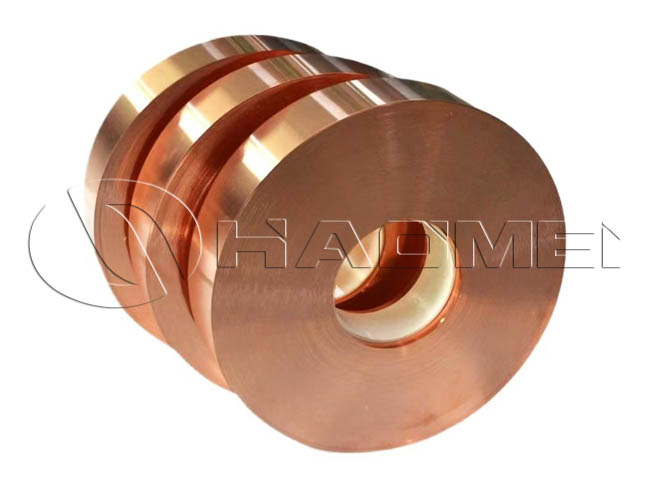
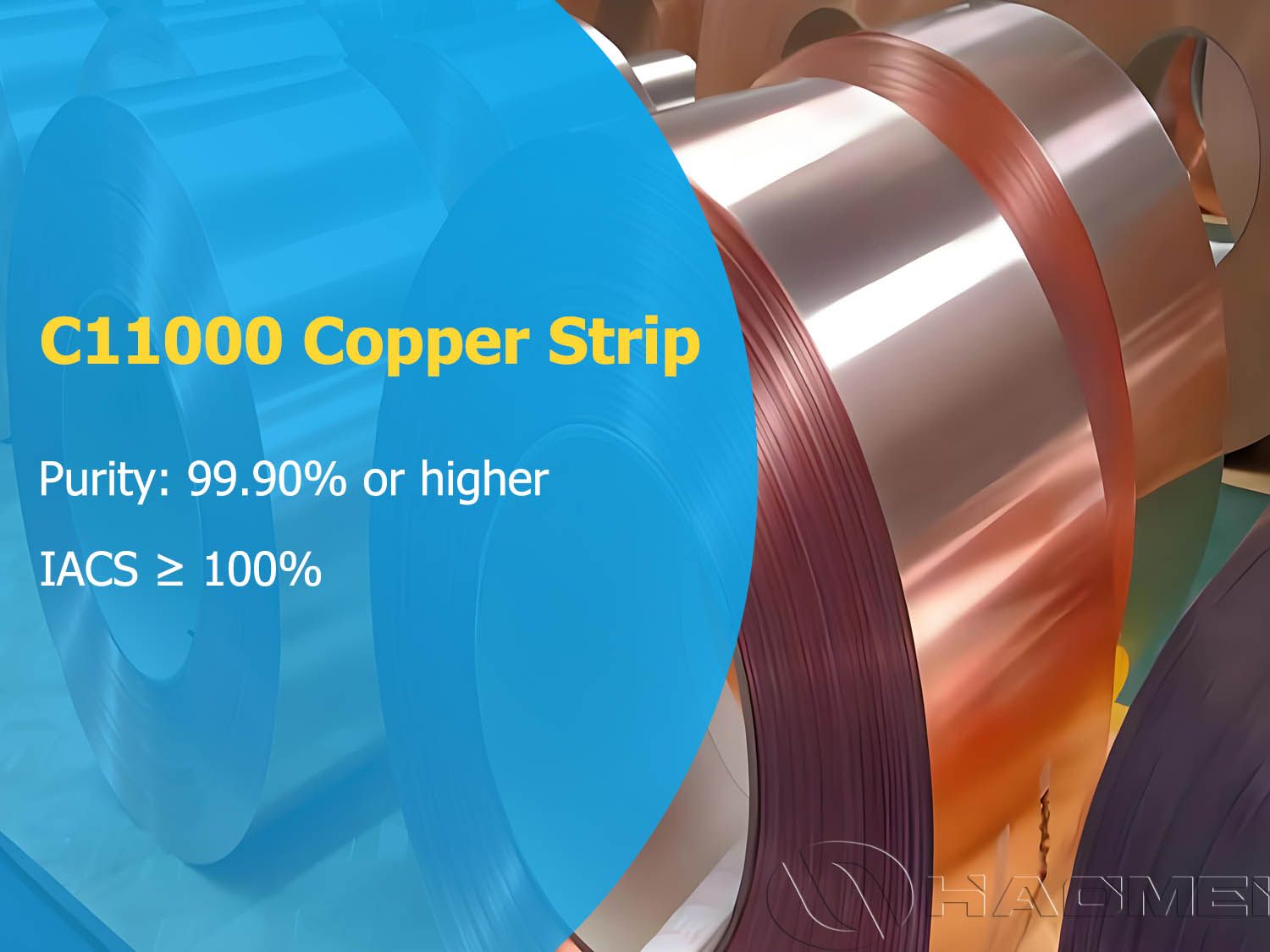
Copper-ETP (C11000) Strip for Power Transformers
Modern transformers are typically required to operate continuously and reliably for 20 to 30 years or even longer, while maintaining high energy efficiency and low maintenance costs. Therefore, the performance of winding conductor materials directly determines transformer copper loss, temperature rise, mechanical strength, and long-term operational reliability.
Compared with other conductive materials, C11000 Electrolytic Tough Pitch Copper (ETP Copper) has an electrical conductivity of approximately 99.9% IACS. With high copper purity and low impurity content, it provides outstanding electrical and thermal conductivity, making it one of the most widely used high-conductivity materials in the power equipment manufacturing industry.
As global smart grids, renewable energy projects, and transmission and distribution networks continue to expand, the market for high-performance transformer copper strip is maintaining steady growth.
Product Features of C11000 Pure Copper Strip
1.Ultra-High Electrical Conductivity
C11000 copper strip has a resistivity of only 1.724 μΩ·cm, and its conductivity is about 40% higher than aluminum materials, significantly reducing resistance loss.
2.Excellent Mechanical Properties
It offers a balanced combination of tensile strength and ductility, making it easy to process into strips or coils.
3.Excellent Thermal Stability
C11000 copper maintains a stable structure at elevated temperatures and offers good oxidation resistance.
4.Low Impurity Content
The content of impurities such as oxygen, iron, and silicon is extremely low, reducing the degradation of electrical performance.
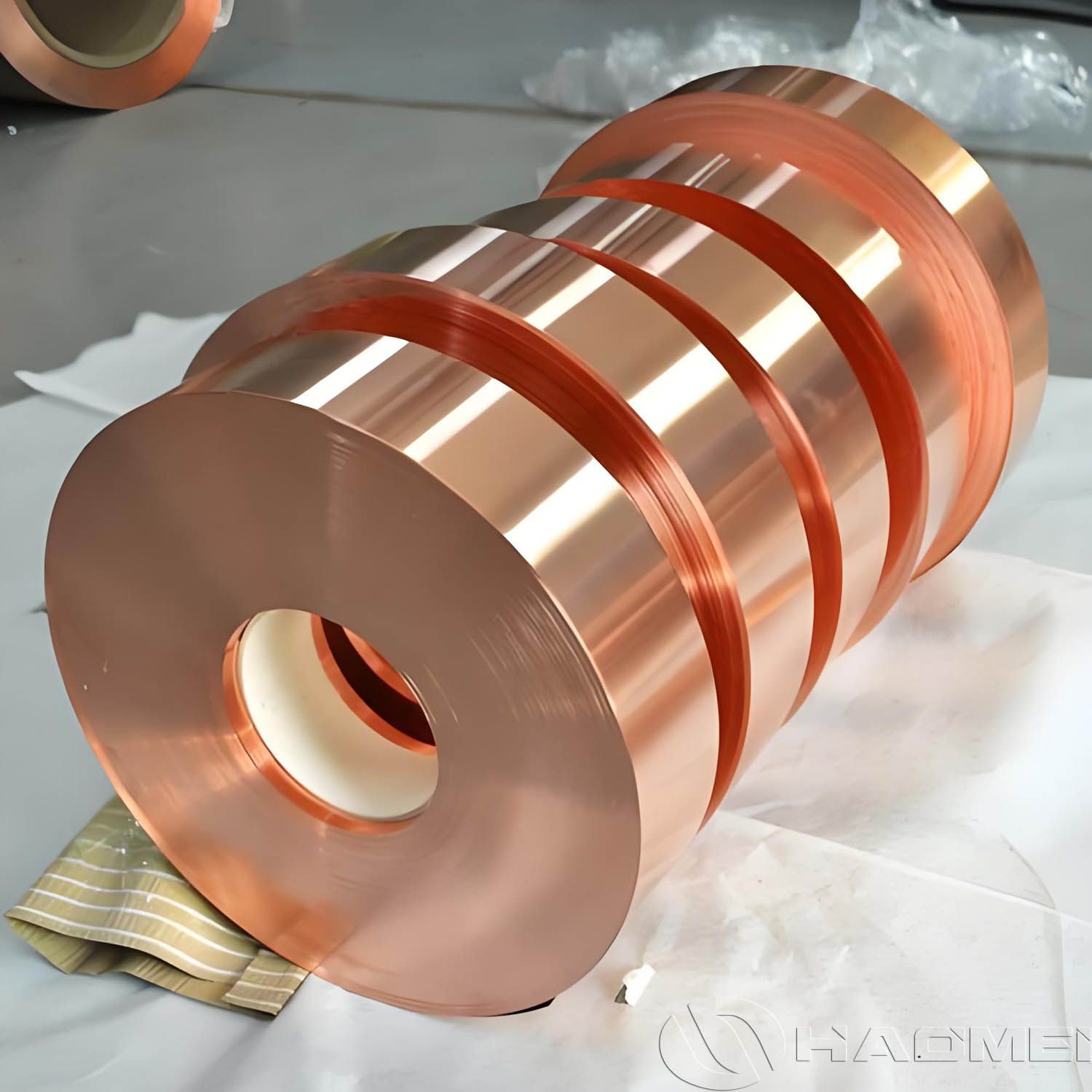
Typical Product Specifications
| Mark | GB | JIS | ASTM | ||
| T2 | C1100 | C11000 | |||
| Temper | O, 1/4H, 1/2H, H | ||||
| Executive Standard | GB/T 18813, JIS H3100, ASTM B152 | ||||
| Main Application | Mainly used as a substitute for copper wire in foil-wound transformers, transformer flexible couplings, amorphous alloy transformers, etc. | ||||
| Thickness Range | 0.09-0.15 | 0.15-0.3 | 0.3-0.6 | 0.6-1.2 | 1.2-2.0 |
| Thickness tolerance | ±0.005 | ±0.008 | ±0.01 | ±0.02 | |
| Width range mm | 30-600 | 50-600 | 60-600 | 80-600 | |
| Width tolerance | ≤400 ±0.1,400-600 ±0.3 | ||||
| Strength of extense MPa | ≥200 | ≥230 | |||
| Ductility % | ≥20 | ≥30 | |||
| Vickers hardness HV | 50-75 | ||||
| Electric conductivity %IACS | ≥100 | ||||
| Surface | Bright, flat, and free from oil stains | ||||
| Edge | Slit edge or rounded edge available | ||||
| Standards | ASTM B152, EN, JIS, GB | ||||
| MOQ | 1-3 Tons | ||||
Why Choose C11000 ETP Copper Strip for Power Transformers?
1. High Electrical Conductivity
The electrical conductivity of C11000 pure copper strip reaches 100%–101% IACS, which can significantly reduce winding resistance, decrease energy waste, and improve the overall conversion efficiency of transformers.
2. Good Thermal Conductivity
C11000 has a thermal conductivity of approximately 401 W/(m·K), enabling rapid transfer of heat generated by the windings and improving internal temperature distribution. It effectively reduces the risk of local overheating and greatly enhances operational stability and safety margins.
3. Excellent Ductility
In the annealed condition, C11000 pure copper strip can achieve an elongation of more than 45%. It has excellent ductility and formability, making it suitable not only for conventional foil windings and layer windings, but also for special irregular winding structures.
4. High Dimensional Accuracy
The thickness tolerance of C11000 copper strip can usually be controlled within ±0.005 mm, with stable width accuracy, providing reliable support for automated precision winding.
5. Superior Surface Quality
C11000 pure copper strip for power transformers requires a smooth surface, flat edges, and no burrs. Burr height is usually controlled at ≤0.01 mm. Excellent surface quality reduces potential risks during winding processing and helps protect insulation materials.
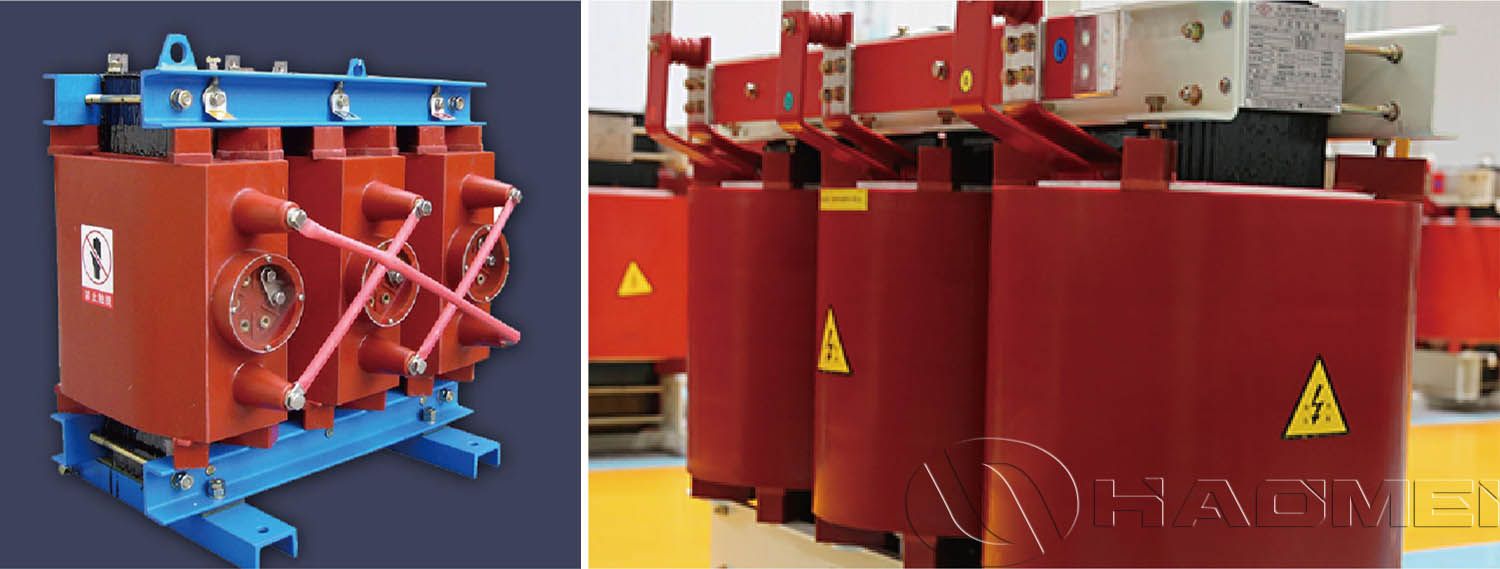
Application Scenarios of Transformer Copper Strip
Power Transformers
Mainly used for high-voltage and low-voltage winding manufacturing, ensuring excellent conductivity and long-term operational stability.
Distribution Transformers
Effectively reduces no-load loss and load loss, improving the operating efficiency of power distribution systems.
Dry-Type Transformers
Widely used in cast-resin dry-type transformers for hospitals, airports, commercial buildings, industrial plants, and other locations.
Renewable Energy Transformers
Widely applied in supporting transformers for photovoltaic power generation, wind power generation, and energy storage systems, providing stable and reliable power transmission for renewable energy systems.
Instrument Transformers
Suitable for current transformer (CT) and voltage transformer (VT) windings, where high conductivity and dimensional accuracy are required.
Reactors and Inductive Equipment
Also widely used in the winding manufacturing of various reactors, inductors, and other electromagnetic equipment.
Common Temper Options for C11000 Pure Copper Strip
Different transformer structures and processing methods have different requirements for copper strip temper. C11000 pure copper strip is usually available in soft, half-hard, and hard tempers.
Soft Copper Strip (O Temper)
The copper strip is fully annealed, completely eliminating work-hardening stress inside the material.
Soft copper strip has excellent ductility and bending performance, making it suitable for transformer foil windings and applications requiring large deformation. For products with demanding winding requirements, soft copper strip can reduce cracking and strip breakage.
Half-Hard Copper Strip
Half-hard copper strip combines certain strength and plasticity. It is suitable for conductive connectors, lead components, or winding structures that require a certain degree of support.
Hard Copper Strip
Hard copper strip has higher strength and good dimensional stability, but relatively lower plasticity. It is suitable for conductive structural parts with small deformation and higher mechanical strength requirements.
When selecting the appropriate temper, companies should comprehensively consider transformer capacity, winding form, processing equipment, insulation system, and product design standards.
The Transformation from Copper Wire to Copper Strip
Traditional transformer windings mostly use round copper wire or rectangular copper wire. The rise of copper strip/copper foil windings represents an important upgrade in transformer manufacturing technology.
C11000 pure copper strip is mainly used in the production of windings for foil-wound transformers, as well as transformer flexible connections and amorphous alloy transformers. Compared with copper wire windings, copper strip windings offer the following significant advantages:
Higher Space Utilization: Copper strip can be wound tightly with smaller interlayer gaps, effectively reducing transformer volume.
Better Heat Dissipation: The flat surface of copper strip provides a shorter heat conduction path, which facilitates rapid heat dissipation from the windings.
Stronger Short-Circuit Resistance: The foil-wound structure has high mechanical strength and can better withstand electrodynamic impacts caused by short-circuit currents.
Higher Automation Efficiency: Copper strip windings are suitable for automated foil winding machines, offering high precision and fast production efficiency.
Quality Requirements for C11000 Pure Copper Strip Used in Power Transformers
| Performance Item | Requirement Description |
| Copper Content | High copper content and low impurities help maintain excellent electrical conductivity |
| Electrical Conductivity | Higher conductivity helps reduce transformer load loss |
| Thickness Tolerance | Uniform and stable thickness avoids winding resistance and structural dimensional fluctuations |
| Width Accuracy | Good width consistency supports neat winding and automated production |
| Surface Quality | Surface should be smooth and flat, free from oil stains, oxidation, scratches, indentations, and other defects |
| Edge Quality | Edges should be neat and burr-free to avoid damaging insulation materials |
| Mechanical Properties | Soft, half-hard, or hard temper should meet different processing requirements |
| Elongation | Good elongation reduces the risk of cracking and strip breakage during winding |
| Flatness | Good strip shape supports high-speed winding and stable processing |
| Packaging Protection | Packaging should provide moisture resistance, oxidation protection, and impact protection to ensure quality during transportation and storage |