 Contact Us
In transformer design and manufacturing, the selection of winding materials has a direct impact on transformer performance, efficiency, and long-term reliability. For transformers with high-current, low-voltage output, copper strip-also known as copper foil-windings offer significant advantages over conventional enameled wire windings.
So, what exactly is transformer winding copper strip? What materials and dimensions are available? And how can the right copper strip be selected? This article provides a comprehensive introduction to transformer winding copper strip.
What Is Transformer Winding Copper Strip?
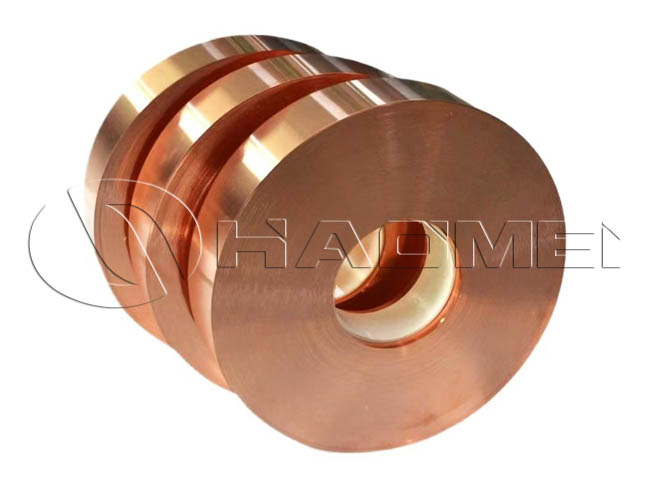
Transformer winding copper strip is a rectangular strip material made from high-purity electrolytic copper through rolling processes. It is mainly used in the manufacture of high-voltage and low-voltage transformer windings. Compared with conventional round copper wire, copper strip offers a larger conductive cross-sectional area, lower electrical resistance, a higher space-filling factor, and better heat dissipation. It is therefore widely used in a variety of electrical power equipment.
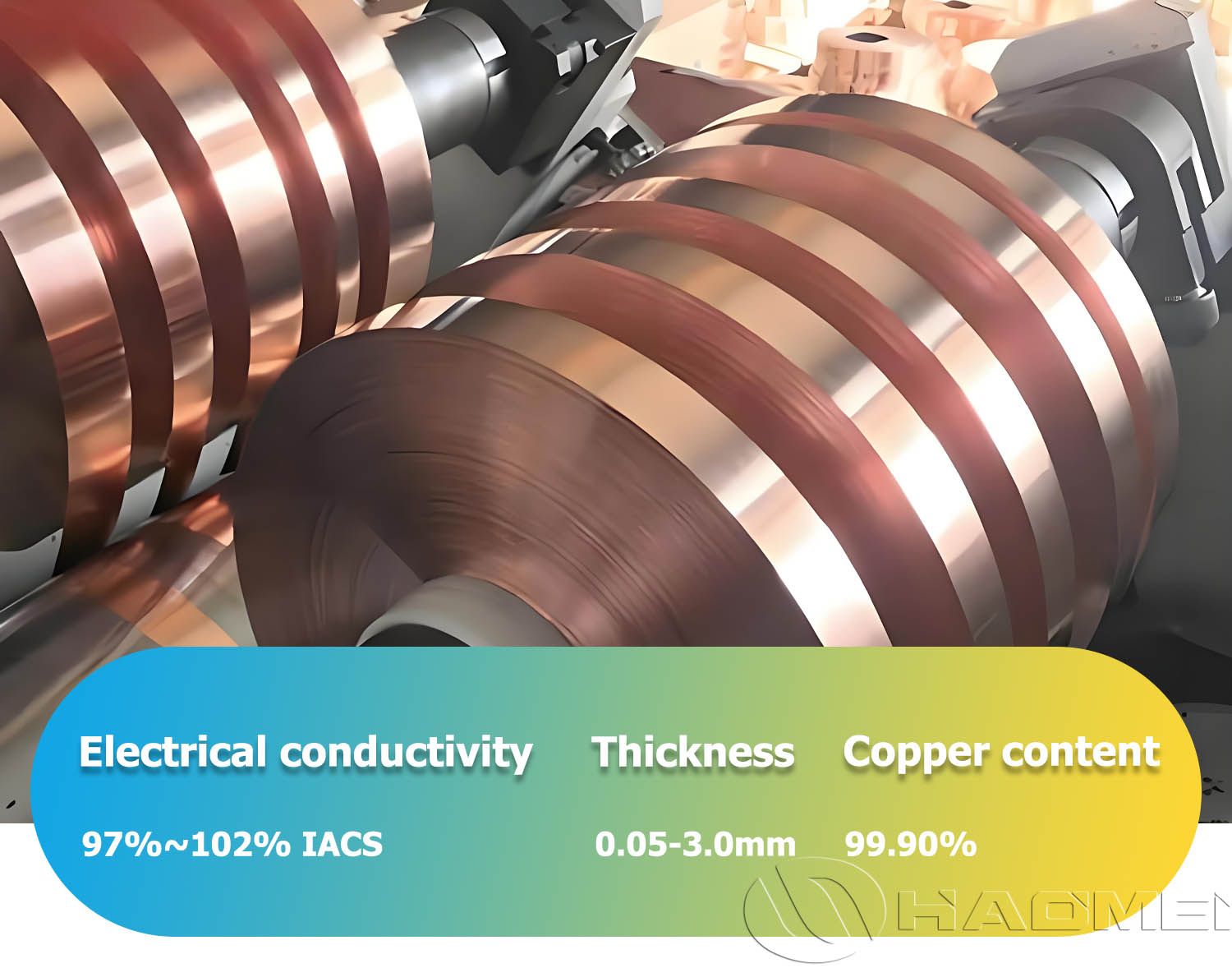
High-quality transformer winding copper strip is generally manufactured from T2 copper (C11000). With a copper content of more than 99.90% and electrical conductivity typically ranging from 97% to 102% IACS, it provides excellent electrical and thermal conductivity. This helps reduce energy losses during transformer operation.
Transformer Winding Copper Strip Specifications
Transformer copper strip is available in a broad range of dimensions to meet the needs of transformers with different power ratings.
In terms of thickness, transformer copper strip is commonly available from 0.1 mm to 3.0 mm. Typical thickness ranges and tolerances are shown below:
| Thickness Range (mm) | Tolerance (mm) |
| 0.09–0.15 | ±0.005 |
| 0.15–0.30 | ±0.008 |
| 0.30–0.60 | ±0.010 |
| 0.60–1.20 | ±0.015 |
| 1.20–2.00 | ±0.025 |
In terms of width, copper strip can range from 5 mm to 1200 mm. According to GB/T 18813-2014:
For strip with a thickness of 0.1 mm to less than 0.5 mm, the maximum width can reach 610 mm.
For strip with a thickness of 0.5 mm to 2.5 mm, the maximum width can reach 1050 mm.
Compared with the 2002 edition, the 2014 edition of the standard imposes stricter requirements on thickness tolerances and edge burrs, placing higher demands on product quality.
Why Are More Transformers Using Copper Strip Windings?
With the development of energy-efficient transformers, copper strip windings have gradually replaced conventional round copper wire windings in certain applications. Their major advantages include the following.
1. Excellent Electrical Conductivity
Copper can achieve electrical conductivity of 100% IACS or higher. Its low resistivity helps reduce winding losses and improve transformer operating efficiency.
For power transformers operating continuously over long periods, high-quality copper strip can help reduce losses and improve overall energy utilization.
2. High Mechanical Strength
During a short-circuit event, transformer windings are subjected to substantial electromagnetic forces.
High-quality copper strip offers good tensile strength and elongation, improving the overall mechanical strength of the winding. This helps reduce the risk of winding deformation and improves short-circuit withstand capability.
3. Better Heat Dissipation
Compared with round copper wire, copper strip provides a larger contact surface area.
By properly designing the thickness and width of the copper strip, the heat dissipation path inside the winding can be optimized. This allows for more uniform winding temperature rise and helps extend the service life of the transformer insulation system.
4. More Compact and Tighter Windings
Copper strip can improve the winding fill factor.
The finished coil is more orderly and compact, with fewer gaps between conductors. This can improve electromagnetic performance while reducing vibration and noise.
5. Easier Automation
Modern transformer production lines increasingly use automatic foil winding equipment.
Copper strip with precise dimensions and a smooth surface can improve winding efficiency, reduce strip breakage and insulation damage, and enhance product consistency.
How to Choose the Right Thickness of Transformer Winding Copper Strip?
The thickness of transformer winding copper strip, or copper foil, generally ranges from 0.05 mm to 3.0 mm. The appropriate thickness should be selected according to transformer type, capacity, winding position, current-carrying requirements, and winding structure.
Ultra-Thin Copper Foil: 0.05 mm–0.2 mm
Ultra-thin copper foil is commonly used for the high-voltage side or layer-type windings of small and medium-sized dry-type transformers. It can help reduce overall winding size and lower eddy current losses.
Medium-Thickness Copper Strip: 0.2 mm–0.5 mm
This thickness range provides an excellent balance between electrical conductivity and mechanical strength. It is widely used in medium- and low-voltage, high-current transformer windings.
Thick Copper Strip: 0.5 mm–3.0 mm
Thick copper strip is mainly used for the low-voltage, high-current side of high-power dry-type transformers, reactors, and certain special transformer designs. It can withstand relatively high current loads and electromagnetic forces.
It is important to note that thicker copper strip is not always better. Excessive thickness may increase material costs and may also lead to challenges related to bending, winding quality, heat dissipation, and eddy current loss. The final thickness should be determined through comprehensive electrical, thermal, mechanical, and manufacturing process calculations.
Typical Applications of Transformer Copper Strip
Transformer winding copper strip is widely used in the following applications:
Dry-type power transformers
Distribution transformers
Amorphous alloy transformers
Transformer flexible connectors
Communication cables
FAQ
Q1: Why is copper strip preferred over round copper wire for transformer windings?
Copper strip offers higher electrical efficiency, a larger fill factor, better heat dissipation, and greater mechanical strength. It can effectively reduce losses and improve the overall performance of transformers.
Q2: What materials are commonly used for transformer winding copper strip?
The most widely used materials are T2 pure copper and C11000 electrolytic copper. These materials offer high purity, high electrical conductivity, and excellent processing performance.
Q3: Is thicker copper strip always better?
No. Excessive thickness increases material costs and may create issues related to heat dissipation, bending, winding processability, and eddy current losses. The thickness should be selected based on transformer capacity, current-carrying requirements, and winding structure.
Q4: Can transformer winding copper strip be customized?
Yes. Professional manufacturers can customize thickness, width, coil weight, inner diameter, and packaging methods according to customer requirements and transformer design specifications.
Q5: What factors should be considered when purchasing transformer winding copper strip?
Key factors include copper grade, electrical conductivity, thickness tolerance, width tolerance, surface quality, mechanical properties, annealing condition, edge burr control, and compliance with relevant IEC, ASTM, GB, or other applicable standards.