 Contact Us
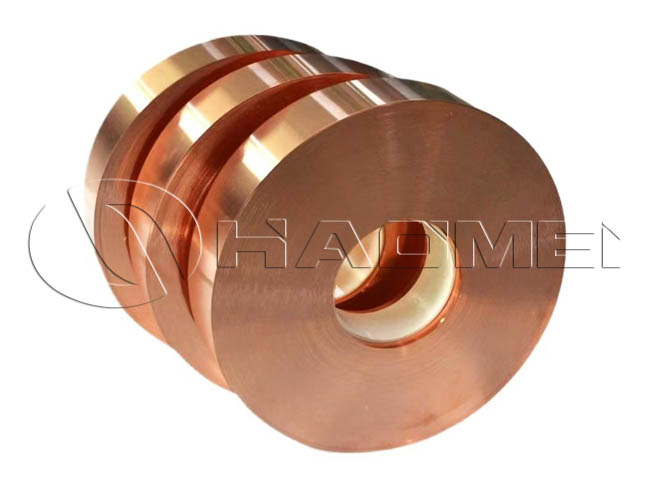
Transformers are essential equipment in power systems for voltage conversion and electrical energy transmission. Their operating efficiency, temperature-rise control, and service life are closely related to the performance of the winding material. With excellent electrical conductivity, good workability, and stable mechanical strength, transformer winding copper strip has become a key material for manufacturing windings in oil-immersed transformers, dry-type transformers, reactors, and other electrical equipment.
Among various specifications, 0.3mm thick transformer winding copper strip is widely used. It provides a balanced combination of electrical conductivity, mechanical strength, and winding performance. It is suitable for continuous windings, foil windings, and layer windings in small and medium-sized transformers, as well as certain large-scale power equipment.
HAOMEI can supply transformer copper strips in thicknesses ranging from 0.01mm to 3.0mm.
Common Copper Grades for Transformer Winding Strips
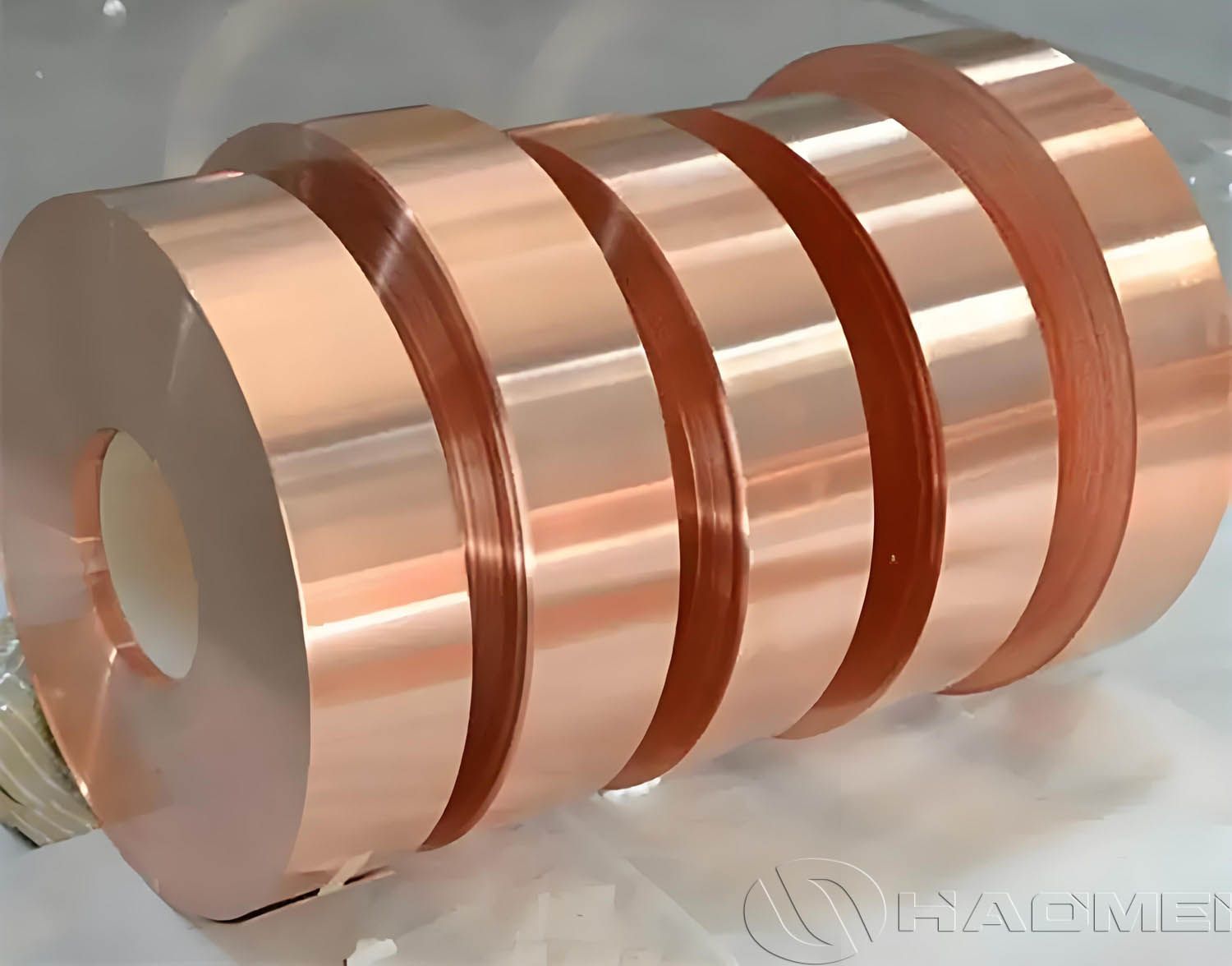
Commonly used copper grades include:
C11000 (T2 pure copper)
C10200 oxygen-free copper
TU1 oxygen-free copper
Among them, C11000 copper strip is widely used in transformer winding manufacturing because of its high electrical conductivity, good plasticity, and excellent processing performance.
Common Tempers of Transformer Copper Strip
Copper strip is generally supplied in soft, half-hard, and hard tempers. Different tempers are suitable for different winding processes and equipment requirements.
Soft Copper Strip
Soft copper strip is fully annealed and has high flexibility and elongation. It is easy to bend and wind, making it suitable for small bending radii, complex forming processes, and precision winding applications.
However, soft copper strip has relatively lower mechanical strength. In high-speed production or under high winding tension, process parameters must be properly controlled.
Half-Hard Copper Strip
Half-hard copper strip provides a good balance between strength and flexibility. It is suitable for transformer windings that require both dimensional stability and a certain level of mechanical strength.
Hard Copper Strip
Hard copper strip has higher mechanical strength but lower flexibility, making winding more difficult. It is generally suitable for applications requiring good shape retention, fewer bending operations, or relatively simple forming structures.
For 0.3mm thick transformer winding copper strip, soft temper or half-hard temper is generally more common. However, the final choice should be determined according to the winding equipment, bending radius, tension settings, and winding structure.
Why Is Copper Strip the Preferred Material for Transformer Windings?
Compared with conventional copper wire windings, 0.3mm copper strip offers several significant advantages in transformer applications.
1. More Uniform Current Distribution
Copper strip has very high electrical conductivity, allowing current to be distributed more uniformly throughout the winding. This helps improve transformer energy efficiency and reduce electrical losses.
2. Smaller Size and Lower Weight
Copper has approximately twice the current-carrying capacity of aluminum. For the same capacity and efficiency level, a transformer with copper windings can generally be smaller and lighter than a transformer with aluminum windings.
3. Greater Resistance to Mechanical Failure
Copper strip offers good strength and ductility. It is less likely to deform and can better withstand stresses caused by high-frequency current and electromagnetic forces. This helps extend transformer service life and reduce maintenance costs.
4. Excellent Heat Dissipation
Copper has better thermal conductivity than many other metals. It can transfer heat more effectively, helping control transformer temperature rise and improve operational reliability.
5. Superior Surface Quality
High-quality copper strip has smooth edges without excessive roughness. After proper surface treatment, it features a bright, clean, and uniform surface suitable for transformer winding applications.
Performance Requirements for Transformer Winding Copper Strip
| Performance Category | Technical Requirements and Parameters | Engineering Significance and Quality Impact |
| Purity and Electrical Conductivity | Cu + Ag ≥ 99.95%; conductivity ≥ 100% IACS, typically reaching 101%–102% IACS | Directly affects transformer load loss, also known as copper loss. A 1% IACS increase in conductivity can save a substantial amount of energy loss over the transformer’s service life. |
| Thickness Tolerance | Nominal thickness: 0.3mm; thickness tolerance controlled within ±0.005mm | Prevents coil outer diameter deviation after winding, ensures accurate impedance voltage calculation, and avoids localized stress concentration. |
| Mechanical Temper / Hardness | Usually supplied in soft temper, such as O60/M, or half-hard temper, such as Y2; tensile strength: 200–250 MPa; elongation ≥ 30% | Ensures excellent tension stability and flexibility on high-speed foil winding machines, preventing microscopic cracking during bending. |
| Edge Burr | Burr height ≤ 0.01mm; premium-grade products can be controlled below 0.005mm | One of the most critical safety indicators. Even a small burr may puncture interlayer insulation film, such as 0.05mm polyester film, causing interlayer short circuits and possible transformer failure. |
| Edge Camber | Camber ≤ 1.0mm/m | Ensures that the copper strip does not wander during automated foil winding and helps maintain a flat, even coil end face. |
Transformer Copper Strip Specifications
| Item | Parameter |
| Material | C11000, C10200, TU1 |
| Thickness | 0.3mm |
| Width | 10–600mm |
| Length | Customizable |
| Temper | O temper, soft temper, half-hard temper |
| Surface | Bright surface, clean surface |
| Electrical Conductivity | ≥ 97% IACS |
| Form | Coil, narrow strip, slit strip |
| Edge Condition | Burr-controlled, precision slit edge |
| MOQ | 3 tons |
Main Application Areas
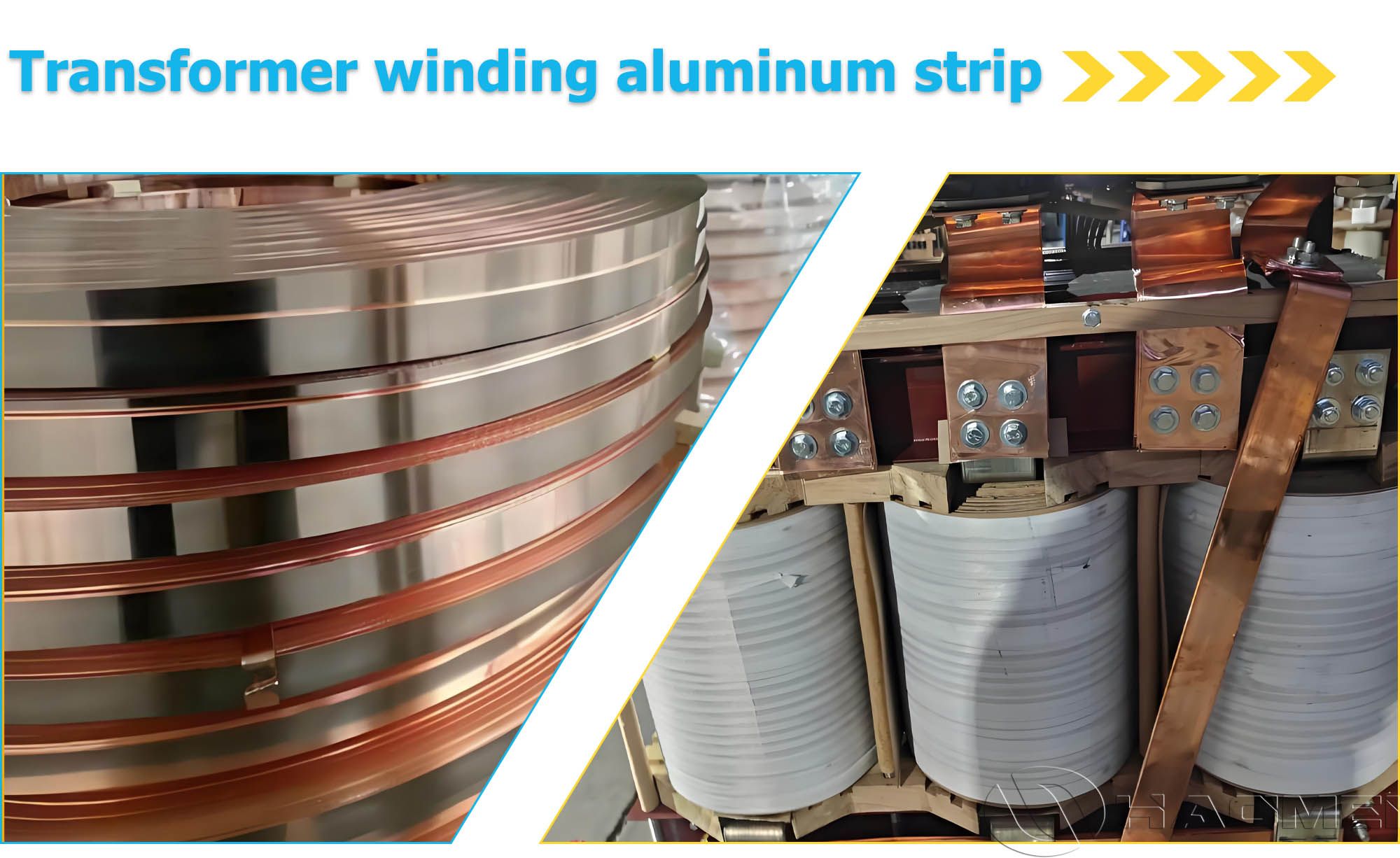
1. Oil-Immersed Power Transformers
Distribution transformers
Power transformers
Special-purpose transformers
2. Dry-Type Transformers
0.3mm copper strip is suitable for foil windings and other compact winding structures used in dry-type transformers.
3. Reactors and Electrical Equipment
Reactor windings
Induction equipment
Electrical coils
Electromagnetic components
4. New Energy Vehicles and Charging Equipment
Copper strip can also be used in transformers, inductors, reactors, and power electronic components for electric vehicles, charging piles, onboard chargers, DC/DC converters, and energy storage equipment.
FAQ
Q1: Why do transformers use copper strip as winding material?
A: Copper strip has excellent electrical conductivity, low electrical loss, and fast heat dissipation. It helps improve transformer operating efficiency and extend service life.
Q2: What materials are commonly used for transformer winding copper strip?
A: Common materials include C11000 and C10200 high-purity copper. These materials provide excellent conductivity and processing performance for high-reliability applications.
Q3: Can 0.3mm copper strip be used for dry-type transformers?
A: Yes. A 0.3mm copper strip is suitable for dry-type transformer foil windings. It provides good dimensional stability and winding performance.
Q4: What temper is required for transformer copper strip?
A: The temper should be selected according to processing requirements. O-temper soft copper strip is commonly used because it has good flexibility, is easy to wind, and is less likely to crack or break.
Q5: What is the electrical conductivity of high-conductivity copper strip?
A: High-quality transformer copper strip typically has an electrical conductivity of 97% IACS or above, helping reduce transformer operating losses.
Q6: Can the width of your 0.3mm copper strip be customized?
A: Yes. The manufacturer can customize different widths, coil weights, and specifications according to customer requirements to meet different transformer winding designs.
Q7: What information should customers provide when purchasing 0.3mm transformer copper strip?
A: Customers should provide the required material grade, thickness, width, temper, coil weight, and application equipment information. This helps ensure the most suitable copper strip product is selected.