 Contact Us
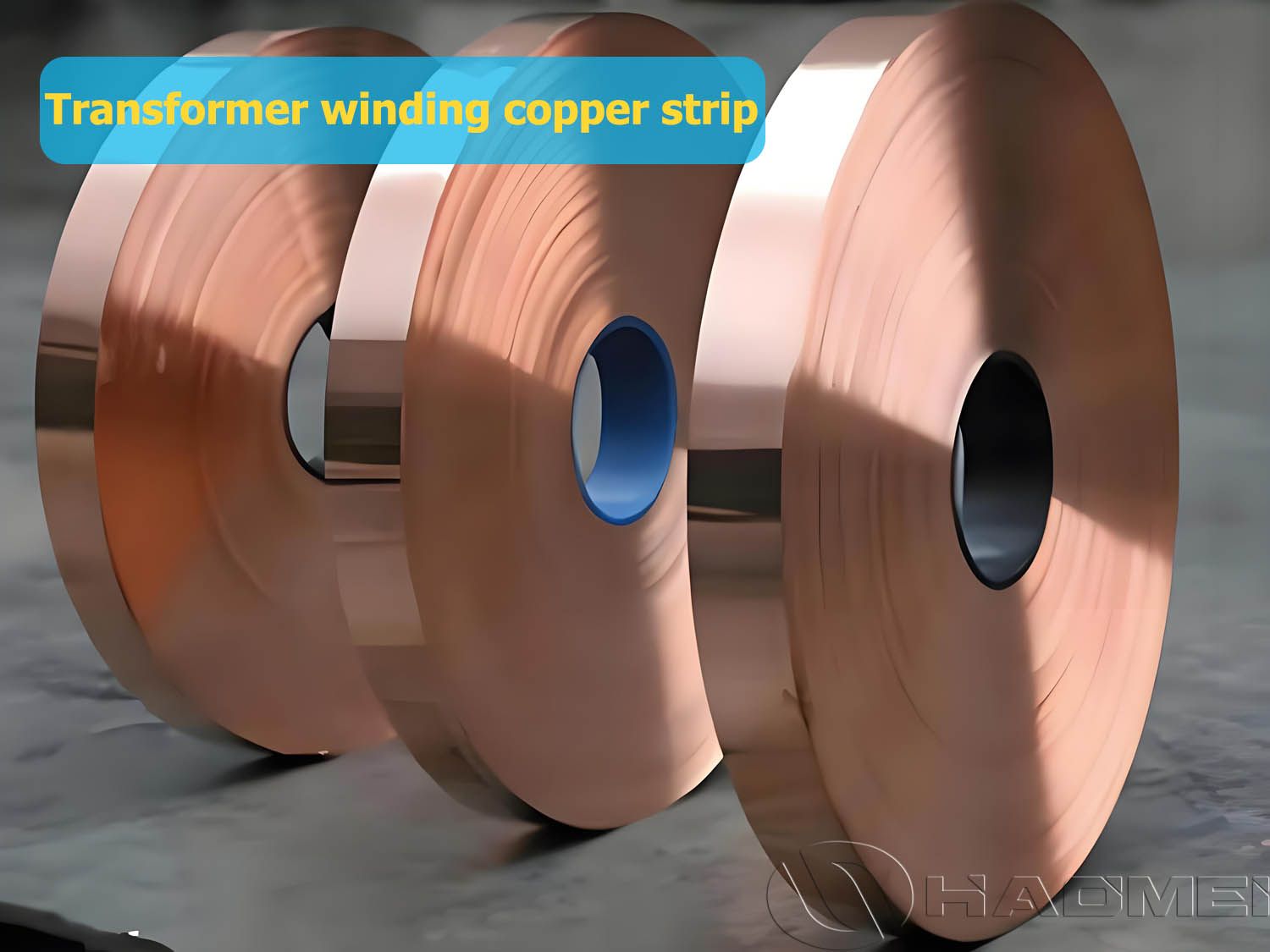
In the core structure of a distribution transformer, the winding is a critical component responsible for electrical energy conversion and transmission. The selection of winding material directly affects the transformer’s efficiency, service life, and operational reliability.
Among various conductive materials, high-conductivity copper strip has become the preferred material for foil-wound transformer windings due to its outstanding electrical, thermal, and mechanical properties.
This article explores the characteristics, advantages, and applications of high-conductivity copper strip in distribution transformer windings.
What Is High-Conductivity Copper Strip?
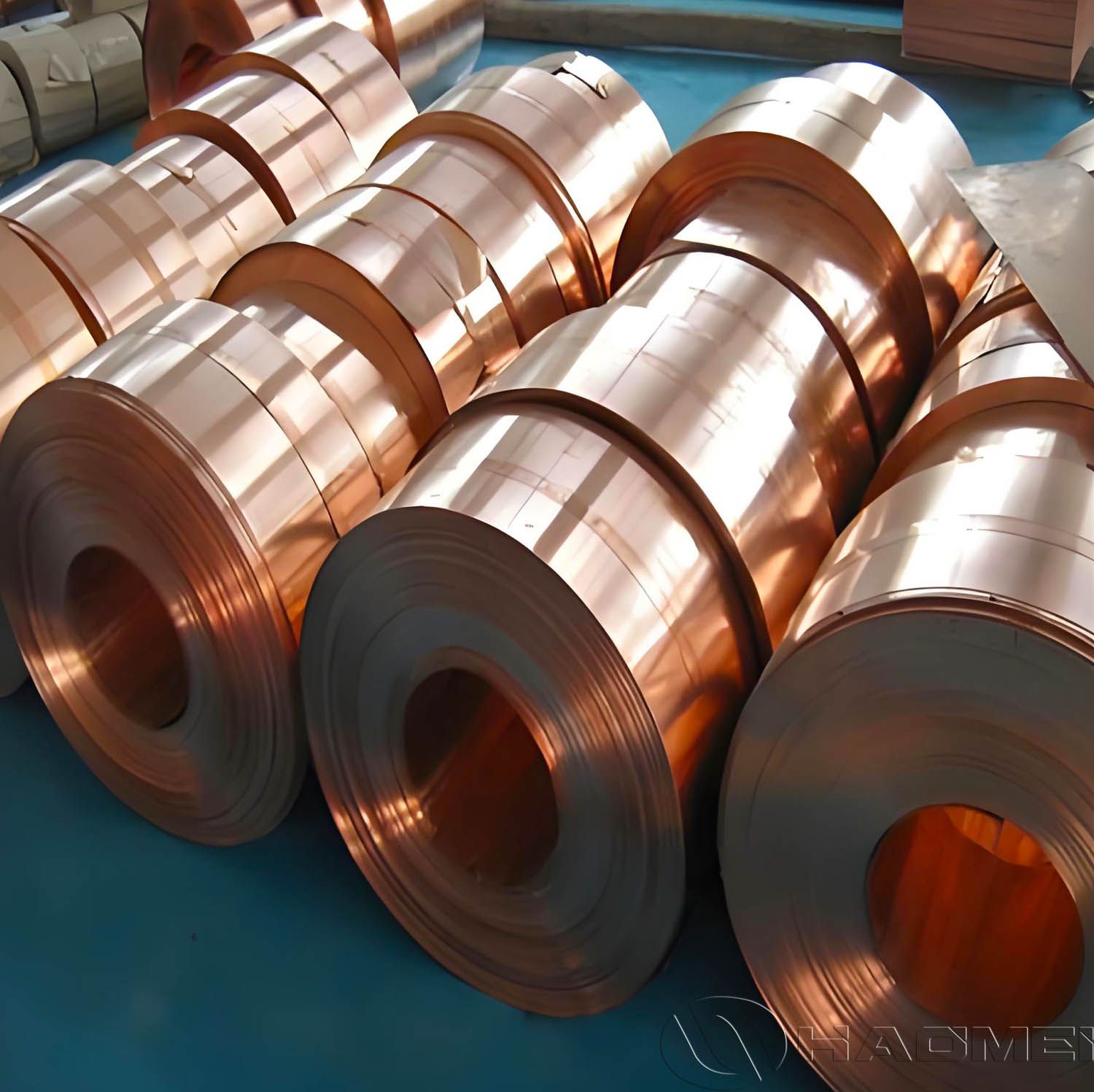
High-conductivity copper strip is a strip-shaped conductive material made from high-purity electrolytic copper through processes such as hot rolling, cold rolling, precision annealing, slitting, and surface treatment.
Its electrical conductivity generally reaches 99.9% IACS or above. It features extremely low electrical resistivity, excellent formability, and stable processing performance.
Common materials include:
T2 copper strip
C11000 copper strip
ETP (Electrolytic Tough Pitch Copper) strip
Oxygen-free copper strip, such as C10200, for specialized applications
Among these materials, T2 copper strip and C11000 copper strip are the most commonly used for distribution transformer windings because of their high conductivity and excellent overall performance.
Key Performance Parameters of High-Conductivity Copper Strip
| Performance Parameter | High-Conductivity Copper Strip | Standard Copper Strip |
| Electrical Conductivity (% IACS) | ≥99.9 | 99.0–99.5 |
| Electrical Resistivity (Ω·mm²/m) | ≤0.017 | 0.018–0.020 |
| Tensile Strength (MPa) | 200–350, depending on thickness and temper | 150–250 |
| Elongation (%) | 20–30 | 10–20 |
| Thermal Conductivity (W/m·K) | Approximately 400 | Approximately 380 |
The low electrical resistivity and high thermal conductivity of high-conductivity copper strip are its most important advantages. These properties directly affect transformer efficiency and temperature rise performance.
Key Properties of Copper Strip for Transformer Windings
1. Outstanding Electrical Conductivity
High-conductivity copper strip can achieve up to 100% IACS conductivity based on the International Annealed Copper Standard. Its extremely low electrical resistance minimizes copper losses, also known as I²R losses, during current transmission.
By reducing winding resistance, copper strip helps improve transformer energy efficiency and supports the design of low-loss, energy-saving distribution transformers.
For transformers operating continuously over long periods, even a modest reduction in winding losses can result in significant energy savings throughout the equipment lifecycle.
2. Excellent Thermal Conductivity and Heat Dissipation
Copper has a thermal conductivity of approximately 401 W/(m·K), significantly higher than aluminum, which is approximately 235 W/(m·K).
During transformer operation, winding conductors generate considerable Joule heat. The excellent heat transfer capability of copper strip allows heat to be quickly conducted away from the winding interior and dissipated more effectively.
This helps reduce winding temperature rise and offers several important benefits:
Improved overload capability
Lower risk of thermal aging of insulation materials
Better temperature control within the winding
Increased operational reliability
Extended transformer service life
While the overall cooling performance of a transformer also depends on factors such as winding structure, insulation design, cooling ducts, transformer oil circulation, enclosure design, and ambient temperature, high-conductivity copper strip provides a strong foundation for efficient thermal management.
3. High Mechanical Strength
During operation, distribution transformers may be subjected to short-circuit currents, electromagnetic forces, mechanical vibration, and thermal expansion or contraction.
High-quality copper strip offers good tensile strength and elongation properties, helping maintain the structural stability of transformer windings and reducing the risk of deformation.
This is particularly important for transformers exposed to high fault currents or frequent load fluctuations. A mechanically stable winding structure can improve short-circuit withstand capability and enhance long-term operating safety.
4. Excellent Ductility and Processing Compatibility
Copper strip has excellent ductility and plasticity. It can be easily processed into different dimensions and shapes to meet the design requirements of various transformer windings.
In foil winding processes, copper strip typically undergoes multiple operations, including:
Uncoiling
Slitting or cutting
Winding
Bending
Welding or brazing
Insulation wrapping
Layer-by-layer assembly
Good ductility ensures that the copper strip does not crack, split, or develop defects during winding and forming.
In addition, copper strip with a smooth surface and precise dimensional control is highly compatible with commonly used insulation materials. This helps ensure reliable insulation performance and long-term transformer stability.
5. Corrosion Resistance and Long Service Life
Copper has good natural corrosion resistance and is less prone to rusting or deformation during long-term service.
High-conductivity copper strip also demonstrates good oxidation resistance in normal operating environments. With proper storage, handling, insulation, and protective packaging, it can maintain stable surface quality and electrical performance over time.
The advantages include:
Lower maintenance requirements
Stable electrical conductivity throughout service life
Better reliability under long-term operation
Reduced risk of connection degradation
Longer transformer operating life
For high-efficiency distribution transformers, the long-term stability of copper windings is an important factor in reducing total lifecycle costs.
Specifications of High-Conductivity Copper Strip
| Item | Specification |
| Material | T2, C11000, ETP Copper |
| Copper Content | ≥99.90% |
| Electrical Conductivity | Up to 100% IACS |
| Temper | O (Soft Annealed), H (Half-Hard), customizable |
| Thickness | 0.08–5.0 mm |
| Width | 5–600 mm |
| Thickness Tolerance | Can be controlled according to customer requirements |
| Surface Condition | Bright, oxidation-free, burr-free |
| MOQ | 3 Tons |
Typical Applications
In addition to distribution transformer windings, high-conductivity copper strip is widely used in:
Oil-immersed distribution transformers
Dry-type transformers
Power transformers
Renewable energy transformers
Photovoltaic transformers
Wind power transformers
Reactors
Inductor coils
High- and low-voltage switchgear
Motor windings
Busbars and electrical connection components
Quality Requirements for Distribution Transformer Winding Copper Strip
To ensure the long-term stable operation of transformers, high-conductivity copper strip should meet the following quality requirements.
1. High-Purity Raw Materials
The copper strip should be produced from high-purity electrolytic copper. Strict control of impurity content is essential to ensure stable electrical conductivity and reliable processing performance.
Excessive impurities may reduce conductivity, affect ductility, and cause unstable mechanical or surface properties.
2. Precise Dimensional Tolerances
Thickness and width tolerances must be tightly controlled to ensure consistent winding dimensions and improve assembly accuracy.
Excessive thickness variation may lead to inconsistent conductor cross-sectional area, increased winding resistance, uneven layer buildup, and dimensional deviations in the finished coil.
For foil winding applications, precise width control is equally important because it directly affects insulation margins, axial winding dimensions, and coil alignment.
3. Excellent Mechanical Properties
Copper strip should provide an appropriate balance between tensile strength and elongation to meet the requirements of winding, bending, forming, and welding processes.
If the strip is too hard, it may crack or spring back during winding. If it is too soft, it may deform during handling or lose dimensional stability during the manufacturing process.
Therefore, the temper should be selected according to the transformer design and winding equipment requirements.
4. Good Surface Quality
The surface of transformer copper strip should be clean, smooth, and free from defects that may affect insulation or winding quality.
Typical defects to avoid include:
Scratches
Dents
Cracks
Oxidation spots
Oil contamination
Slitting burrs
Edge cracks
Surface inclusions
Severe waviness or distortion
A clean and smooth surface helps ensure proper insulation wrapping and reduces the risk of insulation damage, inter-turn short circuits, or partial discharge.
5. Stable Electrical Conductivity
The electrical conductivity of copper strip should remain stable from batch to batch. This is particularly important for high-efficiency and low-loss distribution transformers.
Reliable conductivity helps manufacturers control winding resistance accurately, reduce load losses, and meet transformer energy-efficiency requirements.
Advantages of High-Conductivity Copper Strip Compared with Aluminum Strip
Copper and aluminum are both widely used as winding conductors in distribution transformers. Aluminum strip offers lower density and a relatively lower material cost, making it suitable for certain transformer designs.
However, from an overall performance perspective, high-conductivity copper strip offers several important advantages.
| Comparison Item | High-Conductivity Copper Strip | Aluminum Strip |
| Electrical Conductivity | Higher | Relatively lower |
| Required Cross-Section for Same Current Capacity | Smaller | Usually larger |
| Winding Volume | More compact | Usually larger |
| Mechanical Strength | Better | Relatively lower |
| Welding and Connection Reliability | More mature and reliable | Requires more stringent connection processes |
| Short-Circuit Withstand Capability | Generally better | May require a larger cross-section or optimized design |
| Thermal Conductivity | Excellent | Good, but generally lower than copper |
| Weight | Higher | Lower |
| Raw Material Cost | Higher | Relatively lower |
As shown in the table, the key advantages of copper strip are its high electrical conductivity, compact winding design, connection reliability, mechanical strength, and strong short-circuit resistance.
For distribution transformers with large capacity, high energy-efficiency requirements, limited installation space, demanding operating environments, or strict reliability standards, copper windings generally offer stronger overall performance.
Of course, copper strip and aluminum strip each have their own advantages. The final material selection should be based on transformer capacity, loss requirements, budget, installation space, weight limitations, operating conditions, and customer specifications.