 Contact Us
In the manufacturing of distribution transformers, dry-type transformers, and reactors, the burr control of aluminum strip edges, conductivity stability, and mechanical properties directly affect transformer insulation life, heat dissipation performance, and operational safety.
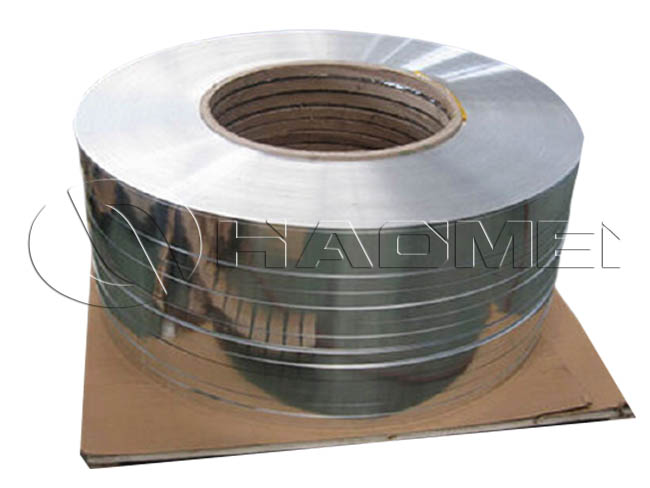
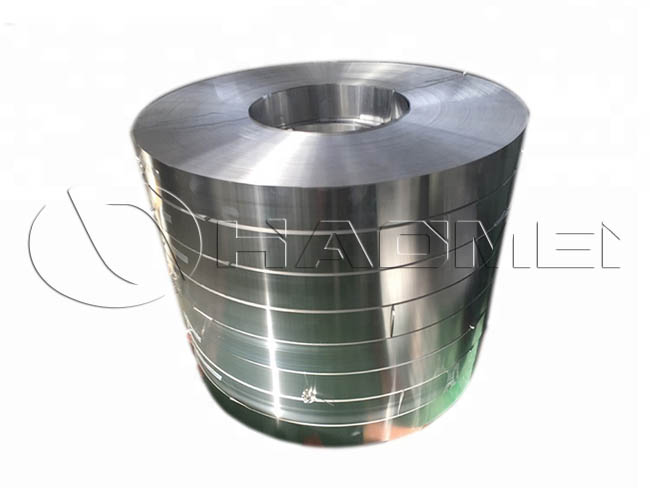
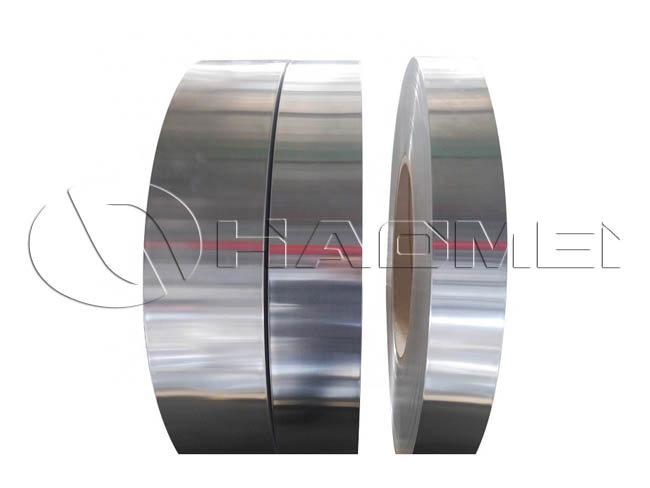
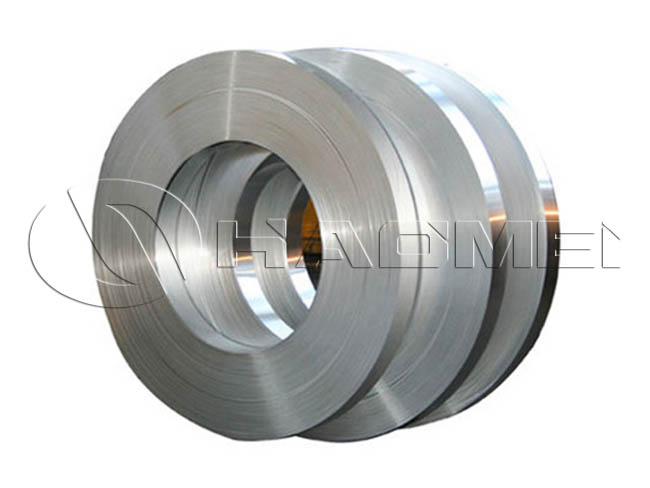
As a professional exporter of industrial-grade aluminum products, HAOMEI has long supplied high-quality 1050 H14 burr-free aluminum strip for transformer applications. Manufactured in accordance with international electrical material standards, our products use high-precision slitting and deburring edge-finishing processes. They are designed for large-volume, customized wholesale supply to distribution transformer manufacturers worldwide.
What Is 1050 H14 Aluminum Strip?
1050 belongs to the commercial pure aluminum series, with an aluminum content of no less than 99.5%. It is one of the most widely used pure aluminum grades. With low impurity content, it offers excellent electrical and thermal conductivity, good plasticity, and easy stamping, shearing, bending, and forming performance.
The H14 temper refers to a half-hard condition achieved through moderate cold work hardening followed by partial annealing. H14 aluminum strip offers a good balance between strength and ductility. Its tensile strength is generally within the range of 105–145 MPa, while maintaining favorable elongation. This makes the strip suitable for tight transformer winding while helping prevent excessive deformation or breakage under winding tension.
In terms of electrical conductivity, 1050 pure aluminum has a volume resistivity of approximately 2.8 × 10⁻⁸ Ω·m and an electrical conductivity of more than 61.5% IACS. Among common conductive materials, its conductivity is second only to silver and copper. For distribution transformer windings, when the cross-sectional area is properly designed, 1050 aluminum strip can provide a stable conductive path and help achieve transformer efficiency targets through appropriate winding design.
In addition, aluminum has a density of approximately 30% that of copper. Under equivalent conductivity requirements, aluminum windings are significantly lighter than copper windings, which helps reduce total transformer weight and optimize material costs.
Why Must Transformer Aluminum Strip Be Burr-Free?
Transformer winding aluminum strip must pass through multiple processing steps during winding, including decoiling, tensioning, interlayer insulation placement, bending, and transition forming. If burrs are present along the aluminum strip edges, they may cause a range of practical problems.
1. Damage to Insulation Materials
Sharp burrs can easily puncture or scratch interlayer insulation paper and insulation films under winding tension, creating weak insulation points. In severe cases, this may cause inter-turn short-circuit risks, one of the most critical quality concerns in transformer manufacturing.
2. Reduced Winding Precision and Appearance Quality
Burrs can result in uneven strip edges and poor layer-to-layer contact during winding. This affects winding compactness and window fill factor, which may further influence heat dissipation and mechanical strength.
3. Potential Safety Risks
Detached burrs or metallic particles may enter the transformer interior and cause partial discharge, oil passage blockage, or other operational risks.
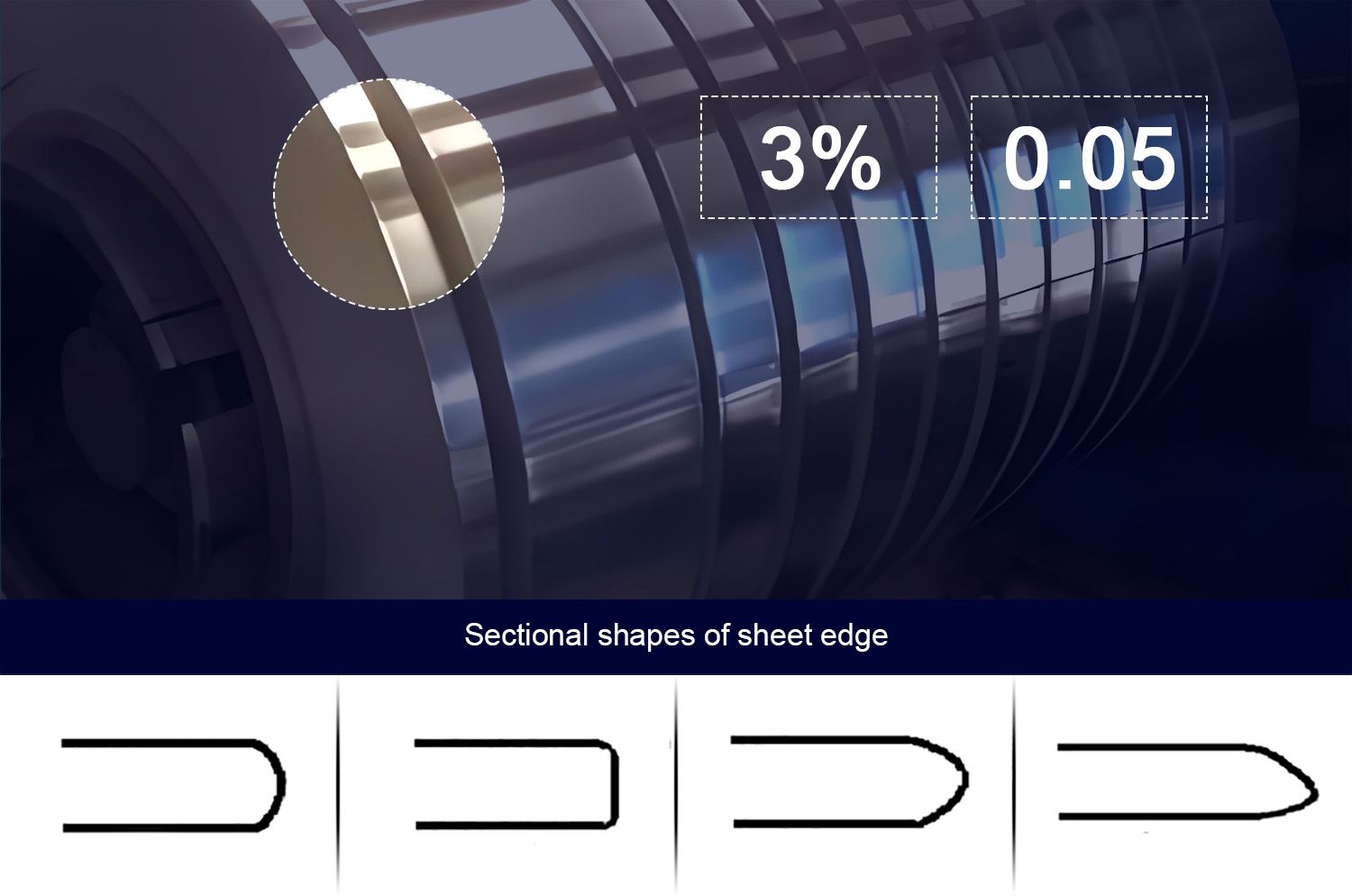
Therefore, distribution transformer aluminum strip requires strict slitting edge quality: edges should be smooth, even, and free from obvious burrs, cracks, and flash. The roughness of the cut surface should also be controlled. Burr-free aluminum strip depends on slitting equipment precision, tool condition, tension control, and properly matched processing parameters. It is an important indicator of a supplier's processing capability.
1050 Transformer Aluminum Strip Specifications
| Item | Specification |
| Material | 1050 aluminum, Al ≥ 99.5% |
| Temper | H14, half-hard |
| Thickness Range | 0.20 mm–3.0 mm |
| Common Transformer Thicknesses | 0.3 mm, 0.5 mm, 0.8 mm, 1.0 mm, 1.5 mm, 2.0 mm |
| Width Range | 5 mm–600 mm, custom slitting available |
| Coil Inner Diameter | 76 mm / 150 mm / 200 mm; aluminum core or paper core available |
| Surface | Bright aluminum surface, free from oil stains, scratches, and dents |
| Edge Quality | Precision slit, burr-free, no edge curling |
| Tensile Strength | ≥190 MPa |
| Yield Strength | ≥120 MPa |
| Elongation | ≥12% |
| Electrical Resistivity | 0.027 Ω·mm²/m |
| Thermal Conductivity | Approx. 235 W/(m·K) |
| Operating Temperature Range | -40°C to +150°C |
| Burr Height | ≤0.01 mm |
| Standards | GB/T 3190, GB/T 22638; ASTM B209 available upon request |
| Inspection Items | Dimensional tolerance inspection, surface appearance inspection, conductivity testing, tensile testing, and spectrometric composition analysis |
| Coil Weight | As required by customers; commonly 500–2000 kg per coil |
| Packaging | Moisture-proof and anti-oxidation packaging with stretch film, corner protectors, and wooden pallets; suitable for domestic truck delivery and container export |
| MOQ | 1-3 tons |
Key Features of 1050 Transformer Aluminum Strip
Good electrical conductivity, suitable for distribution transformer windings and conductive structural components.
H14 half-hard temper balances strength and winding ductility, reducing the risk of breakage and excessive deformation during coil winding.
Burr-free edges effectively protect interlayer insulation and reduce the risk of turn-to-turn short circuits.
High slitting accuracy and consistent strip width ensure stable performance on automated winding equipment.
Low aluminum density helps reduce transformer weight and optimize material costs.
Aluminum is a recyclable resource, supporting the development of greener and more sustainable power technologies.
Main Applications
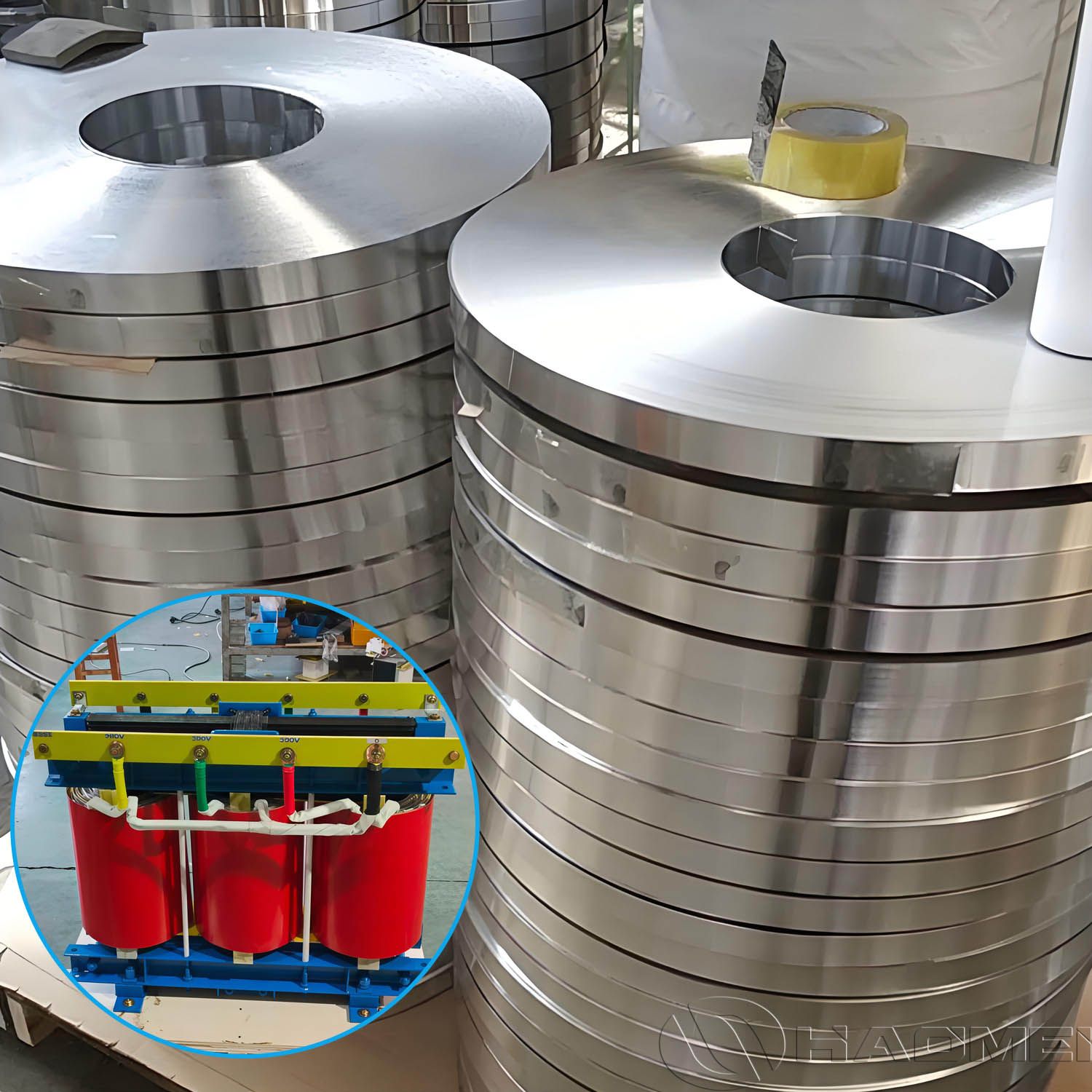
Oil-immersed distribution transformers: low-voltage foil windings, electrostatic shielding strips, and grounded shielding layers.
Dry-type distribution transformers: foil windings, end shielding, and narrow aluminum strips for terminal connections.
Internal shielding and conductive connections for package substations (unit substations) and combined transformers.
Shielding and conductive aluminum strips for reactors and instrument transformers.
Other applications: aluminum base material for copper-aluminum transition joints and for flexible busbar connections.
Export Packaging and Quality Assurance System
To ensure that products remain protected from moisture, oxidation, and impact damage during long-distance sea and land transportation, we implement strict industrial export packaging standards.
Moisture Protection
High-density plastic film and desiccants are used for double-layer sealed wrapping to prevent exposure to salt spray and humidity.
End-Face Impact Protection
Both sides of the aluminum coil are protected with rigid cardboard and impact-resistant corner guards to prevent edge damage and coil end deformation.
Fumigated Wooden Pallets
Standard cross-structured fumigated wooden pallets or steel pallets are used for the base, facilitating forklift handling and lifting operations.
Mill Test Certificate
Each batch is supplied with an original Mill Test Certificate (MTC), including chemical composition analysis, electrical conductivity data, and tensile test results.
We support sample delivery, small-batch trial orders, and large-volume customized wholesale orders. With short delivery times, we offer shipment to major global ports under FOB, CIF, and CFR terms.
If you are looking for a reliable supplier of high-quality 1050 H14 burr-free aluminum strip for transformer applications, please contact our sales engineering team today for the latest quotation and technical data sheet.