 Contact Us
In power equipment manufacturing, transformer winding materials directly affect electrical conductivity, temperature rise, size and weight, service life, and manufacturing cost. Traditionally, copper strip and copper wire have been widely used for transformer windings because of their excellent electrical conductivity. However, with the growing demand for lightweight designs, cost control, and advances in aluminum processing technology, pure aluminum strip is increasingly used in transformer windings.
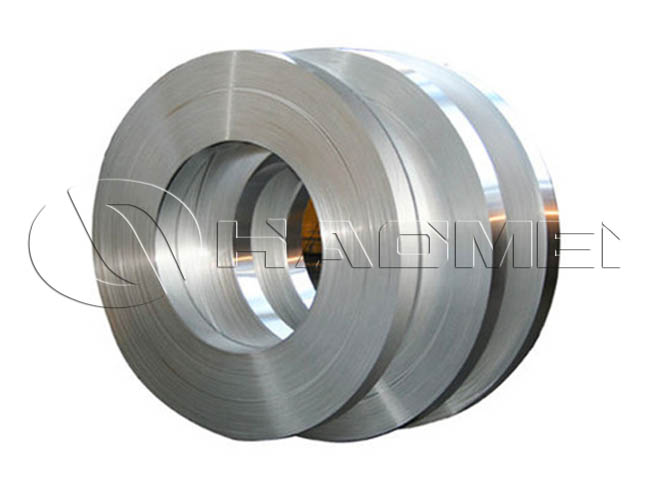
In recent years, aluminum winding technology represented by 1060 H24 pure aluminum strip has become an important solution in power transformer manufacturing, thanks to its strong conductivity, excellent cost performance, and favorable mechanical processing characteristics.
What Is 1060 H24 Aluminum Strip?
1060 is a pure aluminum alloy in the 1xxx series, with a relatively high aluminum content. Compared with aluminum alloys containing larger amounts of alloying elements, 1060 aluminum offers good electrical conductivity, thermal conductivity, corrosion resistance, and formability. It is therefore suitable for applications with high requirements for electrical performance and forming capability.
1060 Aluminum Strip: H24 Temper
Among transformer aluminum strip products, the most common delivery temper for 1060 is generally the O temper—fully annealed, soft in condition, and typically offering elongation above 20%. This makes it easy to wind tightly on foil-winding machines. O-temper aluminum strip is a classic choice for low-voltage windings in dry-type transformers.
However, O temper is not the only option. The H24 temper is gaining increasing attention in certain transformer winding applications.
H24 is a semi-hard temper. Its typical processing route involves cold rolling to the finished thickness followed by low-temperature annealing. During this process, the effects of cold work are partially relieved, but the material is not fully recrystallized. Its mechanical properties fall within a highly practical range: tensile strength is generally between 105 and 145 MPa, yield strength is approximately 75 MPa or above, elongation is around 10%, and Brinell hardness is approximately 33 HBW.
This temper retains sufficient strength to resist winding tension while maintaining enough ductility to accommodate bending deformation during coil winding.
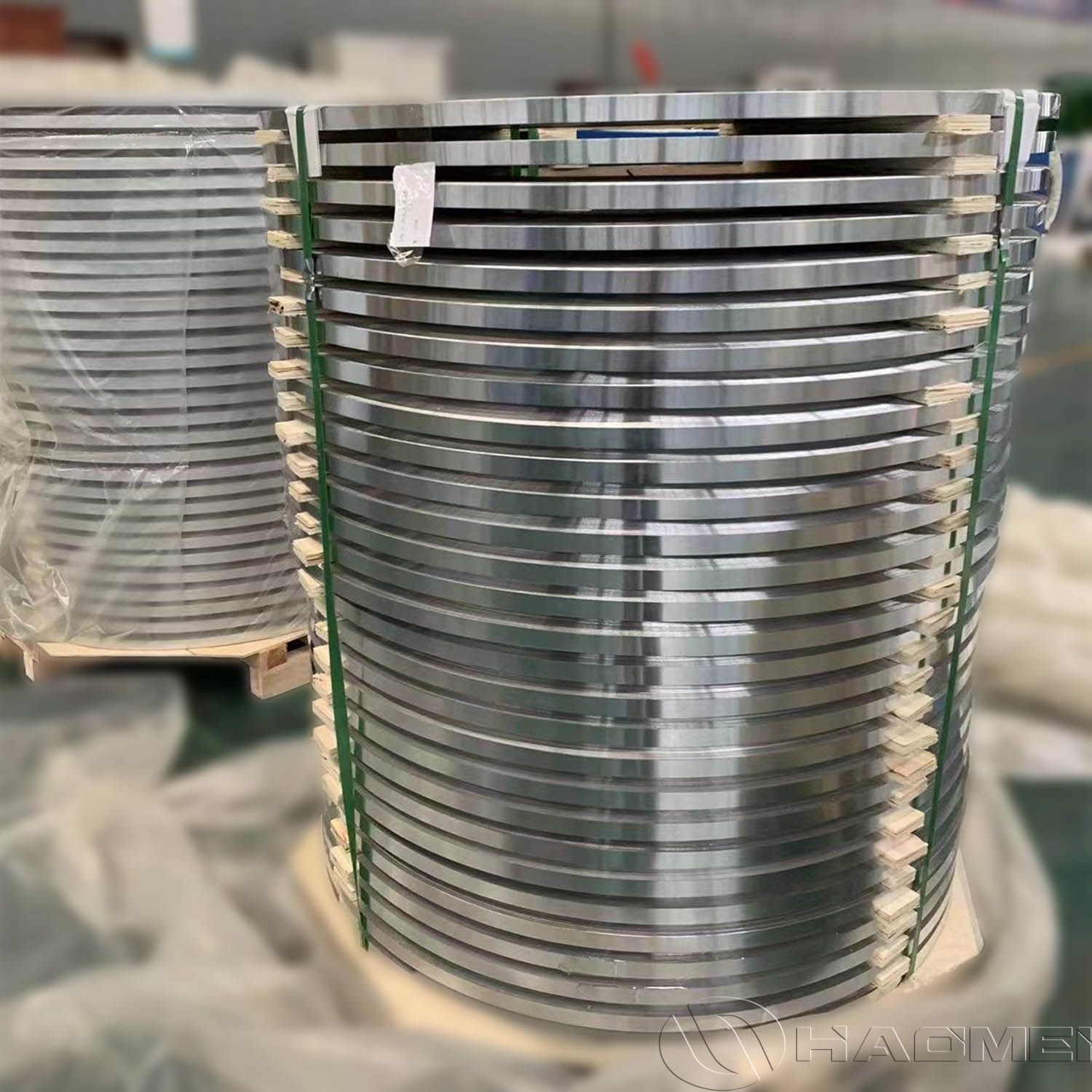
The Different Roles of 1060 O and H24 Aluminum Strip in Transformer Windings
Transformer windings are generally divided into high-voltage windings and low-voltage windings. These two winding types have significantly different requirements for aluminum strip.
H24 Is Particularly Suitable for Low-Voltage Windings
Low-voltage windings carry high current and have relatively few turns. They commonly use a foil-winding structure, in which wide aluminum strip is directly wound into a cylindrical coil.
In this structure, the aluminum strip is pulled from an uncoiler under a controlled tension, passes through tension rollers and guide rollers, and is finally wound onto a winding mandrel. Insulating material is inserted between layers during the winding process.
Throughout this process, the aluminum strip is subjected to continuous tensile and bending stresses.
If the strip is too soft, such as O-temper material, it may undergo plastic deformation under high winding tension, resulting in coil dimensional deviation or insufficient interlayer contact.
If the strip is too hard, such as H18 temper material, microcracks may occur along the edges during bending, creating potential insulation risks.
H24 aluminum strip provides a balanced combination of strength and ductility, making it suitable for this processing window.
O Temper Is Often Preferred for High-Voltage Windings
High-voltage windings have more turns and generally use thinner conductors. They may be produced using wire winding or foil winding structures and often require higher elongation.
O-temper aluminum strip, with elongation typically exceeding 20%, is more compliant during winding. It can closely follow the shape of the winding mandrel and form tight, uniform turns more easily than H24 material in applications requiring high ductility.
It is worth noting that 1060 H24 aluminum strip is not limited to transformer windings. It is also widely used in radiator stamping, electrical cabinets, sheet metal components, and certain automotive structural applications. In the transformer industry, however, H24 material is sometimes overlooked because O-temper aluminum strip is more commonly specified.
In fact, for certain low-voltage foil-wound transformers and reactors, H24 is becoming a practical and reliable option.
Common Specifications of 1060 Transformer Aluminum Strip
1060 Transformer aluminum strip is usually customized according to the coil structure and equipment requirements. Different transformers may require different thicknesses, widths, coil weights, and dimensional tolerances.
| Item | Typical Specification |
| Alloy | 1060 |
| Temper | H24 |
| Aluminum Series | 1xxx Series |
| Thickness | 0.2–10 mm, customizable |
| Width | 20–600 mm, customizable |
| Length | 1,000–16,000mm |
| Typical Conductivity | Approximately 61% IACS; subject to applicable standards and actual chemical composition |
| Surface | Bright, flat, and clean |
| Edge Quality | Precision slit, low burr |
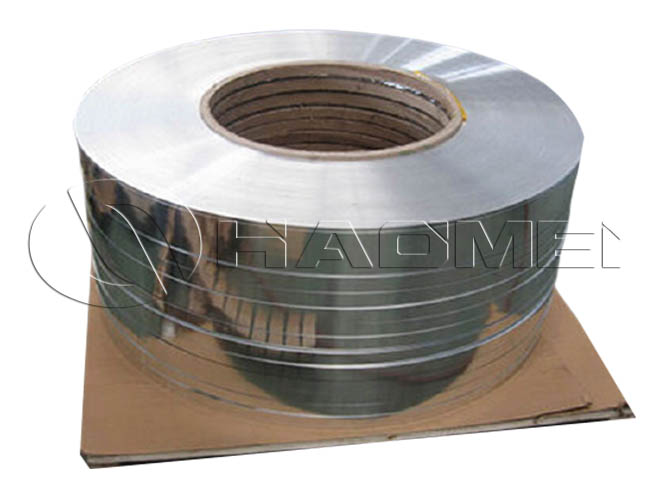
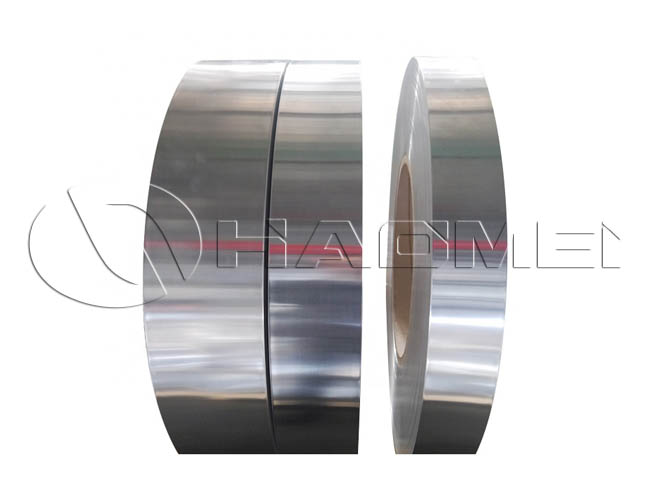
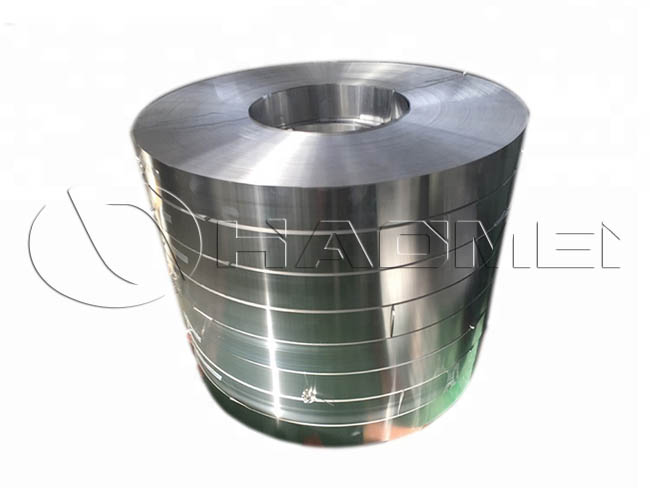
| Supply Form | Aluminum strip coil |
| Processing Method | Cold rolling, annealing, slitting |
| Main Applications | Transformer windings, reactors, and electrical equipment conductors |
| Packaging | Wooden cases, pallets, or export-standard packaging |
| MOQ | 3 tons |
Key Quality Indicators
Test / Inspection Item | Typical Technical Requirement (GB/T 3880 / IEC Standard) | Impact on Transformer Performance |
| Aluminum Purity | ≥ 99.60% | Ensures electrical conductivity and helps reduce no-load and load losses |
| Tensile Strength (Rm) | 100–135 MPa | Helps the winding resist deformation or collapse under short-circuit electromagnetic forces |
| Elongation After Fracture (A50mm) | ≥ 10%–18% | Helps prevent cracking during winding and bending; reduces the risk of edge microcracks |
| Burr Height | ≤ 0.01–0.02 mm, precision deburred | A critical indicator. Excessive burrs may puncture interlayer insulation paper, causing interturn short circuits and burnout |
| Sickle Bend | ≤ 1.5 mm / 2,000 mm | Prevents strip tracking deviation during high-speed winding and helps ensure a flat, even coil end face
|
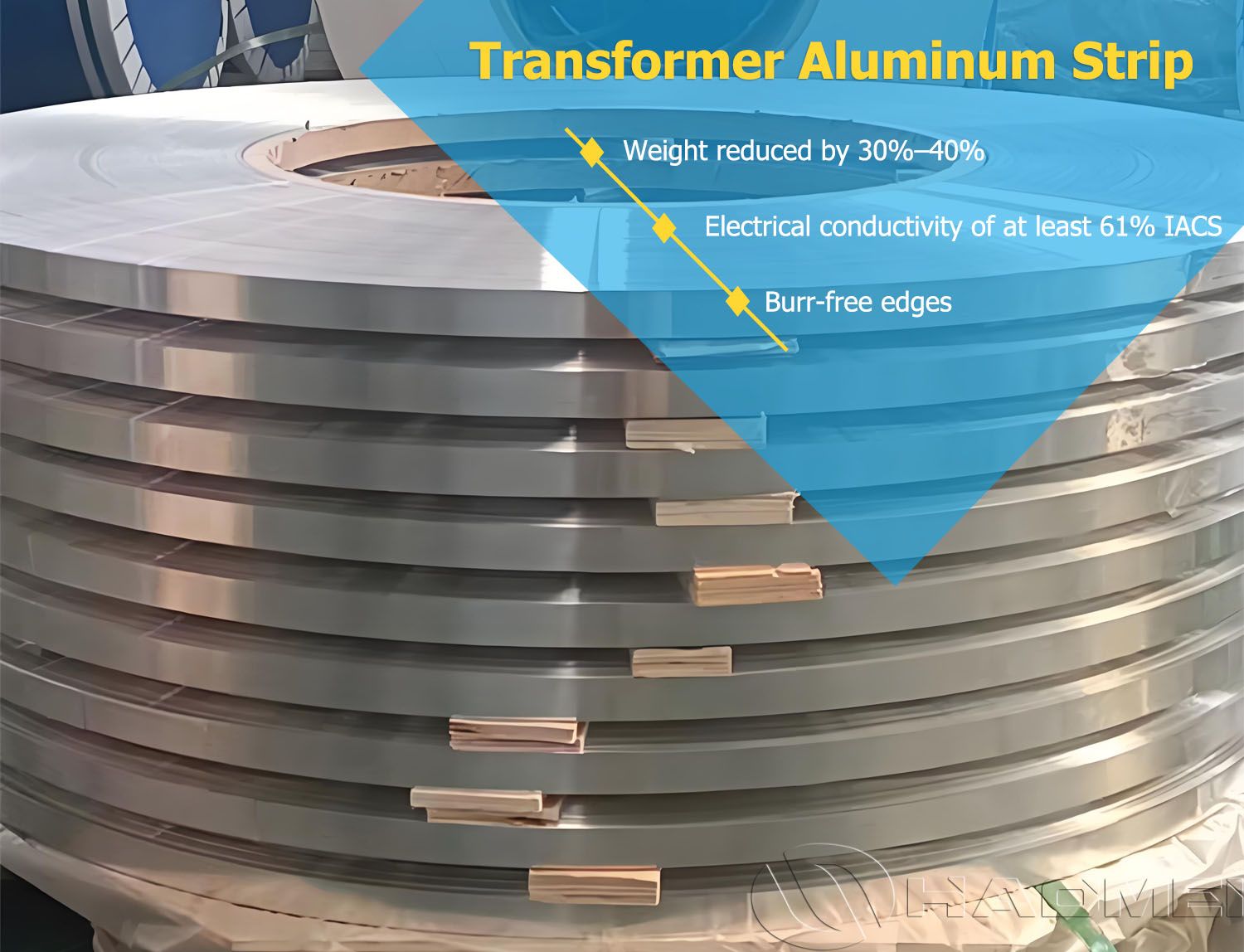
Key Advantages of 1060 H24 Pure Aluminum Strip for Transformer Windings
1. Lightweight Performance
The density of aluminum is approximately 2.70 g/cm³, while copper has a density of approximately 8.96 g/cm³. Aluminum is therefore only about one-third the weight of copper by volume.
Under equivalent current-carrying requirements and proper conductor design, using 1060 aluminum strip can reduce the overall weight of a transformer by approximately 30% to 40%.
2. High Electrical Conductivity
With its high aluminum purity, 1060 H24 aluminum strip provides good electrical conductivity. When the conductor cross-sectional area is properly designed, it can offer low resistance and help reduce energy loss in transformer windings.
3. Low Internal Resistance
The relatively low resistivity of electrical-grade aluminum strip helps reduce winding resistance. This can contribute to improved transformer efficiency, provided that the strip dimensions and winding design are correctly matched to the operating current and temperature-rise requirements.
4. Good Mechanical Strength
The H24 temper provides improved mechanical strength compared with fully annealed O-temper aluminum strip. It can withstand winding tension and certain mechanical stresses encountered during transformer manufacturing and operation.
5. Good Thermal Stability
Aluminum strip can maintain stable performance under typical transformer operating temperatures. With an appropriate insulation system, winding structure, and cooling design, it can support long-term transformer reliability.
6. Cost Efficiency
Aluminum is generally more economical than copper. As a result, 1060 H24 transformer aluminum strip offers a cost-effective conductor solution for applications where transformer design allows the use of aluminum windings.
7. Recyclability
Aluminum is highly recyclable and can be repeatedly recovered with relatively little loss of material value. The use of recyclable aluminum strip helps conserve resources, reduce energy consumption, and minimize environmental impact.
Main Application Areas
1060 H24 pure aluminum strip is mainly used for aluminum windings in small and medium-sized distribution transformers, including:
Oil-immersed distribution transformers for local distribution networks;
Dry-type transformers used in buildings, shopping malls, factories, and other power distribution systems;
Small box-type substations and prefabricated substations;
Reactors and small inductive coils, particularly in non-high-voltage and non-ultra-high-power applications;
Other electrical equipment requiring wide-strip aluminum conductors.
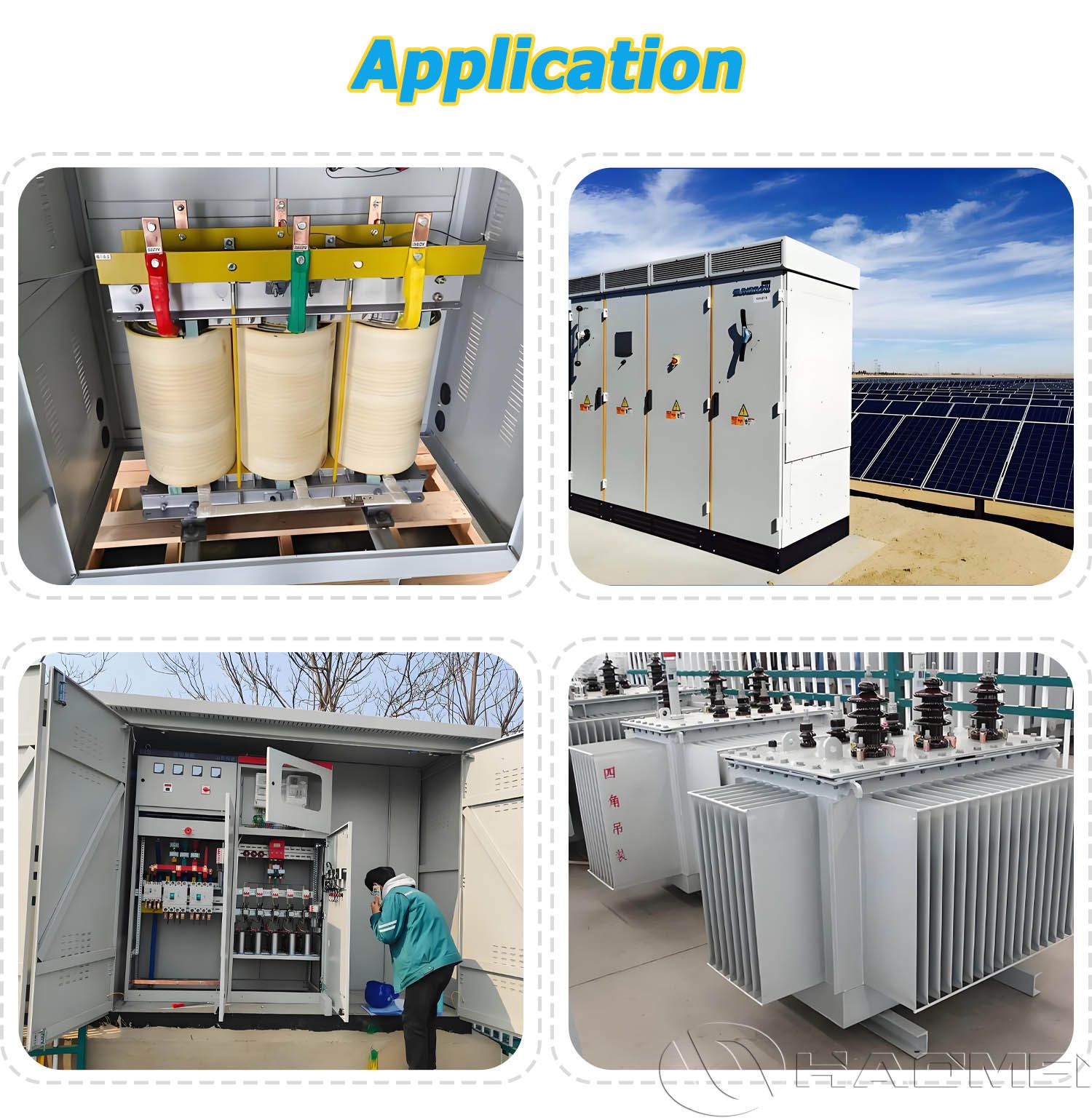
How to Select High-Quality 1060 H24 Transformer Aluminum Strip
When purchasing 1060 transformer aluminum strips, the following factors should be carefully evaluated.
1. Confirm the Alloy and Temper
Clearly specify 1060 H24 and confirm that the chemical composition and mechanical properties comply with the relevant material standards and project requirements.
2. Verify Electrical Conductivity
Conductivity is a key property of transformer winding conductors. Suppliers should provide relevant test data, such as conductivity or resistivity values, to confirm that the material meets design requirements.
3. Control Dimensional Accuracy
Thickness and width tolerances should match the transformer winding design and the capabilities of the winding equipment. Stable dimensions help ensure consistent coil geometry and reliable winding performance.
4. Inspect Edge Quality
Precision slitting and low-burr edges are essential. High burrs or sharp edges can damage insulation paper, polyester film, or other interlayer insulation materials during the winding process.
5. Evaluate Coil Quality
The aluminum strip coil should be wound neatly with stable tension. Problems such as loose coils, telescoping, collapsed coils, edge waves, or uneven coil shape should be avoided.
6. Ensure Batch Consistency
For volume transformer production, consistent material properties are extremely important. Stable quality from batch to batch helps reduce production adjustments, improve winding efficiency, and ensure reliable finished transformer performance.