 Contact Us
In the power cable sector, interlocked armored cable aluminum alloy strip serves as the core metallic protective substrate for self-locking armored cables such as AC90, MC, and YJLHS. Unlike traditional steel tape armor, this material offers advantages, including light weight, high flexibility, non-magnetic properties, and corrosion resistance-making it widely used in high-rise buildings, rail transit, petrochemical facilities, offshore operations, and industrial projects.
So, what exactly is cold-rolled aluminum alloy tape used for interlocking cable armor? Why is it suitable for this application? Which alloys are commonly used, and how do you select the right specifications? This article provides the answers.
What Is Cold-Rolled Aluminum Alloy Strip for Interlocked Cable Armor?
Interlocked armor is also known as interlocking armor, self-locking armor, or interlocked metallic armor.
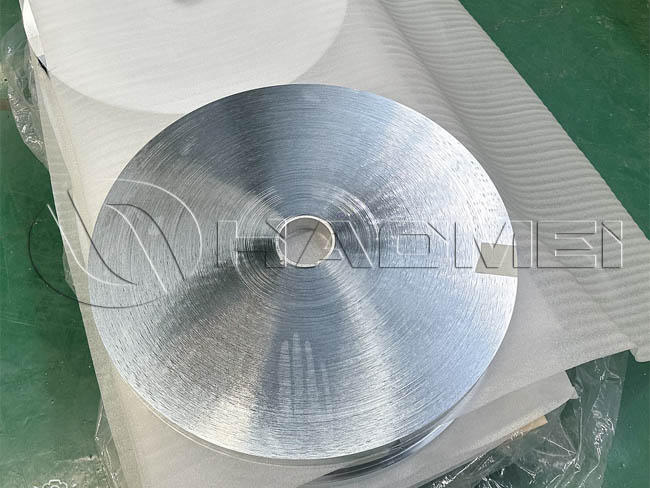
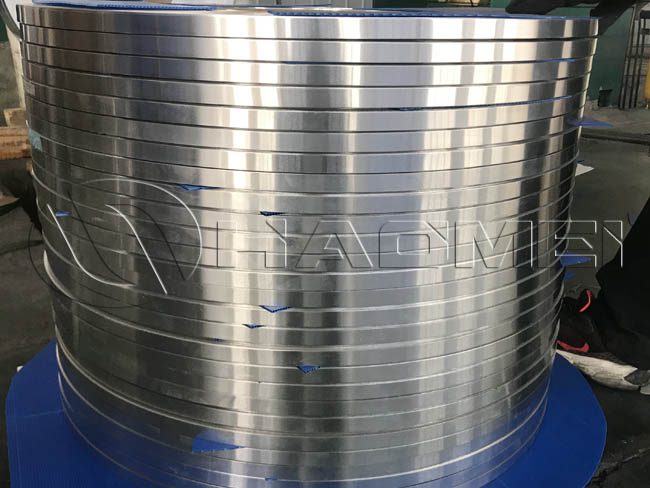
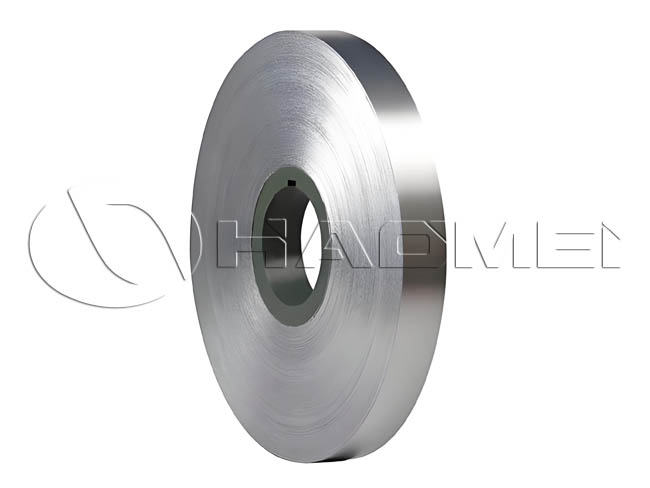
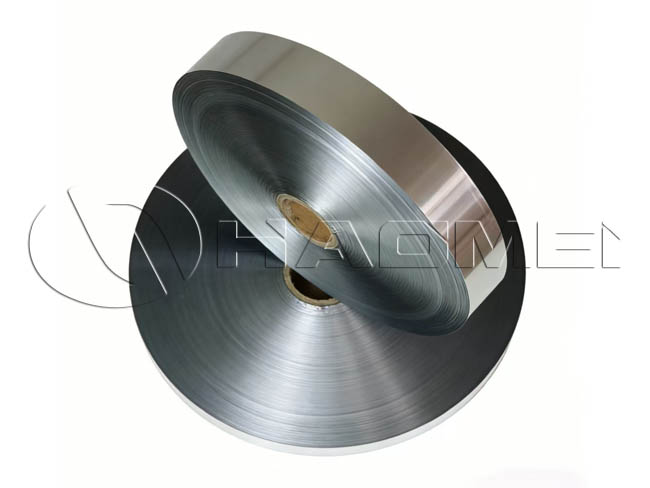
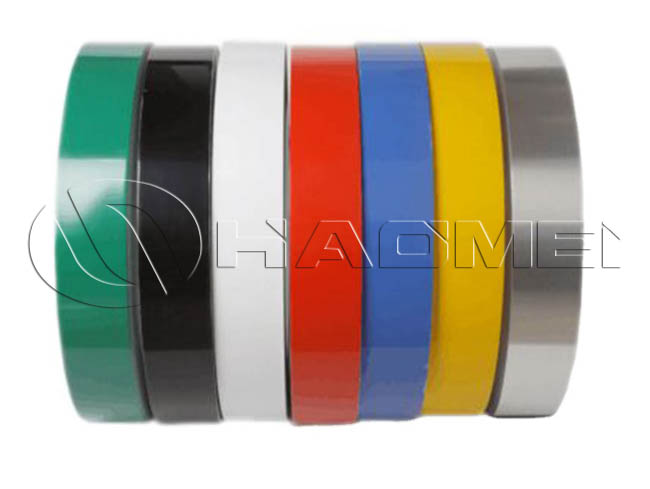
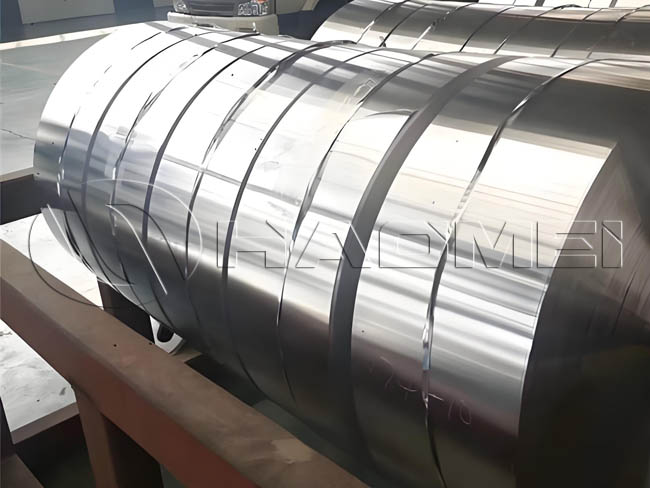
Cold-rolled aluminum alloy strip for interlocked armor is generally a 5xxx-series aluminum-magnesium alloy strip that has undergone cold rolling, annealing, precision slitting, and edge treatment.
During cable manufacturing, the strip is fed through forming dies on an armoring machine. It is bent into an S-shaped or Z-shaped profile and helically wrapped around the cable core. Each turn mechanically interlocks with the next, forming a continuous, flexible metallic protective sheath around the cable.
A typical interlocked armored cable structure, from inside to outside, is:
Conductor → Insulation Layer → Wrapping / Bedding Layer → Interlocked Aluminum Alloy Armor Layer → Outer Jacket, Optional
The interlocked aluminum alloy armor layer provides four major benefits:
1. Mechanical Protection: Resists external crushing, impact, and rodent damage, safeguarding the internal insulated cores; the interlocking structure disperses stress under pressure, offering superior crush resistance compared to conventional steel-tape wrapped designs.
2. High Flexibility: The interlocking metal layers allow for small-radius bending, making installation in confined spaces easy; the minimum bending radius is just 7 times the cable's outer diameter—far superior to steel-tape armored cables—facilitating more convenient routing and installation.
3. Non-magnetic and Eddy-current Free: The 5-series aluminum alloy is non-magnetic; single-core cables do not generate heat losses from eddy currents—a key advantage over steel-tape armoring—making them ideal for single-core power cable applications.
4. Lightweight and Corrosion-resistant: With a density only one-third that of steel, the overall cable weight is significantly reduced, lowering demands on transportation, lifting, and cable tray load-bearing capacity; a dense oxide film forms on the surface, providing resistance to atmospheric and moisture-related corrosion, making it suitable for direct burial, tunnels, and coastal environments.
How Is Cold-Rolled Aluminum Alloy Strip Manufactured?
A qualified aluminum alloy strip for interlocked cable armor must undergo a controlled manufacturing process.
Step 1: Alloy Melting and Casting
High-purity aluminum ingots and alloying elements are melted according to the required chemical composition. The molten metal is then cast into large aluminum alloy slabs or ingots.
Step 2: Hot Rolling
The cast ingot is heated and hot-rolled to reduce its thickness and produce an intermediate strip suitable for further processing.
Step 3: Cold Rolling
Cold rolling is one of the most critical production stages.
The aluminum strip is rolled through multiple passes to gradually reach the target thickness. During cold rolling, the material undergoes work hardening, which improves its strength.
Step 4: Annealing
After cold rolling, the strip is annealed at controlled temperatures to reduce internal stress, adjust grain structure, and obtain the required balance between strength and ductility.
Typical annealing temperatures are generally in the range of:
225°C to 300°C
The specific annealing process depends on alloy grade, strip thickness, target temper, and end-use requirements.
Step 5: Finishing and Precision Slitting
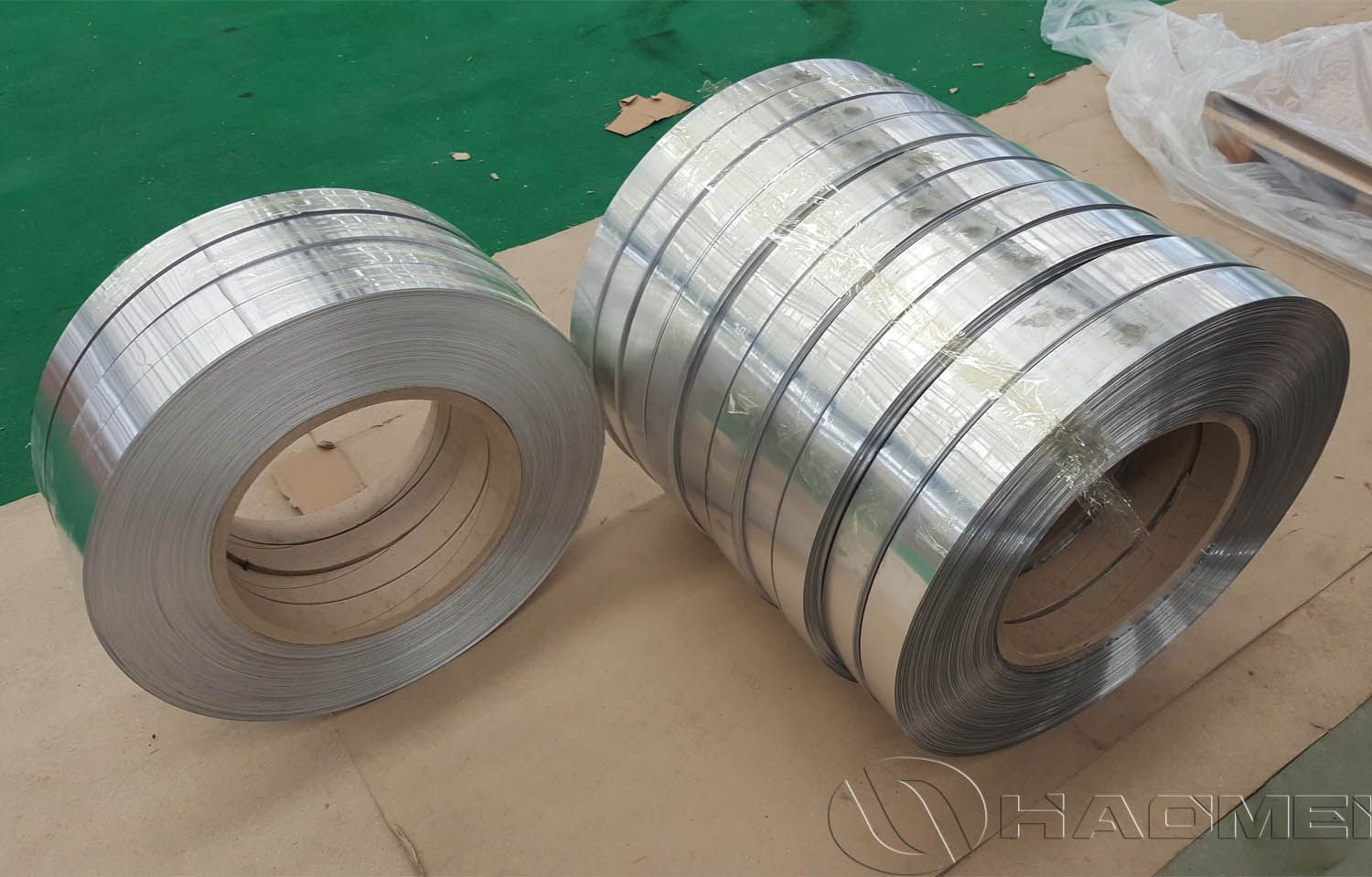
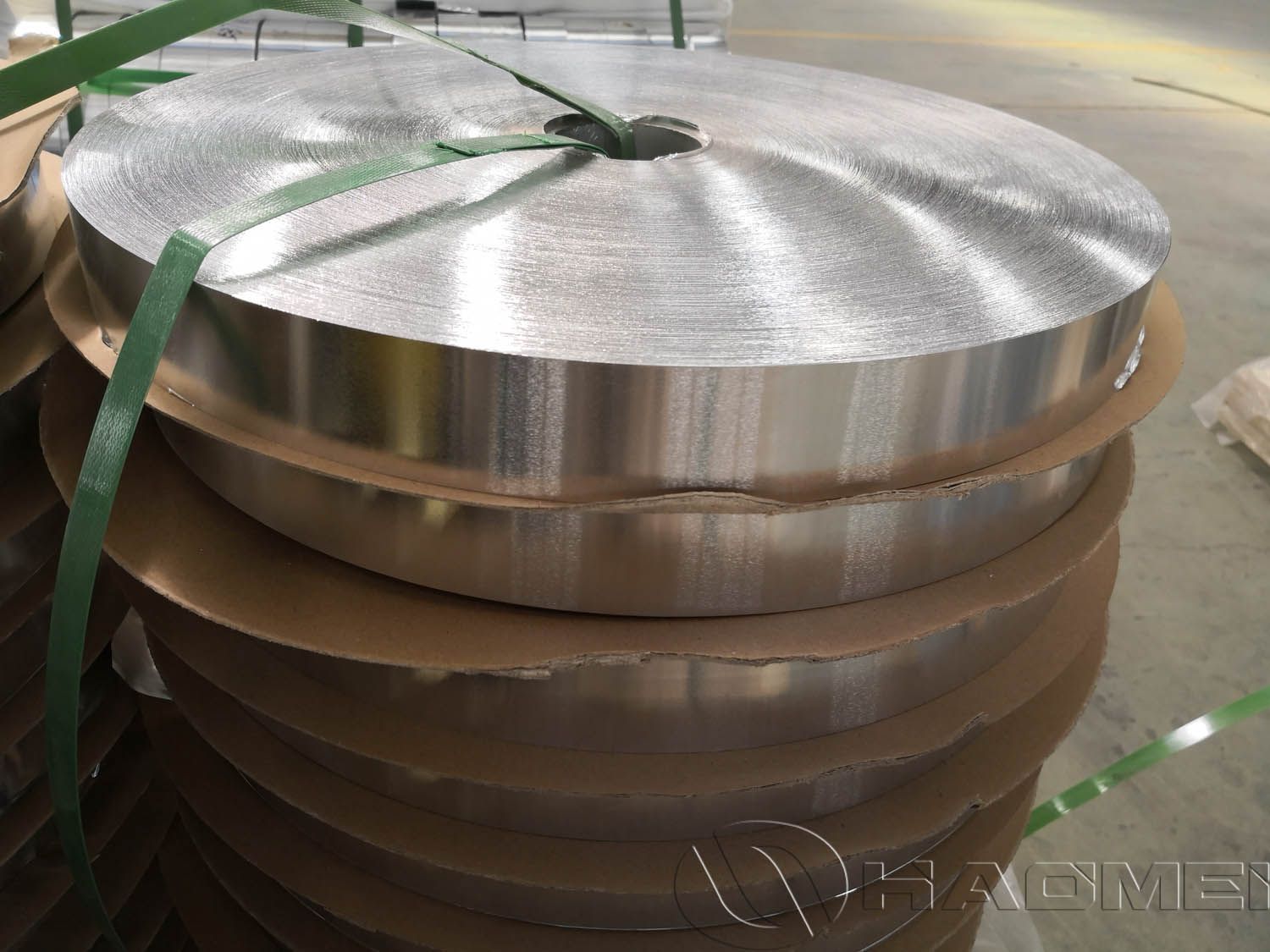
The strip is leveled, edge-treated, deburred, and surface-inspected. It is then precision-slit into the required widths and rewound into coils according to customer requirements.
Throughout the entire production process, flatness control and thickness accuracy are two major technical challenges. Even small fluctuations can affect the stability of downstream armor-forming operations.
Advantages of Cold-Rolled Aluminum Alloy Strip for Cable Armor
1. Lightweight: The density of aluminum alloy is significantly lower than that of steel. Therefore, while meeting requirements for mechanical cable protection, aluminum alloy armor helps reduce the overall weight of the cable.
2. Good formability: Aluminum alloy strip possesses excellent ductility and is suitable for processes such as continuous stamping, edge forming, bending, winding, and interlocking.
3. Good corrosion resistance: Aluminum forms a dense oxide film when exposed to air, providing a degree of natural protection.
4. Good electrical conductivity: Aluminum has excellent electrical conductivity. Aluminum armoring materials can still play a role in grounding, shielding, and the design of fault current paths.
Main Aluminum Alloy Grades for Interlocked Cable Armor
According to the national standard GB/T 33367-2016 "Aluminum alloy strip for armored cables," the mainstream alloy grades for interlocking armored cable strips include 5052, 5154, and 5154A. These all belong to the 5XXX series (Al-Mg series) of aluminum alloys.
5052 is a non-heat-treatable aluminum alloy of the Al-Mg series, with a magnesium content of approximately 2.3%–2.5%. The addition of magnesium significantly enhances strength, corrosion resistance, and formability while maintaining good bending characteristics.
5154 is an aluminum-magnesium alloy designed for corrosion resistance, specifically intended for the helical wrapping or interlocking armor protection of power cables, control cables, and fiber-optic cables. It combines light weight, high strength, excellent corrosion resistance, and good flexibility, effectively protecting cables against mechanical damage.
Typical Specifications for Interlocked Cable Armor Aluminum Alloy Strip
| Parameter | Common Range |
| Alloy | 5052, 5151, 5154A |
| Temper | O, H24, H32, etc. |
| Thickness | 0.20–0.80 mm |
| Width | 9.5–60 mm |
| Coil Inner Diameter | 55–400 mm |
| Coil Outer Diameter | 500–1,200 mm |
| Thickness Tolerance | ±0.01 mm |
| Width Tolerance | ±0.20 mm |
| Electrical Conductivity | ≥30% IACS |
| Elongation | ≥8% |
Key Quality Requirements
A qualified aluminum alloy strip for interlocked cable armor must meet several key quality requirements.
1. Balanced Mechanical Properties
Tensile strength and elongation must be properly balanced.
If tensile strength is too low, the formed helical interlocked armor may have poor shape retention and insufficient mechanical protection.
If elongation is too low, the strip may crack during interlocking, profiling, bending, or spiral-forming operations.
Studies and industry practice indicate that 5052 material in O or H32 temper, with a tensile strength of approximately 210–235 MPa and elongation of approximately 10%–17%, can be suitable for cable armor applications.
The final target properties should be confirmed according to the relevant cable standard and forming process.
2. Dimensional Accuracy
Thickness and width tolerances are critical for stable interlocked armor production.
According to GB/T 33367-2016, for strips with thicknesses of 0.40–0.60 mm, the allowable thickness tolerance is generally ±0.02 mm.
Leading manufacturers may control thickness tolerance to within:
±0.01 mm
Any excessive dimensional variation can lead to unstable forming, improper interlocking, equipment stoppage, strip breakage, or damage to the cable outer jacket.
3. Edge Quality
The strip edges must be smooth and free from burrs, cracks, sharp edges, and serious slitting defects.
Poor edge quality can cause:
Increased wear on forming rollers;
Unstable interlocking;
Cracking during profiling;
Damage to the cable jacket;
Reduced armoring-machine efficiency.
Therefore, deburring and edge conditioning are essential steps in producing interlocked cable armor strip.
4. Coil Consistency
In cable armoring production, consistency is often more important than a single mechanical-property value.
A cable length may extend for two to three kilometers. On high-speed armoring equipment, even localized variations in thickness, strength, elongation, flatness, or edge condition can cause strip breakage and costly production downtime.
A reliable supplier should ensure consistent quality throughout the coil and from batch to batch, including:
Stable chemical composition;
Uniform thickness;
Consistent width;
Reliable mechanical properties;
Good flatness;
Clean surface;
Smooth edges;
Proper coil winding.
Typical Applications of Interlocked Aluminum Alloy Armor Strip
1. Power Cables
Interlocked aluminum alloy armor strip is widely used in power transmission and distribution cables to provide mechanical protection.
Typical applications include medium-voltage and low-voltage power cable systems, feeder cables, industrial power circuits, and building distribution systems.
2. Industrial Control Cables
Industrial sites often involve mechanical impact risks, compression, vibration, and complex installation environments.
Interlocked armor improves external protection for control cables used in manufacturing plants, processing facilities, automation systems, and heavy industrial environments.
3. Building Electrical Systems
In commercial buildings, industrial buildings, data centers, airports, hospitals, and infrastructure projects, aluminum alloy interlocked armored cables can be used in a variety of electrical installation systems.
They are especially suitable for cable trays, risers, concealed routing, and locations where flexible installation is required.
4. Rail Transit
Rail transit projects place high requirements on cable weight, reliability, durability, and mechanical protection.
Aluminum alloy armor can provide an effective balance between protection and reduced cable weight, making it valuable in metro systems, railways, stations, tunnels, and related infrastructure.
5. Telecommunications and Data Systems
For communication, instrumentation, and data cables requiring additional mechanical protection, appropriate metal armor structures may also be used depending on the cable design and installation environment.