 Contact Us
In modern power transmission and distribution systems, power transformers play a central role in voltage conversion and energy distribution. To achieve high efficiency while optimizing costs and reducing equipment weight, electrical aluminum strip has become an important material for coil windings in dry-type and oil-immersed transformers.
Among the available materials, 1050 and 1060 pure aluminum strips have become preferred materials in the transformer manufacturing industry due to their excellent electrical conductivity, outstanding ductility, and high cost performance.
What Is 1050/1060 High-Conductivity Aluminum Strip?
Both 1050 and 1060 belong to the industrial pure aluminum series. They feature very high aluminum content and strictly controlled impurity levels, making them suitable for electrical conductivity applications.
The compositional difference between the two grades is relatively small. Their primary distinction is aluminum purity:
1050 Aluminum Strip: Aluminum content is not less than 99.50%, with total impurities controlled to 0.5% or below. Common impurities include iron, silicon, and copper. Because these elements can significantly reduce the electrical conductivity of aluminum, impurity control is particularly important for 1050 aluminum strip.
1060 Aluminum Strip: Aluminum content is not less than 99.60%, offering slightly higher purity than 1050 aluminum. Its allowable impurity level is correspondingly lower.
Under otherwise similar conditions, higher aluminum purity generally helps improve electrical conductivity. However, actual conductivity also depends on chemical composition, processing condition, rolling quality, and annealing treatment.
Both grades can be supplied in different tempers, including O temper (soft annealed), H14, and H18. For transformer winding applications, O-temper annealed aluminum strip is generally preferred. Soft aluminum strip has excellent plasticity and is less likely to crack during bending. It can fit tightly around the winding former during coil winding, helping prevent microcracks, localized overheating, insulation damage, and other potential risks.
Main Characteristics of 1050/1060 Transformer Aluminum Strip
Excellent Electrical Conductivity: 1050 and 1060 aluminum strips offer high electrical conductivity, allowing current to be transmitted efficiently through transformer windings and ensuring stable transformer operation.
Good Corrosion Resistance: Due to their high purity, 1050 and 1060 aluminum strips provide strong resistance to atmospheric corrosion. They can be used for extended periods in normal operating environments without severe corrosion.
Excellent Mechanical Properties: These aluminum strips have good formability and ductility. They can be easily formed into the required sizes and shapes for transformer winding applications and other conductive components.
Good Processing Performance: 1050 and 1060 aluminum strips are easy to process and can be slit, stamped, stretched, cut, bent, and fabricated into a variety of electrical components.
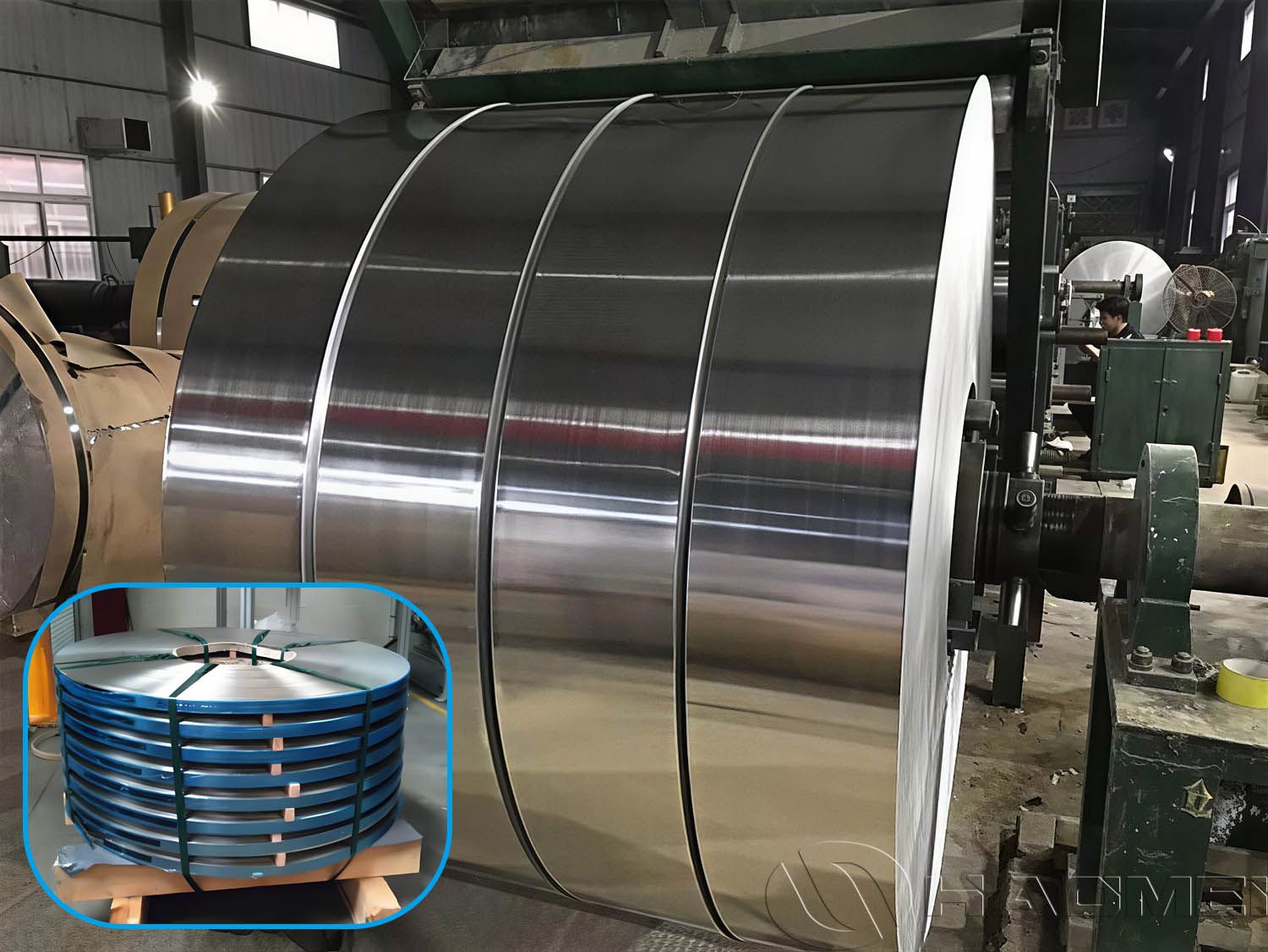
Common Specifications and Technical Parameters for Transformer Aluminum Strip
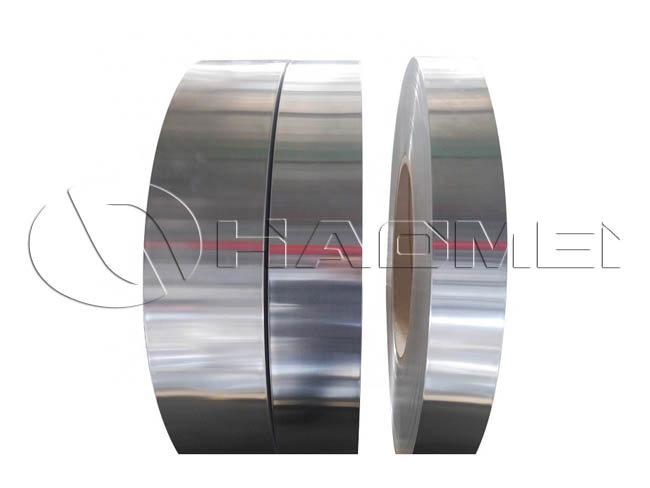
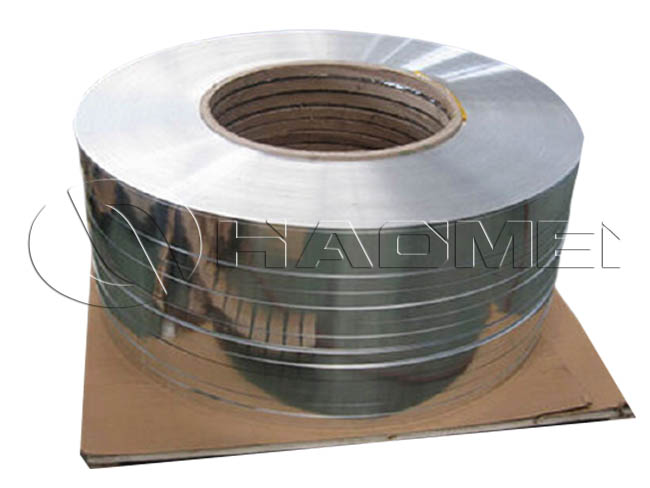
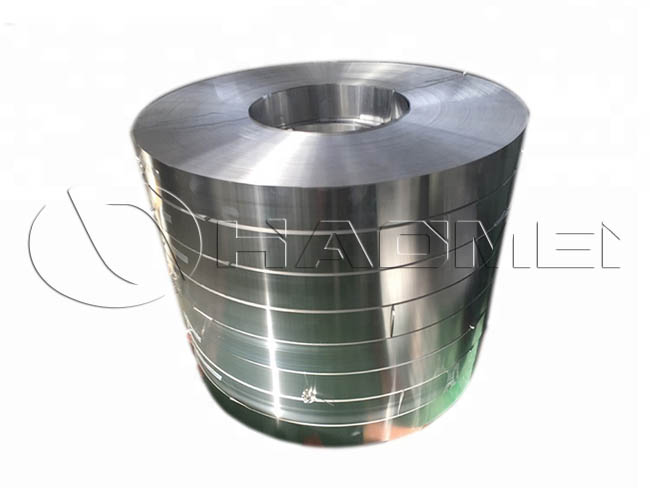
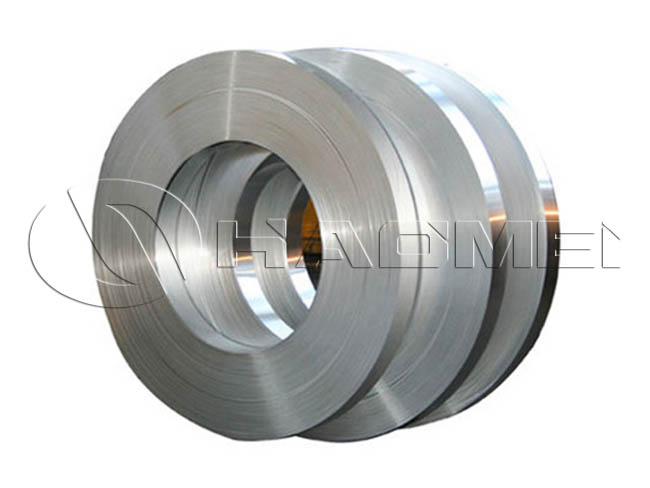
1050 transformer aluminum strips and 1060 transformer aluminum strips are typically supplied in coil form. Final dimensions should be determined according to winding design requirements and production equipment capabilities.
Technical Parameter | Common Requirement or Reference Range |
| Alloy Grade | 1050, 1060 |
| Common Temper | O, H12, H14, H18, etc., selected according to design requirements |
| Thickness | 0.2–3.0 mm |
| Width | 20–600 mm |
| Length | 1,000–16,000 mm |
| Electrical Conductivity | 61%–61.2% IACS |
| Product Form | Slit aluminum strip, aluminum strip coils for transformer windings |
| Edge Quality | Burr height can be controlled as required; deburring is available when necessary |
| Surface Requirement | Clean and flat, free from obvious scratches, dents, oil stains, or other defects affecting use |
| Packaging | Moisture-proof packaging, secured coils, and suitable export packaging |
| MOQ | 3 tons |
Advantages of 1050/1060 Aluminum Strip for Power Transformers
Selecting 1050 or 1060 aluminum strip as a conductive material for power transformers offers several important advantages.
High Electrical Conductivity: The high conductivity of 1050 and 1060 transformer aluminum strips helps ensure low winding resistance. This reduces electrical energy loss and improves overall transformer efficiency.
Corrosion Resistance: Because of their high aluminum purity, these strips offer good corrosion resistance and can operate reliably in appropriate service environments for long periods. This contributes to an extended transformer service life.
Cost Efficiency: Compared with copper, aluminum is generally more economical. Using 1050 or 1060 aluminum strip can significantly reduce the material cost of transformer windings while maintaining reliable electrical performance.
Lightweight Design: Aluminum has a much lower density than copper. The use of aluminum strip can reduce transformer weight, making transportation, installation, and handling more convenient.
Typical Applications of Transformer Aluminum Strip
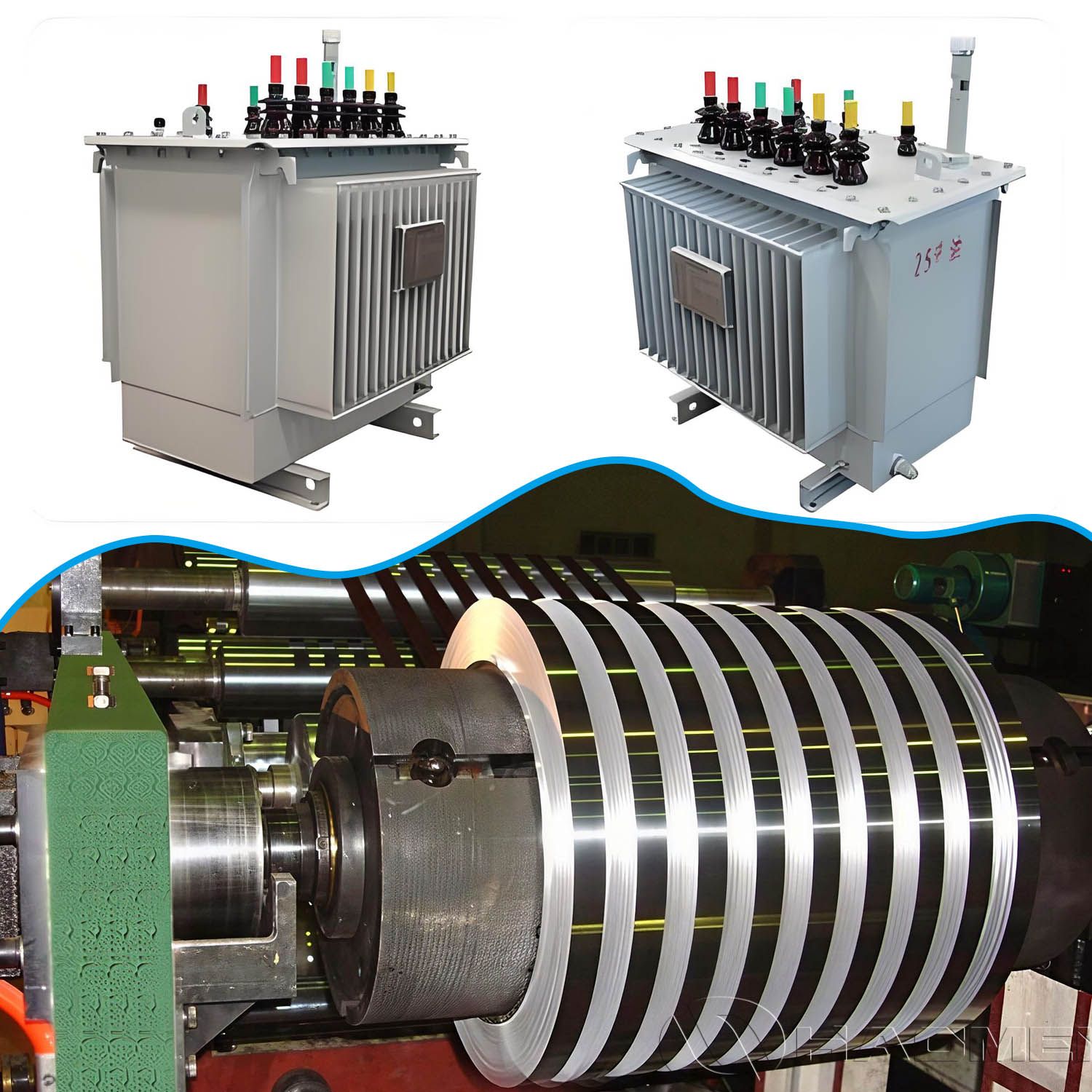
High-conductivity 1050 and 1060 aluminum strips are widely used in different types of power and special transformers, including:
Dry-Type Power Transformers: Used for efficient winding of low-voltage coils in dry-type transformers.
Oil-Immersed Transformers: Used in transformer windings together with transformer oil systems to provide reliable insulation and heat dissipation.
Reactors and Rectifier Transformers: Used in reactors, rectifier transformers, and other specialized electrical equipment requiring specific inductance characteristics and low-loss electrical performance.
Surface Quality Requirements for Transformer Aluminum Strip
The surface of transformer aluminum strip should be clean, smooth, and free from defects that may affect its use. Common quality control requirements include:
Free from oil stains, oxidation spots, and corrosion stains;
Free from obvious scratches, dents, and roll marks;
Free from blisters, inclusions, cracks, and delamination;
Uniform surface color and appearance;
Free from metal dust, foreign particles, and contaminants that may affect insulation performance;
Coils should be free from severe collapse, loose winding, or telescoping;
Strip edges should have a smooth rounded transition rather than sharp square edges.
For transformer windings, surface condition affects more than appearance. It is directly related to insulation wrapping quality and interlayer contact performance. Excessive rolling oil residue or surface contamination may affect insulation paper adhesion, varnish impregnation, and subsequent drying processes.
Key Processing Considerations for 1050/1060 Aluminum Strip in Transformer Manufacturing
1. Slitting Accuracy
Transformer aluminum strip is commonly supplied in thicknesses ranging from approximately 0.3 mm to 3.0 mm, while the width is customized according to winding design requirements. Precision slitting tolerance directly affects the flatness and consistency of coil winding.
Excessive thickness variation may result in uneven spacing between winding turns and layers, potentially causing localized electric field distortion. Suppliers should use high-precision slitting equipment to ensure stable dimensional tolerances.
2. Annealing Process Control
The annealing process determines the plasticity and formability of aluminum strip.
If the annealing temperature is insufficient, the strip may remain too hard and become more likely to crack during winding. If annealing is excessive, grain growth may occur, which can slightly reduce mechanical stability.
Professional transformer aluminum strip production typically uses controlled-atmosphere annealing to minimize surface oxidation and ensure uniform performance throughout the entire coil. The difference in mechanical properties between the head and tail of a coil should be kept as small as possible.
3. Welding and Joint Treatment
Welding aluminum winding leads is generally more challenging than welding copper conductors. During welding of 1050 and 1060 pure aluminum, oxide inclusions can form easily and may increase contact resistance.
It is recommended to use proven welding methods, such as TIG welding, where appropriate. After welding, joints should be ground, inspected, and properly insulated to prevent overheating during transformer operation.
4. Storage and Moisture Protection
Aluminum is a reactive metal. In humid environments, it can form oxide layers and may even develop white corrosion spots. Finished aluminum strip should therefore be packed in sealed, moisture-proof packaging.
Storage areas should remain dry and well ventilated. Aluminum coils should not be exposed for extended periods to high humidity or corrosive gases. Before processing, the surface condition should be inspected carefully. Materials showing corrosion, severe oxidation, or peeling oxide layers should not be used in production.